
Studium der Kunstgeschichte - Schwerpunkt: Filmgeschichte
(Abschluss 2010 mit der Arbeit "Rembrandt im Spielfilm")
Nebenfächer: Philosophie und Alte Geschichte
- seit 2012: Filmkritikerin bei movieworlds (Kino, DVD, BD, Festivalberichte)
- seit 2015: Blog 'Testkammer' online
- Jetzt online! – Der Film „Foreigner“ - 22. Februar 2026
- Kinostarts 19.02.2026 - 18. Februar 2026
- 76. Internationale Filmfestspiele Berlin 2026 – Ankündigung - 16. Februar 2026
 Interview: Im Gespräch mit dem Schweizer Filmemacher Marcel Barelli konnten wir mehr über seinen ersten langen Animationsfilm „Mary Anning“ erfahren, der auf dem 68. DOK Leipzig 2025 im ‚Young Eyes‘-Programm lief, und seinen Kurzfilm „EX-tract“ über das Artensterben, ebenfalls auf dem Festival gesehen. Er erzählt von der Produktion des Langfilms in der Schweiz, für welches Zielpublikum er gedacht ist und ob sich ein Themenkanon durch seine Filme sieht.
The original english language interview is also available.
Wie ist die Idee entstanden, einen Film über Mary Anning zu machen? Hast Du auch selbst eine Schwäche für Fossilien?
Seit meiner Kindheit bin ich ein großer Fan von Dinosauriern, Fossilien, Paläontologie usw., und ich kenne die Figur Mary schon seit meiner Kindheit. Ich fand sie immer sehr modern und ideal, um Kindern eine Geschichte zu erzählen, da sie inspirierend und rebellisch ist.
 Hattest Du ein bestimmtes Zielpublikum im Sinn – ich denke, dein Film eignet sich bereits für ein junges Publikum. Hast Du vor ihn auch außerhalb von Kinos (u.a. in Schulen) zu zeigen?
Ich wollte einen Film für alle machen, insbesondere für Kinder, aber auch für Eltern. Der Film ist in Kinos in der Schweiz, Belgien, Frankreich usw. angelaufen. Tatsächlich sind viele Schulvorführungen geplant.
In Leipzig lief Dein Film synchronisiert – doch worauf hast Du bei den Originalsprecher:innen Wert gelegt?
 Die Originalversion ist tatsächlich auf Französisch (aber ich habe auch die italienische Version betreut, da ich hauptsächlich Italienisch spreche). Es war mir besonders wichtig, dass die Stimmen der Kinder von Kindern synchronisiert wurden, da dies viel bewegender ist als wenn dies von Erwachsenen gemacht wird.
Kannst Du schon was dazu sagen, wann man deinen Film in Deutschland sehen kann?
Ich hoffe bald. Ich bin nicht für den Vertrieb zuständig. Aber zuerst wird der Film auf einigen Festivals gezeigt werden.
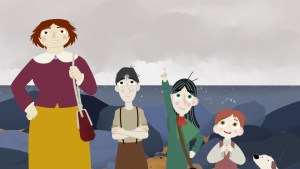 Was lag Dir visuell bei den Animationen am Herzen?
Für den Film haben wir eine einfache Animationstechnik (Puppet-Rig) verwendet, die es uns ermöglichte, den Film mit einem (für die Schweiz) geringen Budget zu realisieren, da in der Schweiz nicht viel Geld und vor allem nicht viel Erfahrung vorhanden ist. Also haben wir uns entschieden, mit etwas Einfachem zu beginnen: Für viele war es die erste Erfahrung mit einem Langfilm.
Ganz anders im Stil ist Dein Kurzfilm „EX-tract“. Kannst Du mir mehr zu deinem dreiminütigen Short erzählen?
 Sie sind tatsächlich sehr verschieden. Ich habe „Mary Anning“ über viele Jahre hinweg mit vielen Leuten und einem Budget gedreht. „EX-tract“ habe ich in einem Monat gedreht, fast alleine und ohne Budget. Ich wartete darauf, dass das Sounddesign für „Mary Anning“ fertig wurde, also sagte ich mir: „Ich werde versuchen, in einem Monat einen Film zu drehen, während ich auf den Sound warte.“
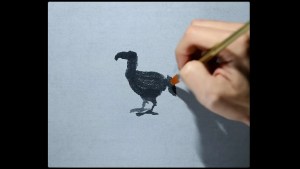
Auf der Bildebene arbeitest Du mit Tuschezeichnungen und Archivmaterial – Kannst Du mir mehr dazu sagen?
Ich wollte etwas Einfaches, aber Direktes und Poetisches schaffen. Und ich dachte, dass eine Technik, die auf der Verdunstung von mit Wasser gezeichneten Bildern basiert, gut zum Thema des Artensterbens passt.
 Beide Filme zusammen und ich denke auch an frühere Arbeiten wie „Autosaurus Rex“ zeigen einen klaren Themen-Kanon. Wie bist Du zu den Umwelt-, Klima- und Naturthemen gekommen?
Es stimmt, dass alle meine Projekte direkt oder indirekt von der Natur, Tieren oder unserer Beziehung zur Umwelt handeln. Das ist mein Lieblingsthema. Und es ist eines der wichtigsten Themen für mich. Denn es umfasst viele andere Themen. Ich versuche, unsere Beziehung zu anderen Spezies und zur Welt um uns herum zu hinterfragen, weil meiner Meinung nach das Kino dies mehr als andere Kunstformen ermöglicht.
 Michael Kaltenecker
 Sind bereits neue Projekte geplant?
Ich habe immer Projekte in Arbeit; derzeit bin ich dabei, einen Kurzfilm fertigzustellen, und wir werden mit der Finanzierung meines neuen Spielfilms beginnen … mal sehen. Daumen drücken.
Die Fragen stellte Doreen Kaltenecker
Übersetzung von Michael Kaltenecker
Lies auch die Rezension des Kurzfilms „Mary Anning“ und „EX-tract“
Interview: In our conversation with filmmaker Marcel Barelli, we learned more about his first feature-length animated film, „Mary Anning“, which was screened at the 68th DOK Leipzig 2025 as part of the Young Eyes program, and his short film „EX-tract“ about species extinction, shown at the same festival. He talks about the production of the feature film in Switzerland, its target audience, and whether there is a common theme running through his films.
How did the idea to make a film about Mary Anning come about? Do you have a soft spot for fossils yourself?
Since my childhood, I have been a huge fan of dinosaurs, fossils, paleontology, etc., and I have known the character of Mary since I was very young. I always found her to be a very modern character and ideal for telling a story to children, as she is inspiring and rebellious.
Did you have a specific target audience in mind? I think your film is already suitable for a young audience. Do you plan to show it outside of cinemas (e.g., in schools)?
I wanted to make a film for everyone, especially for children, but also for parents. The film has been released in cinemas in Switzerland, Belgium, France, etc. Many school screenings are indeed planned.
Your film was shown dubbed in Leipzig, but what was important to you regarding the original voice actors?
Indeed, the original version is French (but I also supervised the Italian version since I am primarily Italian-speaking). It was especially important to me that the children’s voices were dubbed by children because it is much more touching than when an adult does it.
Can you already say anything about when your film will be available to watch in Germany?
I hope soon. I am not the one handling the distribution. But first, the film will go through a few festivals.
What was important to you visually in terms of the animations?
For the film, we used a simple animation technique (puppet rig) which allowed us to make the film with a small budget (for Switzerland) because there is not much money and especially not much experience in Switzerland. So we decided to start with something simple: for many, it was their first experience on a feature film.
Your short film “Ex-Tract” is very different in style. Can you tell me more about your 3-minute short?
It is indeed the opposite. I made „Mary Anning“ over many years, with lots of people and a budget. I made Ex-Tract in 1 month, almost alone and with no budget. I was waiting for the sound design for „Mary Anning“ to be completed, so I told myself: I’m going to try to make a film in 1 month while waiting for the sound.
Visually, you work with ink drawings and archive material—can you tell me more about that?
I wanted to make something simple but direct and poetic. And I thought that using a technique based on the evaporation of drawings made with water aligned well with the subject of species disappearance.
Both films together, and I’m thinking of earlier works such as “Autosaurus Rex,” show a clear thematic canon. How did you come to environmental, climate, and nature themes?
It’s true that all my projects talk, directly or indirectly, about nature, animals, or our relationship with our environment. It’s my favorite theme. And it is one of the most important themes for me. Because it encompasses many other themes. I try to question our relationship with other species and the world around us because, in my opinion, cinema allows this more than other art forms.
Do you already have new projects planned?
I always have projects underway; I am currently finishing a short film, and we are going to start financing my new feature… we’ll see. Fingers crossed.
Questions asked by Doreen Kaltenecker
Read on the german review of the short film „Mary Anning“ und „EX-tract„