
Studium der Kunstgeschichte - Schwerpunkt: Filmgeschichte
(Abschluss 2010 mit der Arbeit "Rembrandt im Spielfilm")
Nebenfächer: Philosophie und Alte Geschichte
- seit 2012: Filmkritikerin bei movieworlds (Kino, DVD, BD, Festivalberichte)
- seit 2015: Blog 'Testkammer' online
- Acht Fragen an Jorge Sermini - 11. September 2026
- „Daughter“ (2024) - 11. September 2026
- Kinostarts 10.09.2026 - 9. September 2026
 Interview: Im Gespräch mit dem britischen Regisseur und Animationskünstler Adrian Maganza konnten wir mehr über seinen Kurzfilm „Fantasies of a Rescue Dummy“ erfahren, der auf den 59. Hofer Filmtagen 2025 seine Weltpremiere feierte, wie die Idee selbst beim Schwimmen kam und warum er sich dafür entschied, eine Mischung aus Live Action und Animation zu wählen.
The original english language interview is also available.
Wie ist die Idee zu Deinem Kurzfilm entschieden?
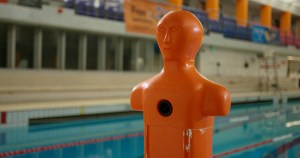
Die Idee zu diesem Film entstand aus meiner Liebe zum Schwimmen. Ich verbrachte viel Zeit damit, auf den Boden des Schwimmbeckens zu schauen, und erkannte schließlich, dass dies ein fantastischer Ort für einen Kurzfilm wäre. Die Idee, eine Rettungsattrappe als Hauptfigur zu verwenden, kam später. Ich glaube, ich bin eines Tages auf eine dieser Attrappen gestoßen und fand ihr Aussehen einfach toll, besonders das Lächeln auf ihrem Gesicht, das weder fröhlich noch traurig ist, sondern offen für Interpretationen, wie eine leere Leinwand. Ich fand das brillant.
 Wie lange hat die Realisierung von der ersten Idee bis zum fertigen Film gedauert?
Die erste Idee dazu kam mir um das Jahr 2020, aber ich habe sie erst 2023 umgesetzt. Die Entscheidung, daraus einen Film zu machen, fiel im April 2023, und im Sommer 2025 war er fertig.
Warum hast Du Dich für eine Mischung aus Live Action und Animation entschieden?
Ursprünglich sollte der Film vollständig animiert sein (diese Entscheidung fiel aufgrund meines Hintergrunds im Bereich Animation „automatisch“). Dann begann ich, nach Finanzierungsmöglichkeiten zu suchen, und aufgrund der Kombination aus extrem hohen Animationskosten und dem allgemeinen Mangel an Finanzmitteln in Großbritannien entschied ich mich für die Möglichkeit, einen Hybridfilm zu drehen. Die Aufteilung zwischen Realfilm (Realität) und Animation (Traum) ergab aus erzählerischer Sicht sehr viel Sinn und ermöglichte es mir, die Kosten massiv zu senken, indem ich die Animation selbst übernahm.
Sind die Live-Action-Aufnahmen dokumentarisch? Wo habt ihr gedreht und was lag Dir visuell dabei am Herzen?
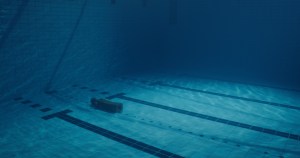
 Alle Unterwasseraufnahmen wurden speziell für diesen Film gedreht. Wir stellten ein Team zusammen und drehten zwei Nächte lang in einem Londoner Freizeitzentrum. Wir waren zeitlich sehr eingeschränkt, da wir nur während der Schließzeiten zwischen 22 Uhr und 6 Uhr morgens drehen konnten.
Die Suche nach diesem Drehort war eine der größten Herausforderungen der Produktion und letztendlich entscheidend für den Erfolg oder Misserfolg des Projekts. Wir hatten unglaubliches Glück, dieses Schwimmbad zu finden, da es an den Seiten groß genug war, um die gesamte Ausrüstung unterzubringen, aber vor allem war es sehr tief (3,5 m), was entscheidend war, um dieses magische und isolierende Gefühl am tiefen Ende zu erzeugen.
Würdest Du sagen, dass man in Deinen 2D-Animationen Deinen persönlichen Stil erkennt?
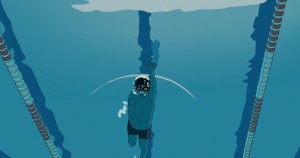
 Ich habe den Großteil der Animation selbst gemacht, ich habe über ein Jahr gebraucht, um etwa eine Minute und 30 Sekunden zu animieren. Es ging besonders langsam voran, da ich nur abends daran arbeiten konnte, weil ich meinen Tagesjob und meine Familie unter einen Hut bringen musste, aber es war auch die einzige Möglichkeit, diesen Film zu realisieren (finanziell gesehen). Gegen Ende haben sich mir ein paar Animatoren angeschlossen, um mir zu helfen, den Film über die Ziellinie zu bringen, dafür bin ich ihnen unendlich dankbar!
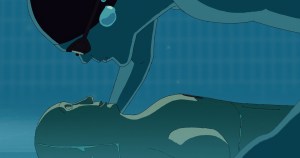
Ich würde sagen, dass der Stil der Animation zu der Geschichte passt, die ich erzählen wollte. Sie musste als Hybrid mit den Live-Action-Aufnahmen funktionieren, weshalb ich mich für einen realistischeren Stil entschieden habe. Rettungsattrappen sind auch sehr spezifische Objekte, manche Leute wissen nicht einmal, was sie sind, wenn sie aus dem Zusammenhang gerissen werden. Deshalb war es für mich sicherer, mich an einen realistischen Look zu halten, um Verwirrung zu vermeiden.
Kannst Du mir noch etwas mehr zur Musik sagen?
 Ich hatte eine ganz bestimmte Vorstellung von der Musik für den Film, was es ziemlich schwierig machte, etwas Passendes zu finden. Die Musikredakteure von Resister haben großartige Arbeit geleistet und den Titel „Vision of Love” von The Futz Butler ausgegraben. Als wir ihn beim Schnitt ausprobierten, passte er so gut, als wäre er speziell für den Film komponiert worden. Ich habe auch mit Raphaelle Thibaut zusammengearbeitet, die all diese wunderschönen und zarten Musikstücke komponiert hat, die sofort die richtige emotionale Stimmung erzeugen.
Das war deine erste Regiearbeit, aber Du bist schon länger im Filmbusiness. Kannst Du mir etwas über Deine bisherigen Filmarbeit erzählen?
 Ich habe 15 Jahre Erfahrung als Storyboard-Künstler in der Animationsbranche, und ich schätze mich sehr glücklich, ein Teil davon zu sein. Ich habe an unglaublichen Projekten wie Aardmans „Star Wars Vision“ oder Alain Chabats jüngstem Film „Asterix und Obelix: Der große Kampf“ für Netflix gearbeitet. Derzeit arbeite ich bei Locksmith Animation an ihrem neuesten Spielfilm „Bad Fairies“, einem animierten Musical mit Cynthia Erivo in der Hauptrolle.
Die Kehrseite einer erfolgreichen Karriere als Story Artist ist jedoch, dass man in eine Schublade gesteckt werden kann und am Ende sein ganzes Leben lang dasselbe macht, was nicht der Grund war, warum ich diesen Beruf überhaupt ergriffen habe.
Sind bereits neue Projekte als Regisseur geplant?
 Ich habe mehrere Projekte im Kopf, die mich beschäftigen, und Geschichten, die ich gerne weiterverfolgen möchte und auf die ich mich unglaublich freue. Die Arbeit an „Fantasies of a Rescue Dummy” war kreativ so erfrischend, dass ich diesen Weg weitergehen möchte. Außerdem war die Produktion dieses Films für mich eine großartige Möglichkeit, der Branche einen Anstoß zu geben und zu sagen: Seht euch an, was ich nebenbei leisten kann – stellt euch vor, ich würde das hauptberuflich machen. Gebt mir eine Chance als Regisseur! In der Zwischenzeit werde ich weiterhin meine eigenen Filme schreiben und drehen!
Die Fragen stellte Doreen Kaltenecker
Übersetzung von Michael Kaltenecker
Lies auch die Rezension des Kurzfilms „Fantasies of a Rescue Dummy“
Interview: In conversation with British director and animation artist Adrian Maganza, we learned more about his short film „Fantasies of a Rescue Dummy„, which celebrated its world premiere at the 59th Hof Film Festival in 2025, how the idea came to him while swimming, and why he decided to use a mixture of live action and animation.
How did you decide on the idea for your short film?
The idea from the film came from the fact that I always loved swimming and consequently I spent a lot of time looking down at the bottom of a pool, eventually realising it would make a fantastic location for a short film. The idea to have a rescue dummy as main character came later, I think I came across one of these manikins one day and just loved the way they looked, especially the smile on their face, it’s neither happy or sad, it’s open for interpretation, like a blank canvas, I thought it was brilliant.
How long did it take to realize the film, from the initial idea to the finished product?
I had the very initial spark of an idea around 2020 but I didn’t act on it until 2023. The decision of making it into a film came around April 2023 and it was completed in summer 2025.
Why did you decide on a mixture of live action and animation?
Initially the film was supposed to be fully animated (It was a decision taken „by-default” because of my animation background). Then I started to look into ways of funding it and the combination of animation being extremely expensive and the general lack of funding available in the UK made me steer towards the possibility of making it a hybrid film. The split between the live-action (reality) and animation (dream) made a lot of sense story wise and it allowed me to reduce the costs massively by tackling the animation myself.
Are the live action shots documentary? Where did you shoot and what was important to you visually?
All the underwater shots were done specifically for this film. We put a crew together and shot it in a London leisure centre over two nights. We were very restricted in terms of timings as we could only shoot during closing time which was between 10pm and 6am.
Finding this location was one of the main challenges of the production and ultimately what was going to make or break the project. We were incredibly lucky to find this swimming pool because it was both spacious enough on the sides to accommodate for all the shooting equipment but most importantly it was very deep (3.5m) which was crucial in creating that magical and isolating feel at the deep end.
Would you say that your personal style is recognizable in your 2D animations?
I did most of the animation myself, it took me more than a year to animate about 1min30 seconds. It was particularly slow as I could only work on it in the evenings juggling my day job and a family but it was also the only way this film was going to happen (financially speaking). A few animators joined me towards the end to help pushing the film through the finishing line, I am forever grateful!
I would say the style of the animation matched the story I was trying to tell. It needed to work as a hybrid with the live-action which is why I decided to go more realistic. Rescue dummies are also very specific objects, some people don’t even know what they are when taken out of context which is why it was safer for me to stick closer to a realistic look in order to avoid any confusion.
Can you tell me a little more about the music?
I had something very specific in mind for the music of the film which made it quite hard to find the good fit. The music supervisors from Resister were brilliant in digging out the track “Vision of Love” from The Futz Butler. When we tried it on the edit it was like it had been composed for the film, it worked so well. I also worked with Raphaelle Thibaut who composed all those beautiful and delicate music cues that instantly set the right emotional tone.
This was your first time directing, but you’ve been in the film business for a while. Can you tell me a bit about your previous film work?
I have 15 years of experiences as a storyboard artist in the animation industry which I feel so lucky to be a part of. I worked on incredible projects such as Aardman’s Star Wars Vision or Alain Chabat’s recent Asterix and Obelix: The Big Fight for Netflix. I am currently working at Locksmith Animation on their latest feature film, Bad Fairies, which is an animated musical starring Cynthia Erivo.
On the other hand, the downside of a successful career as a story artist is that you can get pigeonholed and end up doing the same thing for the rest of your life which isn’t why I joined in the first place.
Do you have any new projects planned as a director?
I have several projects that are stewing in my head and stories that I want to explore which I am incredibly excited about. The journey of making „Fantasies of a Rescue Dummy“ was so creatively refreshing, I want to keep going in that direction. Similarly, making this film was a great way for me to to give the industry a nudge and say: Look at what I can do as a side gig, imagine if I did it full time, now give me a shot at directing! And in the meantime, I will keep writing and directing my own films!
Questions asked by Doreen Kaltenecker
Read on the german review of the short film „Fantasies of a Rescue Dummy„