
Studium der Kunstgeschichte - Schwerpunkt: Filmgeschichte
(Abschluss 2010 mit der Arbeit "Rembrandt im Spielfilm")
Nebenfächer: Philosophie und Alte Geschichte
- seit 2012: Filmkritikerin bei movieworlds (Kino, DVD, BD, Festivalberichte)
- seit 2015: Blog 'Testkammer' online
- Sieben Fragen an Dominic Wittrin - 27. Juli 2026
- „How to kill your family“ (2026) - 27. Juli 2026
- Jetzt online! – Der Film „Invincible“ - 26. Juli 2026
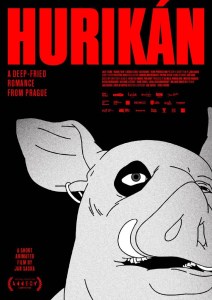
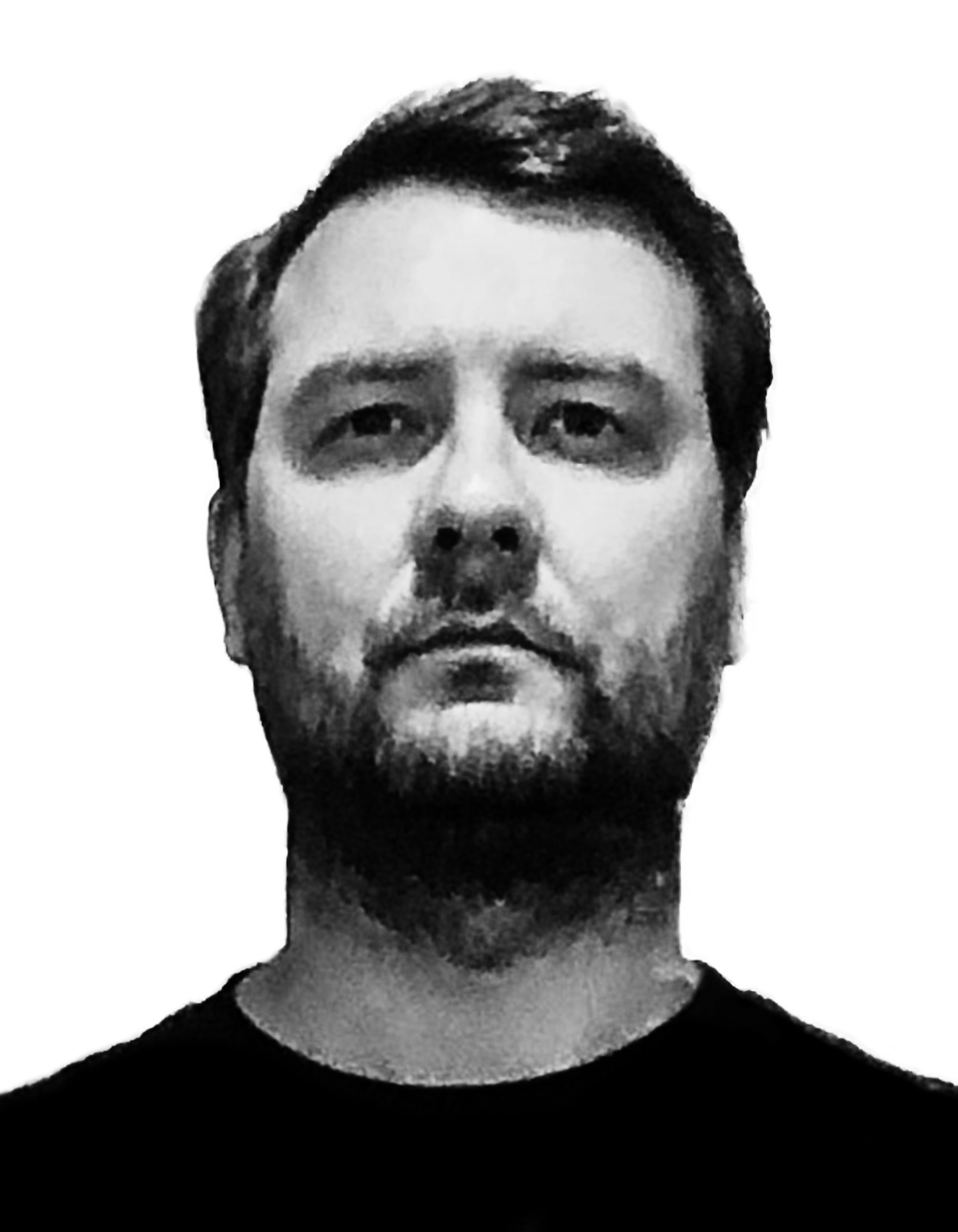 Interview: Im Gespräch mit dem tschechischen Filmemacher Jan Saska konnten wir mehr über seinen Kurzfilm „Hurikán“ erfahren, der auf dem 67. DOK Leipzig 2024 seine Deutsche Premiere feierte, dass der Film die Adaption eines Comics ist, warum der Held ein Schwein ist und warum Schwarz-Weiß am besten zur Geschichte passt.
The original english language interview is also available.
Der Kurzfilm basiert auf Deinen eigenen Comics, richtig? Wie entstand die Idee, das auch als Film zu erzählen?
Ja, Hurikán – die Hauptfigur – ist ursprünglich eine Comic-Figur. Das war ein logischer Schritt, denke ich. Da Animationsfilme immer hinter dem Zeitplan zurückbleiben und es bereits eine Figur, eine Umgebung, einen Stil, eine Stimmung usw. gab, war es eine seltene Gelegenheit, bei der Entwicklung eines Animationsprojekts einen Schritt voraus zu sein. Außerdem war es für mich als Animator verlockend, diese Figur zum Leben zu erwecken.
Warum ist Dein Held ein Schwein?
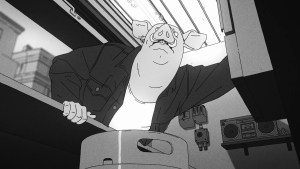 Es ist eine visuelle Abkürzung. Als ich anfing, über die Idee für den ersten Comic nachzudenken, habe ich mit der Umgebung angefangen. Nachtbars, Bierstände, Kioske… und ich wollte eine Figur einbauen, die auf den ersten Blick passt. Der erste Comic entstand in aller Eile und ich habe nicht viel darüber nachgedacht, um ehrlich zu sein.
Die Stadt Prag spielt auch eine wichtige Rolle in Deinem Film. Wie wolltest Du diesen Ort einfangen?
 Ich wollte Prag aus einer etwas anderen Perspektive zeigen, als sie in den Reiseführern dargestellt wird. Deshalb habe ich die klassischen Domänen, die mit der mittelalterlichen Ära der Stadt in Verbindung gebracht werden, weggelassen und ein modernes Wahrzeichen – den Žižkov-Turm – eingefügt, der in unserer Geschichte als eine Art Leuchtturm dient, der anzeigt, wie nah oder weit entfernt die Figur von ihrem Ziel ist. Außerdem befindet sich der Turm in der Nähe des Stadtteils Žižkov, der sich immer noch der Gentrifizierung widersetzt und als der wildere Teil der Stadt gilt, was mehr als passend für unsere Geschichte war.
Kannst Du mir zu Deinem Stil erzählen. Was lag Dir bei den Animationen am Herzen? Warum hast Du Dich gegen Farbe entschieden?
 Es stimmt, dass ein Großteil meiner Arbeit in Schwarz-Weiß entsteht, und ich bin immer davon überzeugt, dass Schwarz-Weiß am besten geeignet ist. Es stimmt auch, dass ich nicht sehr gut mit Farbe umgehen kann, also ist es vielleicht eine unbewusste Kombination aus diesen beiden Tatsachen. Im Fall des Hurikán-Films wollte ich ein wenig Film-Noir-Atmosphäre heraufbeschwören. Ich finde es amüsant, wie der Film Noir mit seinem starken Kunststil ein bestimmtes Segment der Comicproduktion inspiriert hat. Die Comics haben diese Stilisierung dann noch weiter getrieben. Und dann dient es wiederum als Inspiration für den Film. Da unsere Figur ursprünglich eine Comic-Figur ist und dies sein Filmdebüt war, schien es uns eine gute Gelegenheit zu sein, an diesem intermedialen Gespräch teilzunehmen. Vor allem, weil Hurikán ein eher lockerer Typ ist, am Rande der Gesellschaft, immer betrunken oder zumindest verkatert, der im Dunkeln tappt, wie so viele hartgesottene Detektive, die am Ende ihre eigenen Dämonen jagen und nicht das Verbrechen. Von Anfang an wollten der Drehbuchautor und ich eine Geschichte entwickeln, die nachts spielt, unter Neonlicht, mit Attributen wie einer Kneipenschlägerei oder einer Verfolgungsjagd. Gleichzeitig sollte sie in Prag, einer ansonsten relativ sicheren Stadt, glaubwürdig sein. Deshalb gibt es auch keinen Mord oder einen Banküberfall, sondern nur den Gang in die Nacht für ein neues Fass Bier.
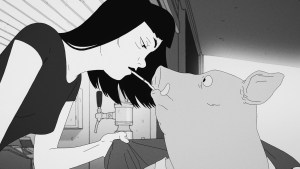 Was die Animation betrifft, so wollten wir uns – recht ehrgeizig – dem Look der japanischen Animationsschule nähern, die für ihren relativ hohen Grad an Realismus bekannt ist. Um die Figuren, ihr Aussehen und ihre Proportionen während ihrer Bewegungen perspektivisch zu halten – was in der klassischen handgezeichneten Animation recht schwierig ist – haben wir 3D-Modelle und 3D-Layouts als Referenz für die Animation verwendet. Das Ziel war es, nicht nur den Realismus zu erhalten, sondern auch ein gewisses Maß an Details, um den Zuschauer in die Geschichte hineinzuziehen. Der Film sollte sich wie eine Reise oder ein Ausflug anfühlen.
Warum hast Du Dich dafür entschieden, nur wenige Dialoge zu verwenden?
 Wir haben unseren Film von Anfang an für Festivals geplant, sowohl für tschechische als auch für internationale Festivals, von denen es noch viele gibt. Da im Ausland nirgendwo Tschechisch gesprochen wird, bedeutet dies, dass Untertitel für die Dialoge notwendig sind. Das ist vor allem bei Animationsfilmen unglücklich, denn als Zuschauer teilt man seine Aufmerksamkeit zwischen den bewegten Bildern und dem Text am unteren Bildschirmrand. Ursprünglich wollten wir den Film komplett stumm machen. Aber da der gewählte Grad an Realismus recht hoch ist, wirkten manche Situationen seltsam, wenn die Figuren überhaupt nicht miteinander sprachen. Deshalb gibt es ein paar Dialoge – um es glaubhaft zu machen. Aber das Ziel war, dass die Dialoge die Handlung nicht vorantreiben und die visuelle Erzählung fortgesetzt wird.
Wird Hurikáns Geschichte noch filmisch fortgesetzt?
Zurzeit plane ich, mit Hurikán zu den Comics zurückzukehren, aber ich denke, die Leinwand passt zu ihm, also denke ich, ja.
Kannst Du mir mehr zu Dir erzählen und wie Du zum Film gekommen bist?
 Ich habe schon immer gerne gezeichnet und mich für Filme interessiert, also wandte sich mein Interesse sehr bald der Animation zu, da sie beides miteinander verbindet. Ich hatte das Glück, dass meine Eltern mich in dieser Richtung unterstützten, und so studierte ich zunächst an der Kunsthochschule und dann an der Hochschule Animation.
Sind schon andere Projekte geplant?
Ich plane den oben erwähnten Hurikán-Comic. Und wenn er gut ist, wird daraus vielleicht eines Tages ein Film.
Die Fragen stellte Doreen Kaltenecker
Übersetzung von Michael Kaltenecker
Lies auch die Rezension des Kurzfilms „Hurikán“
Interview: In our conversation with Czech filmmaker Jan Saska, we found out more about his short film „Hurikán„, which celebrated its German premiere at the 67th DOK Leipzig 2024, that the film is an adaptation of a comic book, why the hero is a pig and why black and white suits the story best.
The short film is based on your own comics, right? How did the idea of telling this as a movie come about?
Yes, Hurikán – the main character – is originally a comic character. It was a logical step I guess. Since animation is always behind schedule and there was a character, environment, style, mood etc. already settled up, it was a rare opportunity to be one step ahead in terms of the development of an animation project. Also it was tempting for me as an animator to bring this character to life.
Why is your hero a pig?
It’s a visual shortcut. When I started thinking about the idea for the first comic, I started with the environment. Late-night bars, beer stands, kiosks…and I wanted to put in a character that fits at first look. The first comic was created in a hurry and I didn’t think much about it to be honest.
The city of Prague also plays an important role in your movie. How did you want to capture this place?
I wanted to show Prague from a slightly different perspective than the one presented in tourist guides. That’s why I left out the classical domains associated with the medieval era of the city and included a modern landmark – the Žižkov Tower – which serves in our story as a kind of lighthouse showing how close or far away the character is getting from his goal. Also, the tower is located near the Žižkov district, which still resists gentrification and is considered the wilder part of the city, which was more than fitting for our story.
Can you tell me about your style? What was important to you in the animation? Why did you decide against color?
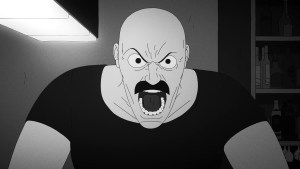
It is true that a lot of my work results in black and white and I’m always convinced that black and white solution suits it best. It’s also true that I’m not very good with color, so maybe it’s an unconscious combination of those two facts. In the case of the Hurikán movie, I wanted to evoke a bit of a film noir atmosphere. I find it amusing how film noir with its strong art style has inspired a certain segment of comic production. The comics then pushed that stylization to an even greater extreme. And then again, it serves as an inspiration for the film. Since our character is originally a comic character and this was his movie debut, it seemed like a fine chance to be part of this inter-media conversation. Especially when Hurikán is rather looser, on the periphery of society, always drunk or at least hungover, wandering in the dark, like so many hard-boiled detectives who end up chasing their own demons instead of the crime. From the beginning, the screenwriter and I wanted to create a story set at night, under the lights of neon, with attributes like a bar fight or a police chase. And at the same time keep it believable in the setting of Prague, which is otherwise a relatively safe city. That’s why there’s no murder or a bank robbery, just heading out into the night for a new keg of beer.
As far as animation is concerned, we wanted to approach – quite ambitiously – the look of the Japanese school of animation, which is known for its relatively high degree of realism. To keep the characters, their appearance and proportions in perspective during their movements – which is quite difficult in classical hand drawn animation – we used 3D models and 3D layouts as a reference for the animation. The goal was to maintain not only realism, but also a certain level of detail that we wanted to draw the viewer into the story. To make the film feel like a trip or an excursion.
Why did you decide to use only a few dialogs?
From the beginning we planned our film for festivals, both Czech and international ones, of which there are many more. Since Czech is not spoken anywhere abroad, this means that subtitles are necessary for the dialogues. And this is especially unfortunate in the case of animated films, because as a viewer you divide your attention between the moving images and the text at the bottom of the screen. Originally, we wanted to make the film completely silent. But because the chosen level of realism is quite high, some situations seemed strange when the characters didn’t speak to each other at all. That’s why there’s a bit of dialogue – to make it believable. But the goal was to keep the dialogues from moving the plot forward and to continue the visual storytelling.
Will Hurikán’s story be continued in film?
I’m currently planning to go back to the comics with Hurikán, but I think the silver screen suits him, so I guess so.
Can you tell me more about yourself and how you came to filmmaking?
I’ve always been into drawing and I’ve always been into movies, so very soon my interest turned to animation as it brings both together. I was lucky that my parents supported me in this direction, so I studied high art school and then animation in college.
Are other projects already planned?
I’m planning the above mentioned Hurikán comic. And if it’s a good one, maybe one day it will be a movie.
Questions asked by Doreen Kaltenecker
Read on the german review of the short film „Hurikán„