
Studium der Kunstgeschichte - Schwerpunkt: Filmgeschichte
(Abschluss 2010 mit der Arbeit "Rembrandt im Spielfilm")
Nebenfächer: Philosophie und Alte Geschichte
- seit 2012: Filmkritikerin bei movieworlds (Kino, DVD, BD, Festivalberichte)
- seit 2015: Blog 'Testkammer' online
- „Als wäre es leicht“ (2025) - 1. April 2026
- Kinostarts 02.04.2026 - 31. März 2026
- Sieben Fragen an Saladin Dellers und Kim Culetto - 30. März 2026
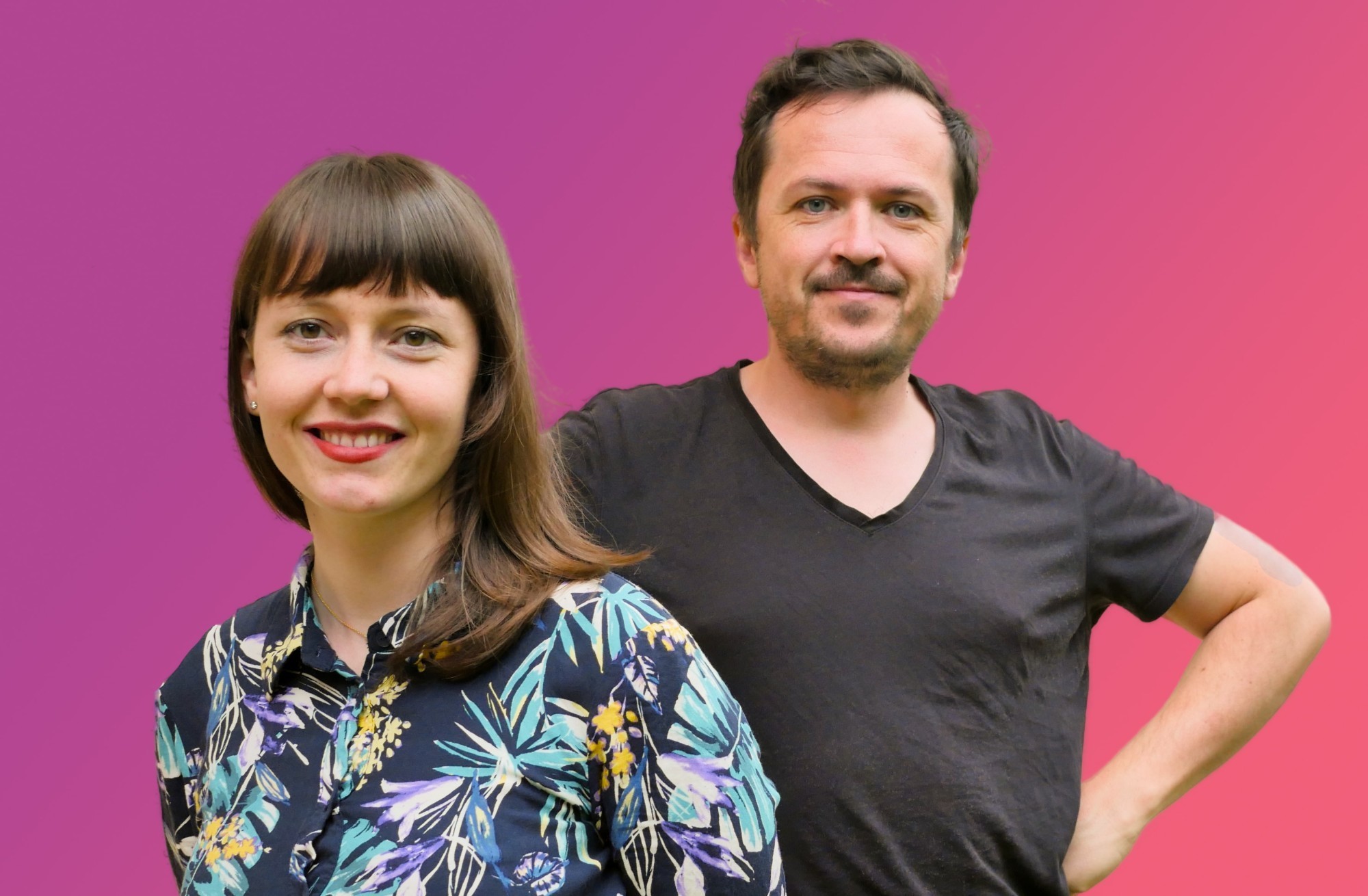 Interview: Im Gespräch mit den beiden Filmemacher:innen Mélody Boulissière und Bogdan Stamatin konnten wir mehr über ihren Kurzfilm „Simply Divine“ (OT: „Pur și simplu divin“) erfahren, der auf dem 67. DOK Leipzig 2024 seine Deutsche Premiere feierte und den mephisto 97.6 Preis gewinnen konnte. Sie erzählen davon, wie die Liebesgeschichte der Großmutter ihren Weg auf die Leinwände gefunden hat, wie die Animationen aus Fotografie und Malerei entstanden und welches Glück sie hatten, dass die Großmutter ihre Geschichte selbst erzählen konnte.
The original english language interview is also available.
Die Geschichte stammt aus der eigenen Familie, richtig? Könnt ihr mir mehr über die Idee erzählen, daraus einen Film zu machen?
Bogdan Stamatin: Ja, tatsächlich handelt es sich um eine Familiengeschichte – genauer gesagt um eine „Oma-Geschichte“. Es ist interessant, dass Großmütter selbst im immer noch sehr patriarchalen 20. Jahrhundert ihre Rolle als Erzählerinnen großartiger Geschichten behalten haben. Die Liebesgeschichte meiner Großmutter 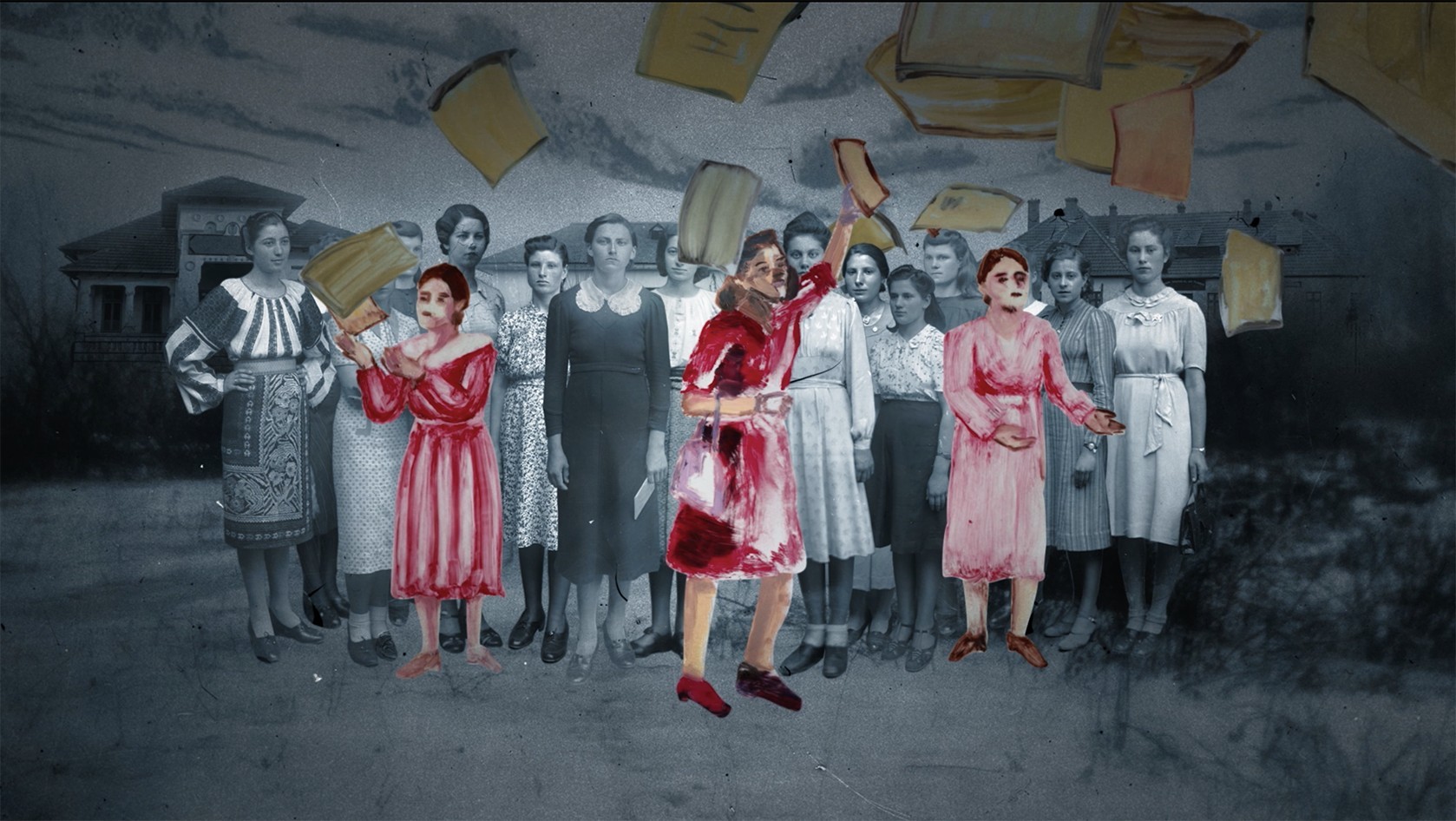 Nușa mit einem Soldaten während des Zweiten Weltkriegs war in meiner Familie wohlbekannt – ein Thema, das wir beim Feiertagsessen immer wieder zur Freude aller aufgegriffen haben. Über die Jahre wurde daraus eher eine Legende, ein Mythos, als ein tatsächlicher Bericht, bis wir sie fast vergessen hatten. Das änderte sich erst vor zehn Jahren, im Jahr 2014, als…
Mélody Boulissière: …als ich auf die Bühne kam. Ich hatte Bogdan Anfang des Jahres in Indien kennengelernt, und er lud mich ein, seine Heimatstadt Câmpulung Moldovenesc im Norden Rumäniens zu besuchen. Dort stellte er mir seine Großmutter vor, die damals 91 Jahre alt war, und vermutlich, um einen guten Eindruck zu machen, bat er sie, mir ihre alte Liebesgeschichte zu erzählen. Spontan nahm er das Ganze mit seiner Kamera auf.
Ein Jahr später verstarb seine Großmutter, und wir durchforsteten all unsere digitalen Erinnerungen an sie – darunter auch „die Liebesgeschichte“. In diesem Moment wurde uns klar, dass wir die ganze Zeit einen Schatz in den Händen hielten. So begannen wir zu überlegen, wie wir daraus einen Film machen könnten.
Wie lange hat die Realisierung des Projektes gedauert? Wie groß war euer Team über die Zeit hinweg und wie habt ihr das Projekt finanziell gestemmt?
MB: Von der ersten „Interview“-Aufnahme mit Oma Nușa bis zur ersten Festivalvorführung vergingen satte zehn Jahre! Zehn Jahre für vierzehn Minuten – könnt ihr euch das vorstellen? Es dauerte etwa vier Jahre, bis das Konzept und die ersten Drehbuchentwürfe entstanden. Am Anfang waren es nur Bogdan und ich, und wir waren beide mit anderen Projekten beschäftigt. Ich beendete gerade meinen Abschlussfilm („Ailleurs“, 2016 in der Cinefondation-Sektion des Cannes-Festivals ausgewählt), während Bogdan ein Filmfestival in seiner Heimatstadt organisierte – in einer Stadt ohne Kinos!
 2018 gewannen wir das NEF-Animationsstipendium in der Abbaye de Fontevraud, und ab da wurde es ernst. Einige Zeit später unterzeichneten wir einen Vertrag mit einem Produzenten, Marc Faye von Novanima, und das Projekt nahm Fahrt auf.
BS: Finanziell sah es lange Zeit schlecht aus, bis es etwas besser wurde. Novanima begann, in Frankreich Fördermittel zu beantragen, und langsam wuchs unsere Zuversicht. Dann stieß ein zweiter Produzent zum Team – Amopix Studio – und später auch Safe Frame aus Rumänien.
MB: In jeder Phase arbeiteten nie mehr als vier Personen gleichzeitig am Film, aber insgesamt bestand das Team, allein für die visuellen Aspekte, aus etwa zwanzig Leuten.
Wo habt ihr euer Material gefunden und wie lange hat die Sichtung und Auswahl gedauert?
BS: Im Jahr 2013 wurde in Rumänien ein Fotoarchiv mit mehr als 5000 Glasplattenfotografien entdeckt, das digitalisiert und gemeinfrei zugänglich gemacht wurde – dank eines engagierten Mannes namens Cezar Popescu. Das Archiv wurde nach seinem Fotografen benannt: Costică 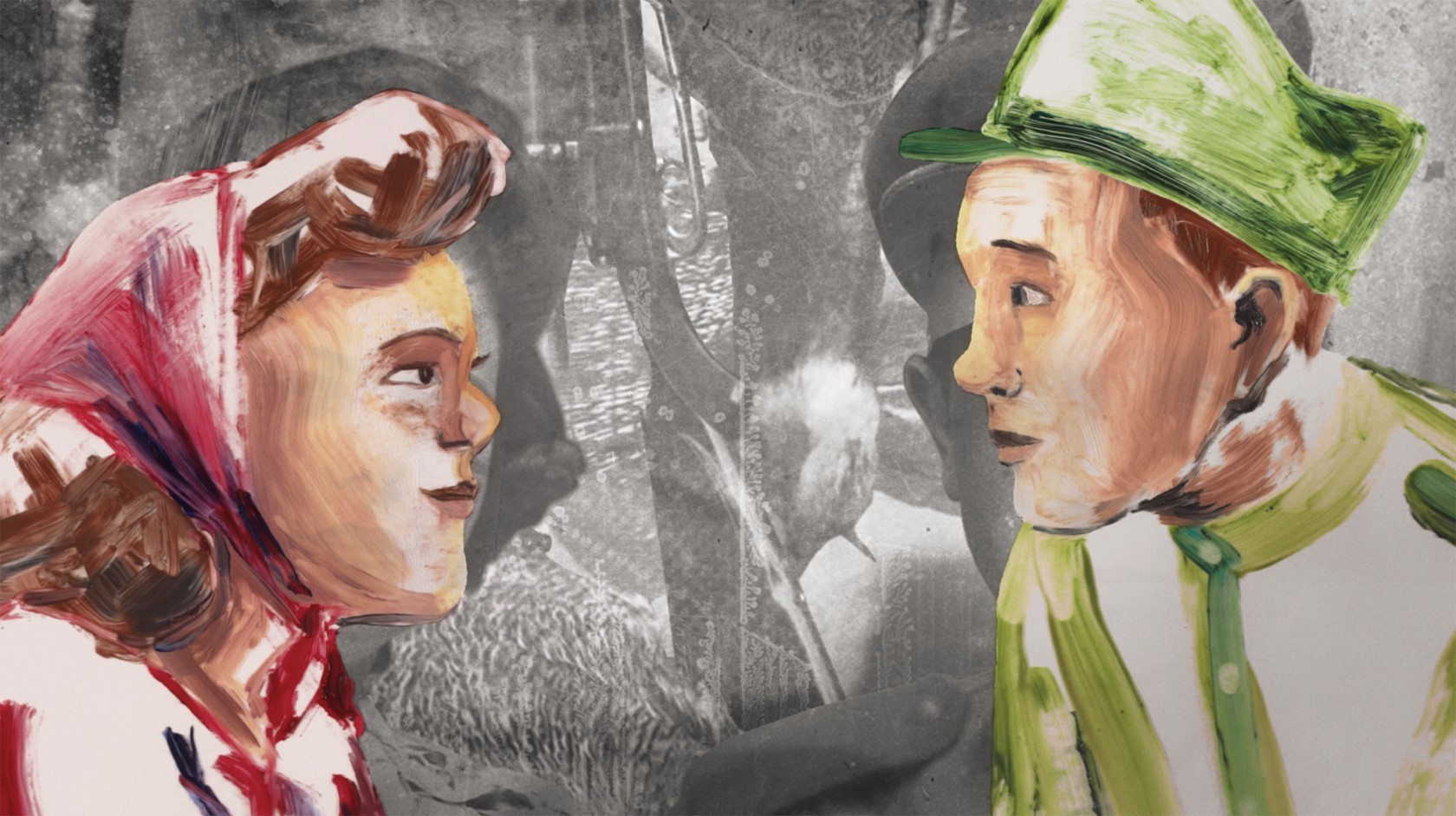 Acsinte. Heute wird es vom Kreismuseum von Slobozia in Rumänien verwaltet. Es besteht hauptsächlich aus einfachen Studio-Porträts, die zwischen 1930 und 1960 aufgenommen wurden. Ihre Besonderheit liegt in ihrer fast magischen Ausdruckskraft – in den Blicken der Menschen, ihren Haltungen, der Alterung der Fotos. Darunter sind Hunderte Porträts von Paaren – Soldaten und jungen Frauen. Wir sahen unsere Darsteller für die Geschichte von Bogdans Großmutter direkt vor uns – hinter den Glasplatten.
MB: Das Muzeul Județean Slobozia gewährte uns freundlicherweise Zugang zu den hochauflösenden Scans des Archivs. Wir erstellten dann ein vollständiges Inventar und kategorisierten die Fotos nach Typ, Geschlecht, Haltung usw. Das war eine höllische Arbeit, kann ich euch sagen – ich war völlig darin vertieft, das passende Foto für jede Szene zu finden.
Die Animationen sind großartig. Könnt ihr mir mehr über die Machart erzählen?
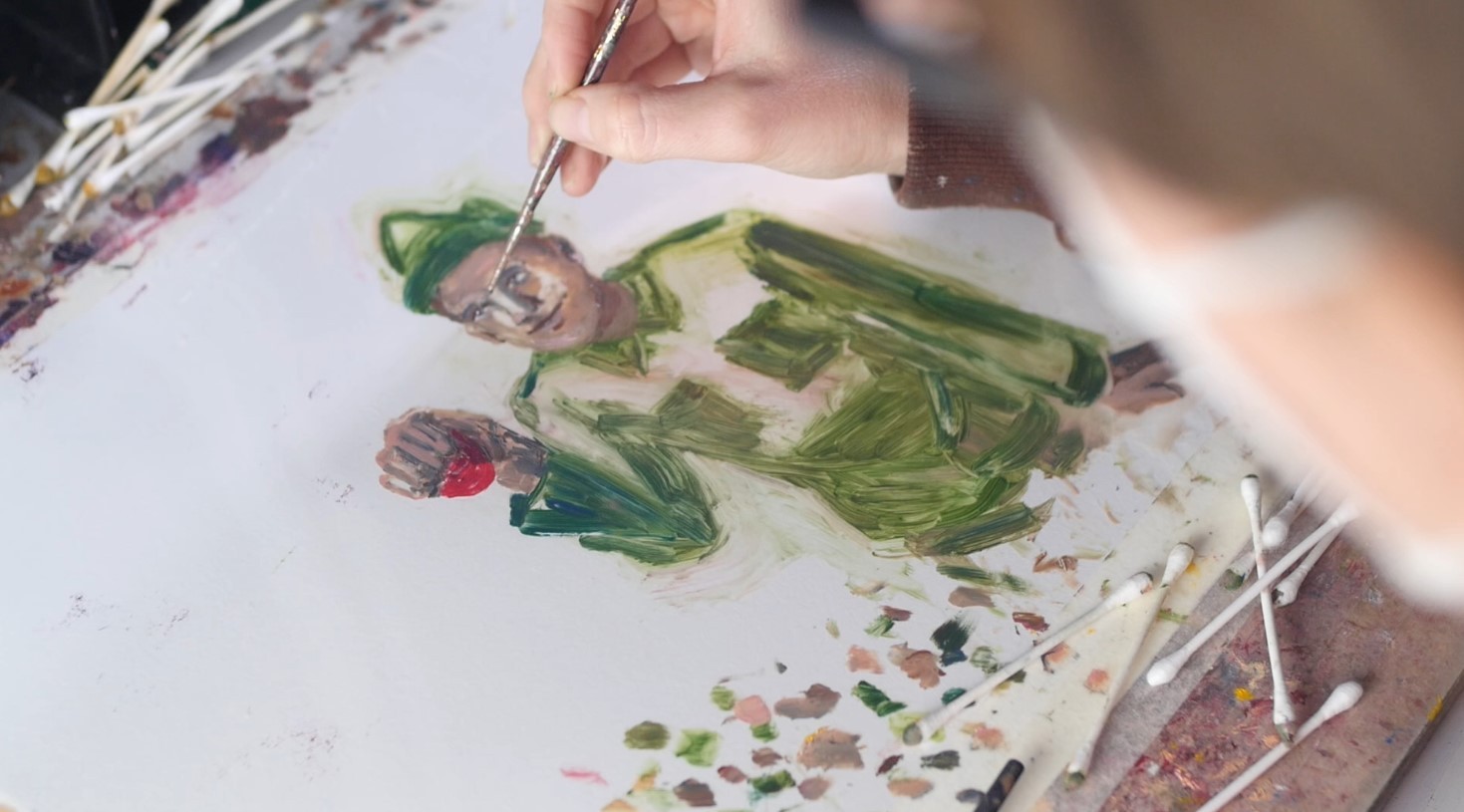
MB: Vielen Dank für das Kompliment – das ist dem gesamten Team zu verdanken! Mein Abschlussfilm „Somewhere“ (2016) kombinierte die Technik der Ölmalerei auf Glas mit komponierter Fotografie – diese Technik war der Ausgangspunkt für „Simply Divine“. Allerdings war der Prozess hier noch komplexer. Ich wollte die gescannten Fotos intakt lassen und musste einen Weg finden, sie nahtlos mit handgemalten Elementen zu verschmelzen.
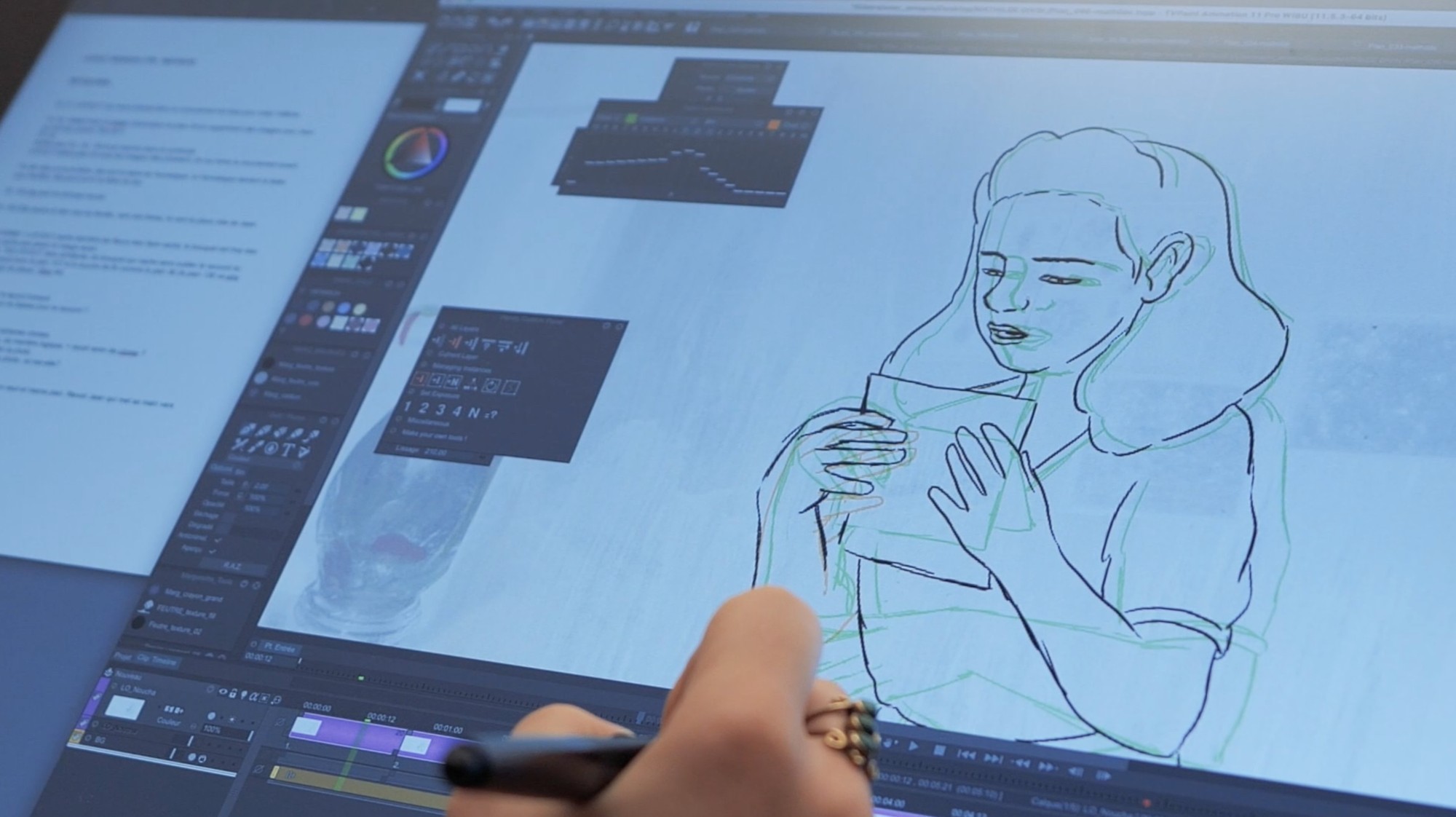
 Zunächst zeichnete Mathilde Poignez alle Figuren des Films mit den Fotos als Referenz. Dann erstellte ein Team grobe Animationen Bild für Bild am Computer. Anschließend übernahm ich diese Animationen, um jedes Bild nachzumalen – ohne mir Sorgen um die Bewegung machen zu müssen, sondern nur um Textur, Licht und Farbe.
Dann kam die Compositing-Künstlerin Rosalie Loncin ins Spiel, die alle handgemalten Bilder mit den Foto-Hintergründen zusammenfügte. Eine kleine Gruppe half uns, die bemalten Elemente freizustellen – ein zeitaufwendiger Prozess.
Im Film gibt es außerdem Blumen – Gladiolen –, die von der Stop-Motion-Künstlerin Charlotte Arene animiert wurden. Dank ihr vermitteln sie das Gefühl von Schmetterlingen im Bauch.
Könnt ihr mir ein bisschen mehr zum Voice-Over erzählen?
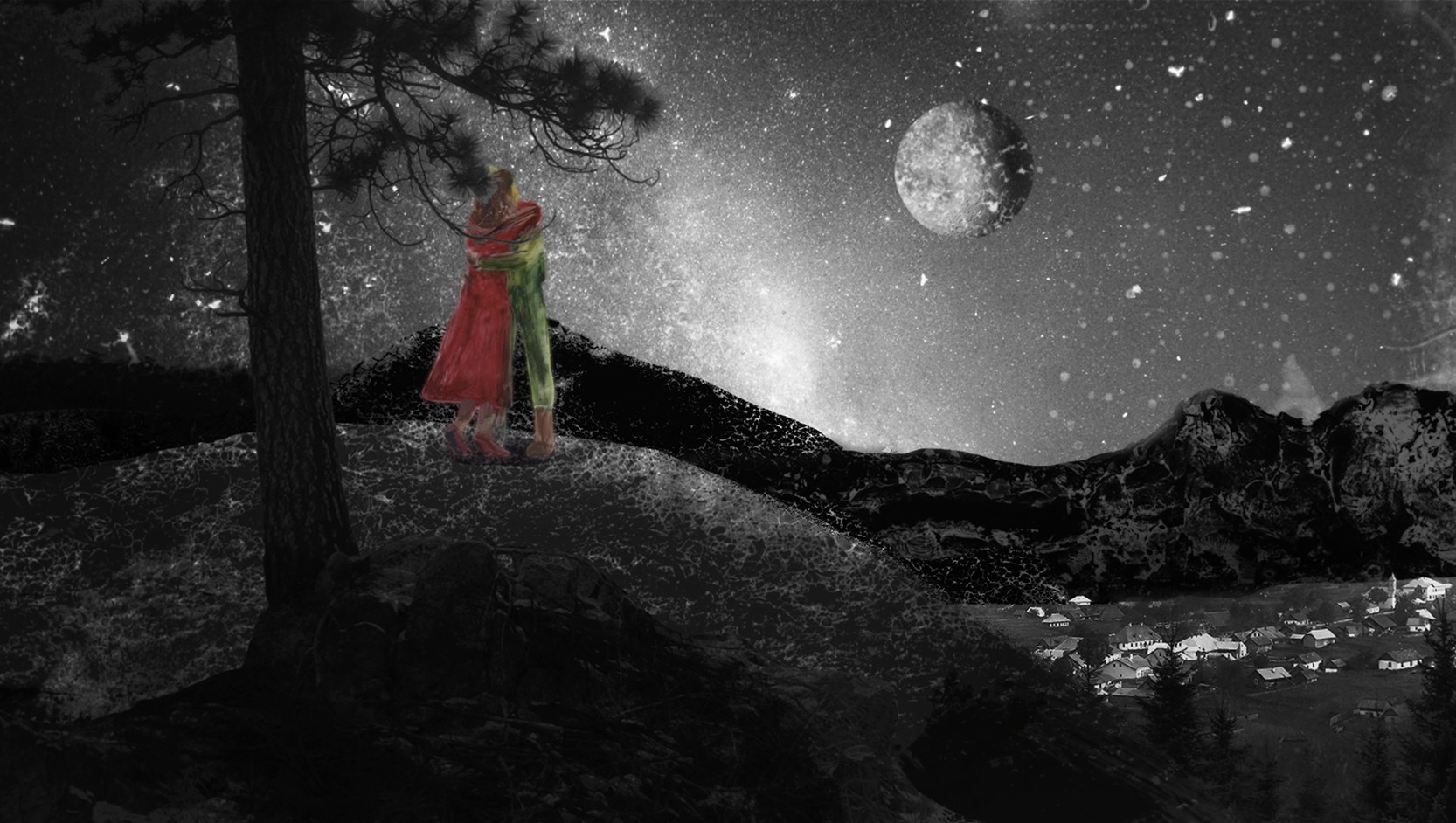 BS: Die Aufnahme von Omas Stimme war alles andere als professionell – und nur dank unserer fantastischen Sound-Profis konnten wir sie verwenden. Ich erinnere mich an einen warmen, aber windigen Sommerabend. Unser Hund bellte gelegentlich, und ich wollte eigentlich nur eine „Familienaufnahme“ als Erinnerung – ohne Hintergedanken an einen Film.
Jahre später dachten wir, dass die Aufnahme unbrauchbar wäre, und erwogen sogar, alles mit einer professionellen Schauspielerin nachzusprechen. Doch am Ende funktionierte es – und jetzt sind wir sehr glücklich darüber, dass Oma, mit 91 Jahren, in ihrer eigenen Stimme von Erlebnissen erzählt, die fast 75 Jahre zurückliegen.
Könnt ihr mir noch ein bisschen mehr von Euch erzählen und wie Ihr zum Film gekommen seid?
 MB: Ich war schon immer fasziniert von Zeichnen und Comics. Mit meinen Eltern reiste ich regelmäßig zum Angoulême-Comicfestival und tauchte in eine Welt aus Farben und Geschichten ein. Später besuchte ich eine Kunsthochschule und dann die École nationale supérieure des arts décoratifs (ENSAD) in Paris. Danach absolvierte ich ein zweijähriges Programm an La Poudrière in Valence. Zurzeit arbeite ich an einer Animationsserie für Kinder namens Patouille, gemeinsam mit meinen Co-Regisseurinnen Inès und Clémentine Campos, produziert von Miyu Productions.
BS: Ich habe Journalismus in Bukarest studiert und viele Jahre als Fotojournalist gearbeitet, bevor ich mit einem Master in Production Design an der KADK in Kopenhagen zum Film wechselte. (Wir beide haben übrigens ein Austauschsemester am NID in Indien gemacht – dort haben wir uns kennengelernt. 😉) Ich habe einige Kurzfilme produziert, ein Filmfestival gegründet (Câmpulung Film Fest, mittlerweile im 10. Jahr) und vier Jahre lang ein ethnografisches Museum geleitet.
Sind bereits neue Projekte geplant?
MB: Natürlich! Wir kehren zu Standbildern und Zeichnungen zurück und arbeiten an einem Comic über Bogdans Kindheit im kommunistischen Rumänien und seinen Übergang in den Kapitalismus.
BS: Was könnte da schon schiefgehen? 🙂
Die Fragen stellte Doreen Kaltenecker
Übersetzung von Michael Kaltenecker
Lies auch die Rezension des Kurzfilms „Simply Divine“
Interview: In our conversation with the two filmmakers Mélody Boulissière and Bogdan Stamatin, we learned more about their short film „Simply Divine“ (OT: „Pur și simplu divin“), which celebrated its German premiere at the 67th DOK Leipzig 2024 and won the mephisto 97.6 award. They talk about how the grandmother’s love story found its way onto the screens, how the animations were created from photography and painting and how lucky they were that the grandmother was able to tell her story herself.
The story comes from your own family, right? Can you tell me more about the idea of turning it into a movie?
Bogdan Stamatin: Yes, indeed, this is a family story, more precisely a „grandma story“. It is quite interesting how, even in a still very patriarchal XXth century, grandmas have retained their place as generators of amazing stories. Grandma Nușa’s love story with a soldier during the Second World War was well known in my family, the stuff we would revisit at holiday dinner get-togethers, to the delight of everybody. The years turned it into more of a legend, more of a myth than a real account, until we almost forgot about it. That is until ten years ago, in 2014, when…
Mélody Boulissière: …when I came into the picture. Having met Bogdan in India earlier that year, he invited me to visit his native town of Câmpulung Moldovenesc, in Northern Romania. There he presented to me his grandma, who was 91 at the time, and, probably to make a good impression, asked her to tell me her old love story, which he proceeded to record with his camera on a whim.
A year later, grandma passed away and we revisited all sorts of digital memories of her, including „the love story“. We immediately understood that we actually had a treasure in our hands all this time, so we started exploring how we could turn this into a film.
How long did it take to realize the project? How big was your team over time? How did you manage the project financially?
MB: Start to finish, from the „interview“ with grandma Nușan until the first festival screening, we’re looking at ten long years! Ten years for fourteen minutes, can you imagine? We took about four years for the treatment and the first screenplay drafts to emerge. In the beginning it was just the two of us, Bogdan and me, and we were both caught up in different other projects. I was finishing my graduation film („Ailleurs“, selected in the Cinefondation section of Festival de Cannes 2016) and Bogdan was setting up a film festival back in his hometown (in a town with no cinemas). In 2018 we won the NEF Animation residency at Abbaye de Fontevraud and this is the moment it got serious. Some time later we signed a deal with a producer, mr. Marc Faye of Novanima and work started to pick up speed.
BS: Financially things were bad until they got a little better. Novanima started to apply for funding in France and optimism was growing. Then a second producer came into the team, Amopix Studio and later Safe Frame from Romania.
MB: For each stage, there were never more than four people working at the same time, but overall, just for the visuals, the team consisted of about twenty people.
Where did you find your material and how long did it take to view and select it?
BS: Around 2013, a photo archive of more than 5000 glass-plate photos was discovered, in Romania, which got digitized and offered in public domain, by a dedicated fellow called Cezar Popescu. The archive took the name of its photographer: Costică Acsinte and is nowadays being cared for by the county museum of Slobozia, in Romania. It consists mainly of simple studio portraits, taken between 1930 and 1960. What makes them truly special is their magical power of transcendence: the people’s regards, their postures, the photos‘ degradation and decay. Among them, there’s hundreds of portraits of couples, made of soldiers and young women. We saw the actors for grandma’s story right there, looking at us from behind the glass plates.
MB: The Muzeul Județean Slobozia was kind enough to offer us access to the high-res scans of the archive and we then proceeded to a full inventory, categorizing them according to type, sex, posture, etc. It was a hell of a job, I can tell you that, I was very absorbed by trying to find which photo could fit where.
The animations are great. Can you tell me more about how they were made?
MB: Thank you for the compliment; it’s all thanks to the entire team. My graduation film, Somewhere, 2016, used a technique of oil painting on glass plates combined with composited photography, which became the starting point for the technique in „Simply Divine„. However, the process for „Simply Divine“ was more complex. I wanted to keep the scanned photos intact, so we had to figure out how to blend the scanned photographs with the hand-painted elements seamlessly.
So…first, Mathilde Poignez drew all the characters in the film, using photos as references. Then, the rough animations were created frame by frame on the computer by a team. Afterward, I took over these rough animations to repaint each frame. At that stage, I no longer needed to worry about the movement, only about the painting – focusing on the texture, shading, lighting, and color.
Next, the compositing artist Rosalie Loncin took charge of assembling all the hand-painted frames and photo-based backgrounds, digitally blending the painting with photography. A small team helped us cut out the painted elements, which was a lengthy process.
The film also features flowers – gladioli – which were brought to life by a talented stop-motion animator named Charlotte Arene. It’s thanks to her that the animated flowers evoke a sense of butterflies in the stomach.
Can you tell me a bit more about the voice-over?
BS: The recording of grandma’s voice narrating the story was nothing close to professional, and it is only thanks to the wonderful sound professionals in our team that we managed to make it work. I remember it was a warm but windy summer evening, our dog was barking from time to time, and at the moment I only wanted a „family recording“ to remember us of grandma and nothing else. Years later we thought that the voice would be unusable, and at some point we even thought of maybe re-recording everything with a professional actress. Thankfully in the end it worked and now we’re very happy to have grandma’s voice, at 91 years old, telling stories which happened almost 75 years prior, in her own voice
Can you tell me a bit more about yourselves and how you came to making films?
MB: Growing up I was fascinated with drawing and bandes-dessinees or comics. I used to travel to the Angouleme BD festival with my parents and plunge myself in drawings, colors and stories. I later followed an arts high school and the School of Applied Arts, ENSAD in Paris. I followed that with a two year program at La Poudriere, in Valence. I’m currently working on an animation series for children, called Patouille, together with two friends co-directors Inès and Clémentine Campos produced by Miyu Productions.
BS: I graduated from Journalism Studies in Bucharest, Romania and worked for many years as a photojournalist, before moving into film with a masters degree in Production Design from KADK in Copenhagen, Denmark. (We actually both took exchange semesters at NID, Ahmedabad, India and that’s how we met ;). I self produced some shorts in the meantime, I founded and directed Câmpulung Film Fest, a film festival now in its 10th year and managed an ethnography Museum for four years. Currently I’m running an anthropological video research/experiment where I’m filming the same group of around 80 people, once every ten years, answering a simple question: „what is important“.
MB: What I love about this film is that we each blended our obsessions—mine being painting, color, and animation, and Bogdan’s being video, history, and archives.
Are there any new projects planned?
MB: Of course! But we’re moving back to still pictures and drawings. We’re currently outlining a BD following Bogdan’s childhood in communist Romania and his adventurous transition into capitalism!
BS: What could go wrong? 🙂
Questions asked by Doreen Kaltenecker
Read on the german review of the short film „Simply Divine„