
Studium der Kunstgeschichte - Schwerpunkt: Filmgeschichte
(Abschluss 2010 mit der Arbeit "Rembrandt im Spielfilm")
Nebenfächer: Philosophie und Alte Geschichte
- seit 2012: Filmkritikerin bei movieworlds (Kino, DVD, BD, Festivalberichte)
- seit 2015: Blog 'Testkammer' online
- Jetzt in der Mediathek! – Der Film „Gelato – Die sieben Sommer der Eisliebe“ - 22. März 2026
- Sechs Fragen an Stella Deborah Traub - 21. März 2026
- „Schwanensee“ (2025) - 21. März 2026
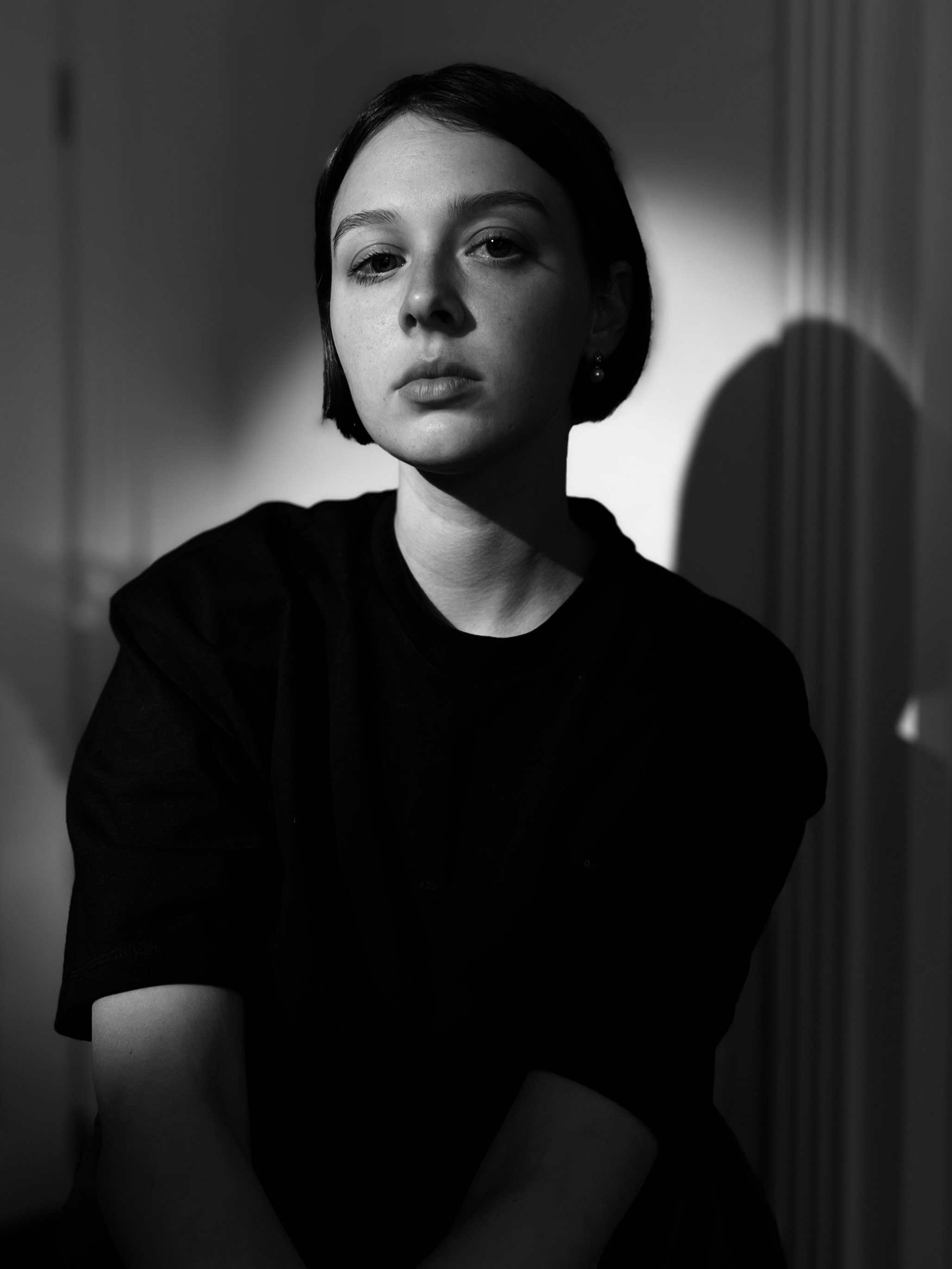 Interview: Im Gespräch mit der ukrainischen Animationskünstlerin und Filmemacherin Anastasia Falileieva konnten wir mehr über ihren Kurzfilm „I Died in Irpin“ erfahren, der im Internationalen Wettbewerb des 37. Filmfest Dresden 2025 lief und den „voll politisch“ – Kurzfilmpreis für demokratische Kultur gewinnen konnte. Sie erzählt, warum sie die persönliche Geschichte als Kurzfilm erzählen musste, wie die Animationen sich dem Thema anpassen und warum sie selbst das Voice-Over eingesprochen hat.
The original english language interview is also available.
Warum hast Du beschlossen, Deine persönliche Geschichte als Kurzfilm zu erzählen?
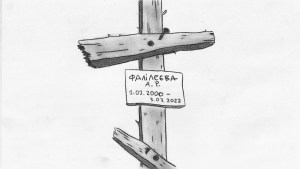
Ich verwandle Dinge, die mich beschäftigen, immer in Filme. Im Fall von Irpin habe ich zunächst einfach angefangen, alles mit meiner Kamera zu filmen, um mit dem Surrealismus der Situation fertig zu werden. Ich beschloss, dass ich, wenn ich jetzt auf dem Schlachtfeld nicht helfen konnte, versuchen würde, alles zu dokumentieren, und vielleicht würde mir etwas Wichtiges für Journalisten oder Behörden vor die Linse kommen. Aber je länger ich in Irpin blieb, desto mehr wurde mir klar, dass das Filmen extrem gefährlich ist, nicht nur wegen der Besatzung und der Aufbewahrung des Filmmaterials, sondern auch beim Verlassen der Stadt – die Russen suchen immer nach Journalisten, um sie zu töten und ihre Kameras und SD-Karten zu zerstören, damit es keine Beweise für ihre Kriegsverbrechen gibt. Ich empfinde die Welt nur durch Animation, daher kam es mir nicht in den Sinn, „I Died in Irpin“ als „Live-Videodokumentation“ zu drehen. Das Filmmaterial diente nur der Klarheit meiner Erinnerungen und der Bestätigung der Dinge, die mir widerfahren sind. So bin ich mir zu 100% sicher, dass ich eine präzise Geschichte erzähle. An dem Tag, als ich in Irpin festsaß, wurde mir klar, dass dies vielleicht eine Geschichte ist, die erzählt werden muss, aber ich wusste noch nicht, wie sie sich entwickeln würde. An dem Tag, als wir die Stadt unter schwerem Beschuss verließen, versprach ich mir selbst: Wenn ich überlebe, muss ich diesen Film machen. Dieser Film hat mich buchstäblich gerettet. Er hat mich in vielerlei Hinsicht geheilt und mir Raum gegeben, mein Trauma des Krieges und der grausamen Beziehung zu verarbeiten. Er hat so viele Aspekte davon geklärt, die für mich in dieser Situation unsichtbar waren.
Hast Du das Voice-Over selbst eingesprochen – was lag Dir dabei am Herzen?
 Maur Film
 Dieser Film ist ein intimes Tagebuch, sehr ehrlich und manchmal zu schmerzhaft, um es zuzugeben. Aber all das laut auszusprechen bedeutete für mich, all meine Ängste zu überwinden. Die Angst vor der Verurteilung durch meinen Ex und seine Familie, die Angst, nie wieder mit meiner eigenen Familie in Kontakt zu treten, und die Angst, von russischen Soldaten getötet zu werden, und vieles mehr. Es war für mich unerlässlich, den Film auf Ukrainisch zu vertonen. Um ihn so zu gestalten, wie ich ihn empfand, ohne Kunstgriffe oder Schauspielerei.
Die Animationen fangen auf vielerlei Weise den Schrecken des Krieges gelungen ein. Kannst Du mir zu der visuellen Umsetzung erzählen?
 Maur Film
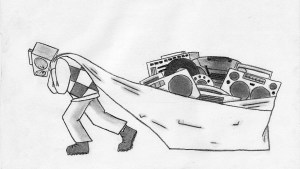
 Ich habe mich für Kohle und Papier für „I Died in Irpin“ entschieden, weil diese Technik meinen damaligen Zustand am besten widerspiegelte. Kohle ist ein rohes, zerbrechliches, unordentliches Material – sie hinterlässt Spuren, auch wenn man das gar nicht will. Sie verschmiert, bröckelt, zerbricht – genau wie der innere Zustand eines Menschen, der ein Trauma erlebt hat. Ich wollte keinen visuell „schönen“ Film machen. Mir war es wichtig, dass die Form zum Inhalt passte – dass der Zuschauer die Angst, die Instabilität und die Unklarheit spüren konnte. Mit Kohle zu zeichnen, ermöglicht es einem, etwas Vergängliches und Vorübergehendes auszudrücken, etwas, das im Begriff ist, zu verschwinden – wie Erinnerungen, wie Menschen, die nicht mehr da sind. Es ist auch eine manuelle, analoge Technik – sie erfordert Zeit, Geduld und physische Präsenz. Das war mir wichtig: eine Spur des Körpers, der Berührung, der menschlichen Wirkung im Film zu hinterlassen.
Kannst Du mir noch ein bisschen mehr von Dir erzählen und wie Du zum (Animations-)Film gekommen bist?
 Maur Film
 Ich hatte kein Interesse daran, in der Schule zu lernen, also verbrachte ich die meiste Zeit während des Unterrichts mit Zeichnen und wurde dafür ständig von den Lehrern gescholten. Als ich 12 war, bekam ich ein iPad mit einer Stop-Motion-App geschenkt und mir wurde klar, dass ich meine Zeichnungen und Barbiepuppen in Animationen verwandeln konnte. Seitdem ist es für mich langweilig geworden, Bilder ohne Bewegung zu erstellen. Meine ersten Stop-Motion-Animationen entstanden also mit Barbies und einigen Papierausschnitten. Von diesem Moment an wollte ich nichts anderes mehr machen. Ich begann, selbst Draht-Stop-Motion-Puppen herzustellen und probierte verschiedene Techniken aus, wobei ich von der einfachen iPad-Ausstattung zu Dragonframe und einer Kamera wechselte. Im Alter von 16 Jahren, direkt nach meinem Schulabschluss, schrieb ich mich an der Kyiv National Karpenko-Kary University of Cinema ein, um unter der Leitung von Oleh Pedan – einem berühmten ukrainischen Stop-Motion-Animator und Puppenspieler – Animation zu studieren. Diese frühen lustigen und unbeholfenen Animationen verschafften mir einen großen Vorsprung und waren der Grund, warum mein Lehrer mich in so jungen Jahren an der Universität aufnahm.
Sind bereits neue Projekte geplant?
 Maur Film
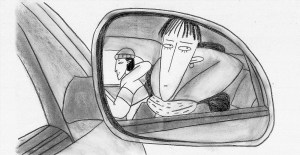
 Kürzlich habe ich von der dezentralen Bilderplattform eine Auszeichnung für meinen neuen Kurzfilm mit dem Titel „Oasis of Good Things“ erhalten. Es ist eine herzerwärmende Animation über die süße Traurigkeit des unvermeidlichen Vergehens der Zeit. Ein Film über meine gemütliche kleine Heimatstadt und meine Kindheit. Das Thema, Erinnerungen lebendig zu halten, ist ein zentraler Bestandteil meiner gesamten künstlerischen Arbeit. Ich habe ständig Angst, die kostbare Zeit mit meinen Lieben zu verpassen. Ich habe das Gefühl, dass der Tod langsam in mein Leben kriecht, während alle und alles älter werden. Ich möchte meine Oase der guten Dinge bewahren, bevor es zu spät ist.
Die Fragen stellte Doreen Kaltenecker
Übersetzung von Michael Kaltenecker
Lies auch die Rezension des Kurzfilms „I Died in Irpin“
Interview: In our conversation with Ukrainian animation artist and filmmaker Anastasia Falileieva, we were able to find out more about her short film „I Died in Irpin„, which screened in the International Competition of the 37th Filmfest Dresden 2025 and won the „voll politisch“ – Short Film Award for Democratic Culture. She explains why she had to tell her personal story as a short film, how the animations adapt to the subject matter and why she recorded the voice-over herself.
Why did you decide to tell your personal story as a short film?
I always transform things that bother me into films. In the case with Irpin, at first I just started to film everything with my camera, just to cope with the surrealism of the situation. I decided that if I couldn’t be helpful now on the battlefield – I will try to document everything, and maybe something important for journalists or authorities will come across my lens. But the longer I stayed in Irpin the more I understood that filming is extremely dangerous, not only in terms of being in occupation and keeping that footage but also at the moment of leaving the city – russians always are searching for journalists to kill and their cameras and sd cards to break – so there will be no evidence of their war crimes. I feel the world through animation only so there was no idea to make „I Died in Irpin“ a “live video documentary”, the footage was only for memory clarity and confirmation of things that happened to me. So I will be 100% sure I’m telling a precise story. The day I got trapped in Irpin I understood – that may be a story that must be told, but I didn’t know how it would unfold yet. The day we were leaving the city under the heavy shelling I promised myself – If I survive I must make this film. This film saved me literally. It healed me in so many ways and gave me room for processing my trauma of war and cruel relationship. It cleared so many aspects of it, which were invisible for me inside the situation.
You recorded your own voice – why did you decide on that approach and was that important to you?
This film is an intimate diary, very sincere and sometimes too painful to admit. But saying all this out loud meant for me to overcome all my fears. The fear of judgment from my ex and his family, the fear of never reconnecting with my own family and the fear of being killed by Russian soldiers and more. It was essential for me to voiceover it in Ukrainian. To make it the way I felt it, with no artistry or acting.
The animations successfully capture the horror of war in many ways. Can you tell me about the visual approach?
I chose charcoal and paper for „I Died in Irpin“ because that technique most accurately reflected the state I was in at the time. Charcoal is a raw, fragile, messy material — it leaves marks even when you don’t intend it to. It smudges, it crumbles, it breaks — just like the inner state of someone who has experienced trauma.I didn’t want to make a visually “beautiful” film. It was important to me that the form matched the content — that the viewer could feel the anxiety, instability, and lack of clarity. Drawing with charcoal allows you to express something ephemeral and temporary, something that’s about to vanish — like memory, like people who are no longer here. It’s also a manual, analog technique — it requires time, patience, and physical presence. That mattered to me: to leave a trace of the body, the touch, the human impact in the film.
Can you tell me a bit more about yourself and how you got into (animated) film?
I wasn’t interested in studying at school, so I spent most of my time drawing during classes and constantly got scolded by teachers for it. When I was 12, I received an iPad with a stop-motion app as a gift, and I realized that I could turn my drawings and Barbie dolls into animation. Since then, it has become boring for me to create pictures without movement. So my first stop-motion animations were made with Barbies and some papercuts. From that moment on, I didn’t want to do anything else. I started making wire stop-motion puppets by myself and tried different techniques, switching from the simple ipad setup to a Dragonframe and camera. At the age of 16, right after finishing school, I enrolled in the Kyiv National Karpenko-Kary University of Cinema to study animation under supervision of Oleh Pedan – Ukrainian famous stop motion animator and puppeteer. Those early funny and clumsy animations gave me a big head start and were the reason my teacher accepted me at the university at such a young age.
Are there any new projects planned?
Recently I received an award from Decentralized pictures platform for my new short film named “Oasis of good things”. It’s a heart warming animation about the sweet sorrow of the inevitable passage of time. A film about my cozy little hometown and childhood years. The theme of keeping memories alive is a key plot of my whole artistic practice. I fear to miss the precious time with my loved ones all the time. I feel like death is crawling into my life slowly as everybody and everything gets older. I want to preserve my oasis of good things until it’s not too late.
Questions asked by Doreen Kaltenecker
Read on the german review of the short film „I Died in Irpin„