
Studium der Kunstgeschichte - Schwerpunkt: Filmgeschichte
(Abschluss 2010 mit der Arbeit "Rembrandt im Spielfilm")
Nebenfächer: Philosophie und Alte Geschichte
- seit 2012: Filmkritikerin bei movieworlds (Kino, DVD, BD, Festivalberichte)
- seit 2015: Blog 'Testkammer' online
- Acht Fragen an Idir Serghine - 16. April 2026
- „Oni“ (2025) - 16. April 2026
- Kinostarts 16.04.2026 - 15. April 2026
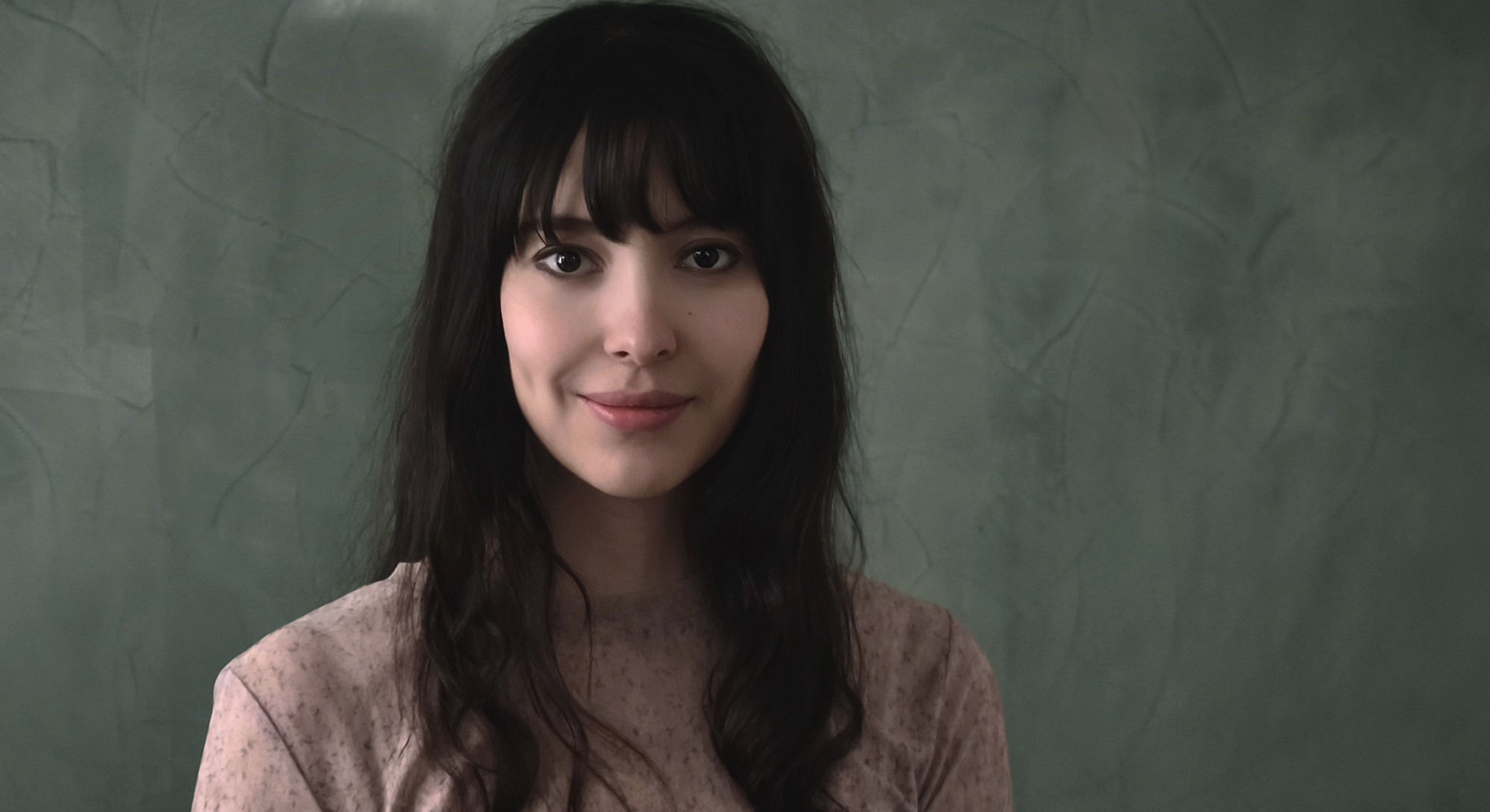 Interview: Im Gespräch mit der kolumbianischen Regisseurin María Cristina Pérez konnten wir mehr über ihren Kurzfilm „Once in a Body“ (OT: „Una vez en un cuerpo“) erfahren, der auf dem 68. DOK Leipzig 2025 mit dem ‚mephisto 97.6 Preis‘ ausgezeichnet wurde, welche Erfahrungen und Botschaften in dem Film stecken und ob sie die Möglichkeit in Betracht zieht, dass der Film auch didaktisch eingesetzt werden kann.
The original english language interview is also available.
Wie ist die Idee zu Deinem Kurzfilm entstanden?
Der Kurzfilm entstand vor einigen Jahren mit der Absicht, die Stereotypen zu untersuchen, welche die Gesellschaft rund um den weiblichen Körper konstruiert, und wie diese Vorstellungen unweigerlich die Art und Weise prägen, wie wir uns selbst sehen. Ich wollte einen Film für viele Menschen in meinem Umfeld drehen, von denen ich weiß, dass sie mit ihrem Körper und allem, was sie durch ihn erlebt haben, zu kämpfen haben. Aus diesem Grund reizte mich die Idee, den Körper in den Mittelpunkt zu stellen, als Spiegelbild all dessen, was wir leben und erdulden, und ihm damit eine Form zu geben, die die Zerbrechlichkeit und Intimität der Frau widerspiegelt.
Die handgemalten Animationen sind ansprechend und assoziativ. Kannst Du mir mehr dazu erzählen? Was lag Dir bei der Umsetzung am Herzen?
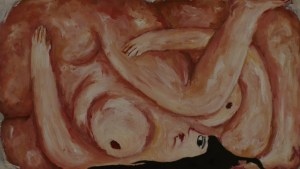
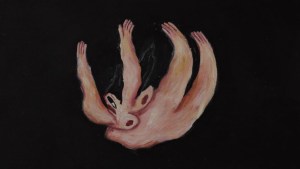
 Von Anfang an war mir klar, dass der Körper im Mittelpunkt stehen musste, nicht als feste Form, sondern als etwas, das sich durch die Erfahrungen der Protagonistin verändert. Bei der Festlegung des Animationsstils war das Kernkonzept, das Morphing zu einer seiner zentralen Säulen zu machen; es wurde zu der Möglichkeit, der Selbstwahrnehmung der Protagonistin eine physische Form zu geben. Es war wichtig, eine Reise nach innen zu evozieren, hin zu dem Unbekannten und manchmal auch hin zu dem Monströsen.
Gleichzeitig war es für die visuelle Identität des Films von grundlegender Bedeutung, jeden einzelnen Frame in Öl zu malen: Ölfarbe bietet eine unverwechselbare Textur und Vibration, die nicht reproduziert werden kann. Ich wollte, dass die Bilder in ihrer Materialität lebendig wirken, dass sie das Gewicht und die Präsenz der Textur, die Dicke der Farbe und das Gefühl jedes einzelnen Pinselstrichs, der auf der Oberfläche zittert, vermitteln. Diese ständige Vibration von Frame zu Frame spiegelt die Geschichte selbst wider: pulsierend, viszeral und zutiefst sinnlich.
Wie lange hat die Realisierung gedauert und wie groß war Dein Team?
Ich begann Anfang 2022 mit dem Schreiben des Drehbuchs, und die Produktion dauerte etwas mehr als zwei Jahre. Der Film wurde mit einem Team von etwa 20 Personen gedreht, die während des gesamten Produktionsprozesses zusammengearbeitet haben.
Was war Dir auf der auditiven Ebene wichtig?
 Dies ist immer ein entscheidender Teil des Prozesses. Zunächst möchte ich die unglaubliche Arbeit des Komponisten Daniel Jones Cozzarelli hervorheben. Für mich ist er einer der talentiertesten Musiker Kolumbiens und ein guter Freund. Wir hatten bereits bei meinem vorherigen Film zusammengearbeitet, und ich wollte, dass er auch die Musik für „Once in a Body“ komponiert. Die Musik musste eine breite Palette von Emotionen ansprechen, und Daniels Ansatz war dafür perfekt geeignet. Er begann damit, den richtigen Ton zu suchen, und formte ihn mit einer Präzision, die mich noch immer beeindruckt. Er schuf Kompositionen voller Ebenen, und seine Liebe zum analogen Klang passte wunderbar zu dem Film, der selbst vollständig analog ist.
Ich möchte auch das fantastische Sounddesign von Sinsonte Estudio erwähnen, mit denen ich bereits zuvor zusammengearbeitet hatte. Ihre Arbeit war unglaublich detailreich und schuf die Klangwelten in der fragmentierten Struktur des Films. Besonders gefiel mir die Subtilität, mit der sie den Klang des Wesens im Inneren der Frau und die Geräusche, die ihre Verwandlungen begleiten, gestalteten. Die Herausforderung bestand darin, ein Gleichgewicht zu finden – etwas zu Dunkles oder zu Monströses zu vermeiden und gleichzeitig den Klang im gleichen Geist wie die Musik evokativ zu halten. Sinsonte gelang dieses Gleichgewicht perfekt und verlieh dem Film einen Ton, der sensibel und geheimnisvoll ist, ohne vollständig in Horror abzugleiten.
Und zu guter Letzt wurde die Erzählstimme von der kolumbianischen Schauspielerin Sara Isabella Martínez gesprochen, mit der ich auch schon bei meinem letzten Kurzfilm zusammengearbeitet habe. Es war mir eine große Freude, wieder mit ihr zusammenzuarbeiten. Ich hatte sie von Anfang an im Sinn; obwohl ich mir zwischendurch auch andere Stimmen angehört habe, bin ich immer wieder zu ihr zurückgekommen. Ihre Stimme hat etwas Leichtes und Warmes, und wenn man ihr zuhört, vermittelt sie so viel mit so viel Subtilität. Sie kann mühelos ihren Tonfall ändern, aber was am meisten auffällt, ist ihre Fähigkeit, mit sehr wenig Aufwand tiefe Emotionen zu wecken. Ihre Präsenz in dem Film ist unglaublich kraftvoll.
Deine Botschaft ist wohltuend und berührt. Ich wünschte, mehr (junge) Menschen könnten deinen Film sehen. Hast Du Pläne den Film auch didaktisch einzusetzen?
Ich würde mich auch sehr freuen, wenn mehr junge Menschen den Film sehen würden. Ich habe das Gefühl, dass sie sich tief mit ihm verbunden fühlen und eine besondere Sensibilität für die darin behandelten Themen haben. Tatsächlich habe ich während der gesamten Festivalreise festgestellt, dass er vor allem bei jüngeren Zuschauern und insbesondere bei jungen Frauen Anklang findet. Ich würde mich auch sehr freuen, wenn er für Bildungszwecke genutzt werden könnte. Kino kann uns helfen, einander zu verstehen und Menschen daran erinnern, dass sie nicht allein sind. Das war eine der Motivationen hinter dem Kurzfilm, daher hoffe ich sehr, dass er seinen Weg in Bildungsräume findet, wo er Gespräche anregen und ein Gefühl der Verbundenheit schaffen kann.
Sind bereits neue Projekte geplant?
 Ich arbeite gerade an meinem ersten Spielfilm mit dem Titel „My Dad the Truck“ (auf Spanisch „Mi papá el camión“). Es handelt sich um einen Spielfilm für die ganze Familie, der die emotionale Reise eines kleinen Mädchens und ihres Vaters durch seltsame und absurde Orte erzählt, auf der sie versuchen, ihren Platz in der Welt zu finden. Es ist eine Coming-of-Age-Geschichte mit einem Hauch von magischem Realismus. Der Film wird als Animationsfilm in einer Mischtechnik gedreht, die manuelle Arbeit mit digitalen Werkzeugen kombiniert. Es handelt sich um eine Koproduktion meiner Firma Pez Dorado Animaciones aus Kolumbien, Sacrebleu Productions aus Frankreich und Sultana Films aus Spanien. Wir hoffen, den Film 2028 veröffentlichen zu können.
Die Fragen stellte Doreen Kaltenecker
Übersetzung von Michael Kaltenecker
Lies auch die Rezension des Kurzfilms „Once in a Body“
Interview: In our conversation with Colombian director María Cristina Pérez, we learned more about her short film „Once in a Body“ (OT: „Una vez en un cuerpo“), which was awarded the „mephisto 97.6 Prize“ at the 68th DOK Leipzig 2025, which was awarded the ‚mephisto 97.6 Prize‘. We also discussed the experiences and messages conveyed in the film and whether she considers the possibility of using the film for educational purposes.
How did you come up with the idea for your short film?
The short film began several years ago with the intention of exploring the stereotypes that society constructs around the female body, and how those ideas inevitably shape the way we see ourselves. I wanted to make a film for many of the close people in my life who I know struggle with their bodies and with everything they’ve experienced through them. Because of that, I was drawn to the idea of placing the body at the center, as a reflection of everything we live and endure, and giving form to female fragility and intimacy through it.
The hand-drawn animations are appealing and evocative. Can you tell me more about them? What was important to you in the production process?
From the very beginning, I knew the body had to be at the center, not as a fixed form, but as something that transforms through the protagonist’s experiences. When determining the animation style, the core concept was to make morphing one of its central pillars; it became the way to give physical form to the protagonist’s self-perception. It was important to evoke a journey inward, toward what is unknown, and sometimes toward what is monstrous.
At the same time, painting each frame in oil was fundamental to defining the film’s visual identity: oil paint provides a distinctive texture and vibration that cannot be replicated. I wanted the images to feel alive in their materiality, to convey the weight and presence of texture, the thickness of the paint, and the sensation of each brushstroke trembling on the surface. This constant vibration from frame to frame echoes the story itself: pulsating, visceral, and deeply sensorial.
How long did it take to make and how big was your team?
I began writing the script in early 2022, and the production took a little over two years to complete. The film was made with a team of around 20 people who collaborated throughout the production process.
What was important to you in terms of the audio?
This is always a crucial part of the process. I want to start by highlighting the incredible work of the composer, Daniel Jones Cozzarelli. For me, he’s one of the most talented musicians in Colombia and a good friend. We had worked together on my previous film, and I wanted him to compose the score for „Once in a Body“ as well. The music needed to connect with a wide range of emotions, and Daniel’s approach became the perfect way to channel that. He began by searching for the right tone, shaping it with a level of precision that still amazes me. He created compositions full of layers, and his love for analog sound fit beautifully with the film, which is entirely analog itself.
I also want to mention the fantastic sound design by Sinsonte Estudio, with whom I had collaborated before. Their work was incredibly detailed, crafting the sonic environments throughout the film’s fragmented structure. I especially loved the subtlety with which they approached the sound of the being inside the woman, and the sounds that accompany her transformations. The challenge was finding a balance—avoiding something too dark or too monstrous, while still keeping the sound evocative in the same spirit as the music. Sinsonte achieved that balance perfectly, giving the film a tone that is sensitive and mysterious without slipping fully into horror.
And finally, but definitely not least, the voice that carries the narration was performed by Colombian actress Sara Isabella Martínez, with whom I also worked on my previous short. It was truly a pleasure to collaborate with her again. I had her in mind from the very beginning; even though I listened to other voices along the way, I always came back to her. She has this airy, warm quality in her voice, and when you hear her, she conveys so much with such subtlety. She can shift tone effortlessly, but what stands out the most is her ability to evoke deep emotion with very little. Her presence in the film is incredibly powerful.
Your message is comforting and touching. I wish more (young) people could see your film. Do you have plans to use the film for educational purposes?
I would also love for more young people to see the film. I feel that they’ve connected deeply with it, and they have a particular sensitivity to the themes it explores. In fact, throughout its festival journey I’ve noticed that it resonates especially with younger audiences, and particularly with young women. I’d also be very happy if it could be used for educational purposes. Cinema can help us understand one another and remind people that they’re not alone. That was one of the motivations behind the short film, so I truly hope it can find its way into educational spaces where it can open conversations and create a sense of connection.
Do you have any new projects in the works?
I am working on my first feature film called My Dad the Truck, or in Spanish Mi papá el camión. It is a feature film for family audiences that tells the emotional journey of a little girl and her father through peculiar and absurd places, trying to find their place in the world. It is a coming-of-age story with touches of magical realism. It will also be an animated film made using a mixed technique, combining manual work with digital tools. It is a co-production between my company Pez Dorado Animaciones from Colombia, Sacrebleu Productions from France, and Sultana Films from Spain. We hope to release it in 2028.
Questions asked by Doreen Kaltenecker
Read on the german review of the short film „Once in a Body„