
Studium der Kunstgeschichte - Schwerpunkt: Filmgeschichte
(Abschluss 2010 mit der Arbeit "Rembrandt im Spielfilm")
Nebenfächer: Philosophie und Alte Geschichte
- seit 2012: Filmkritikerin bei movieworlds (Kino, DVD, BD, Festivalberichte)
- seit 2015: Blog 'Testkammer' online
- Kinostarts 30.07.2026 - 29. Juli 2026
- Sieben Fragen an Dominic Wittrin - 27. Juli 2026
- „How to kill your family“ (2026) - 27. Juli 2026
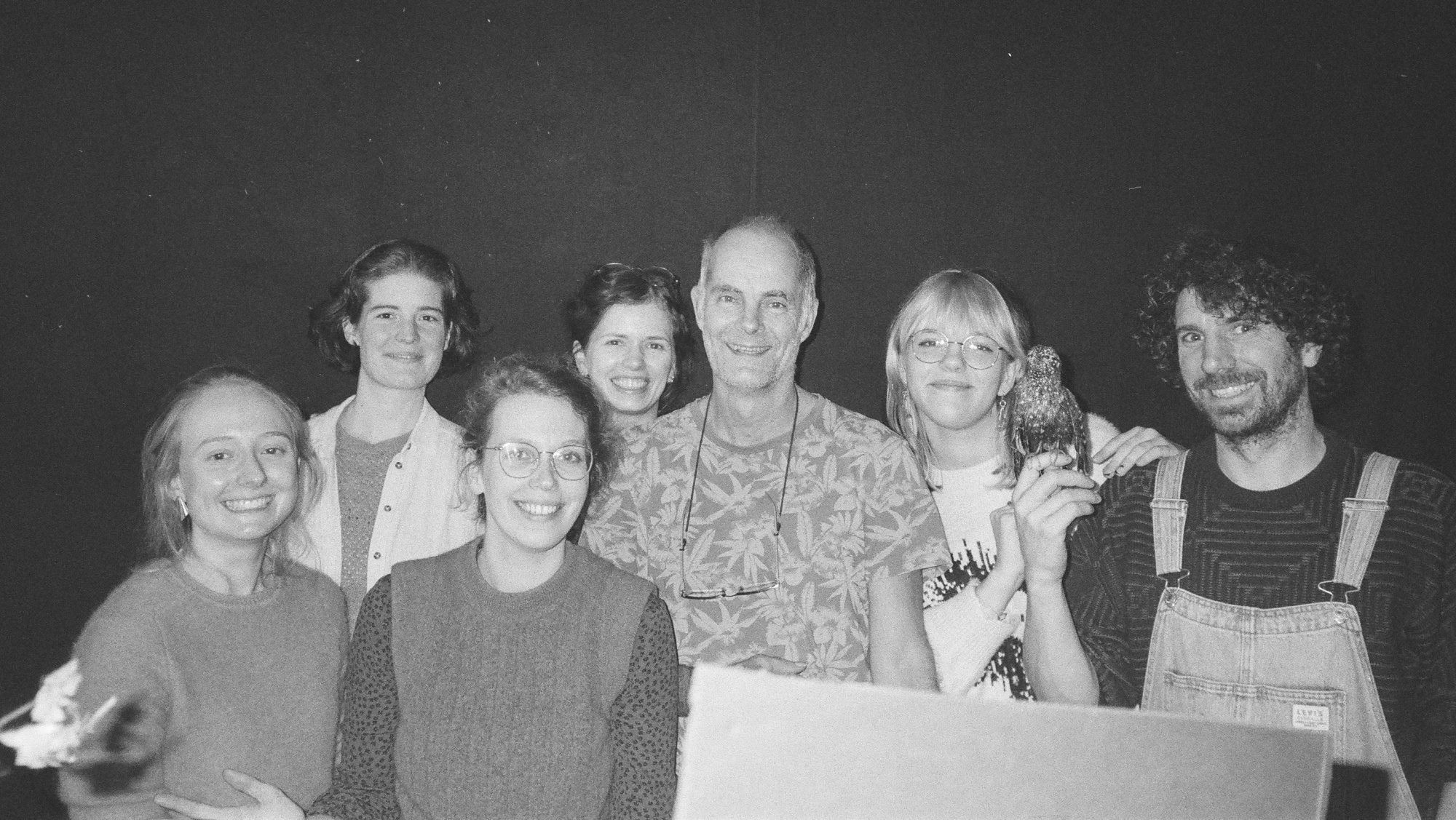 Interview: Im Gespräch mit den beiden Regisseur:innen und Animationskünstler:innen Janneke Swinkels und Tim Frijsinger konnten wir mehr über ihren Kurzfilm „Murmuration“ (OT: „Zwermen“) erfahren, der auf dem 68. DOK Leipzig 2025 seine Deutsche Premiere feierte, wie hier zwei Ideen zusammengekommen sind, warum sie sich das erste Mal für Stop-Motion entschieden haben und welche Herausforderungen, das mit sich brachte.
The original english language interview is also available.
Wie ist die Idee zu eurem Kurzfilm entstanden?
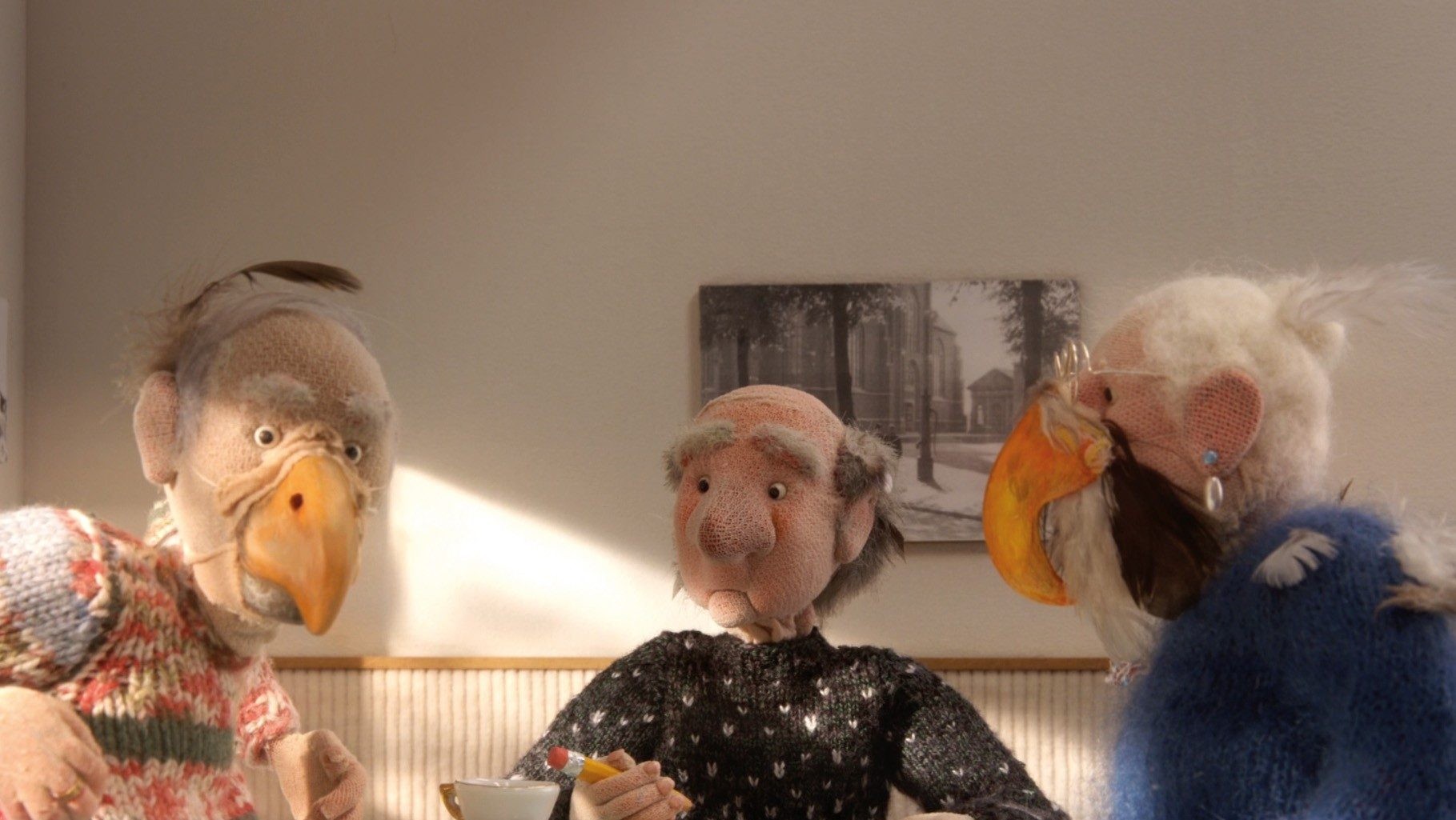 Als Janneke ihren Abschlussfilm drehte (eine kurze Dokumentation über ihren Großvater), verbrachte sie viel Zeit mit ihm im Pflegeheim. Das ruhige Leben dort war wirklich inspirierend. Wir sahen Menschen, denen es in der Gruppe sehr gut ging und die die Aktivitäten und die Teilnahme daran zu lieben schienen, während andere sich langsam davon entfernten, meist aufgrund ihres geistigen oder körperlichen Verfalls. Das schien uns ein Thema für einen Kurzfilm zu sein. Tim hatte bereits über einen Film nachgedacht, in dem sich ein alter Mann in einen Vogel verwandelt, und schließlich haben wir beide Ideen in einem Film vereint.
Man hätte viele Tiere nehmen können, warum habt ihr euch für den Vogel entschieden?
 Renske Zwaan
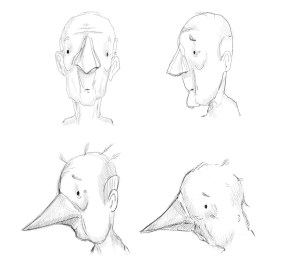
 Am Anfang hatten wir die Idee, dass sich alle alten Menschen im Pflegeheim in Tiere verwandeln würden, und zwar alle unterschiedlich. So wurde zum Beispiel eine alte Dame zu einer Katzenfrau. Aber als wir anfingen, über den Mann zu schreiben, der sich in einen Vogel verwandelt, fühlte sich das für uns am natürlichsten an. Das hatte wohl etwas mit den Ähnlichkeiten zwischen alten Menschen und kleinen Vögeln zu tun. Die Gebrechlichkeit, die großen Nasen und die flauschigen Haare. Außerdem mögen wir Vögel einfach sehr gerne.
Wie denkt ihr selbst über Altersheime und die letzten Jahre, die man manchmal dort verbringt?
 Renske Zwaan
 Für Jannekes Großvater war das Seniorenheim nicht die richtige Wahl. Er war eher ein Einzelgänger und hatte keine Lust an Bingo oder Gymnastik teilzunehmen. Andererseits: Vielleicht wäre er ziemlich einsam gewesen, wenn er nicht dorthin gezogen wäre. Einige andere Bewohner genossen es sehr, unter Menschen zu sein und an den Aktivitäten teilzunehmen.
Aus unserer eigenen Perspektive haben wir gesehen, dass in einer Welt, in der sich alles immer schneller zu drehen scheint, manche Menschen es tatsächlich schätzen, unter Gleichaltrigen zu sein und Teil einer Gemeinschaft zu sein, die ein langsameres Tempo hat. In Filmen und den Medien sehen wir oft die negativen Aspekte des Alterns und von Pflegeheimen. Und das wollen wir sicherlich nicht leugnen. Das Älterwerden geht oft mit Beschwerden einher, das ist also auch die Realität, aber wir glauben, dass es nicht so schwarz-weiß ist, wie es oft dargestellt wird.
Eure Stop-Motion-Animationen sind wunderbar haptisch und voller Details. Könnt ihr mir mehr dazu erzählen?
 Renske Zwaan
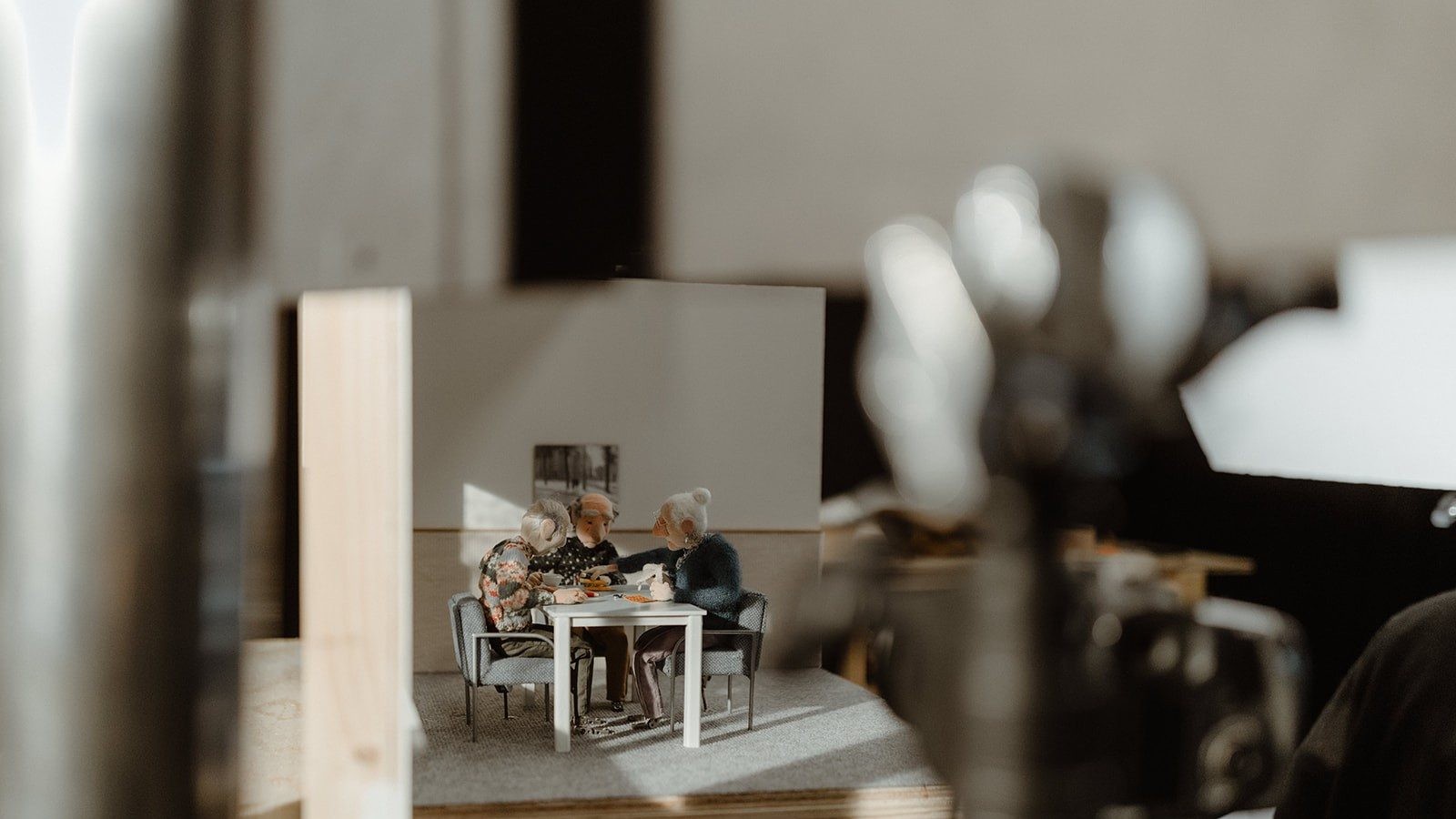
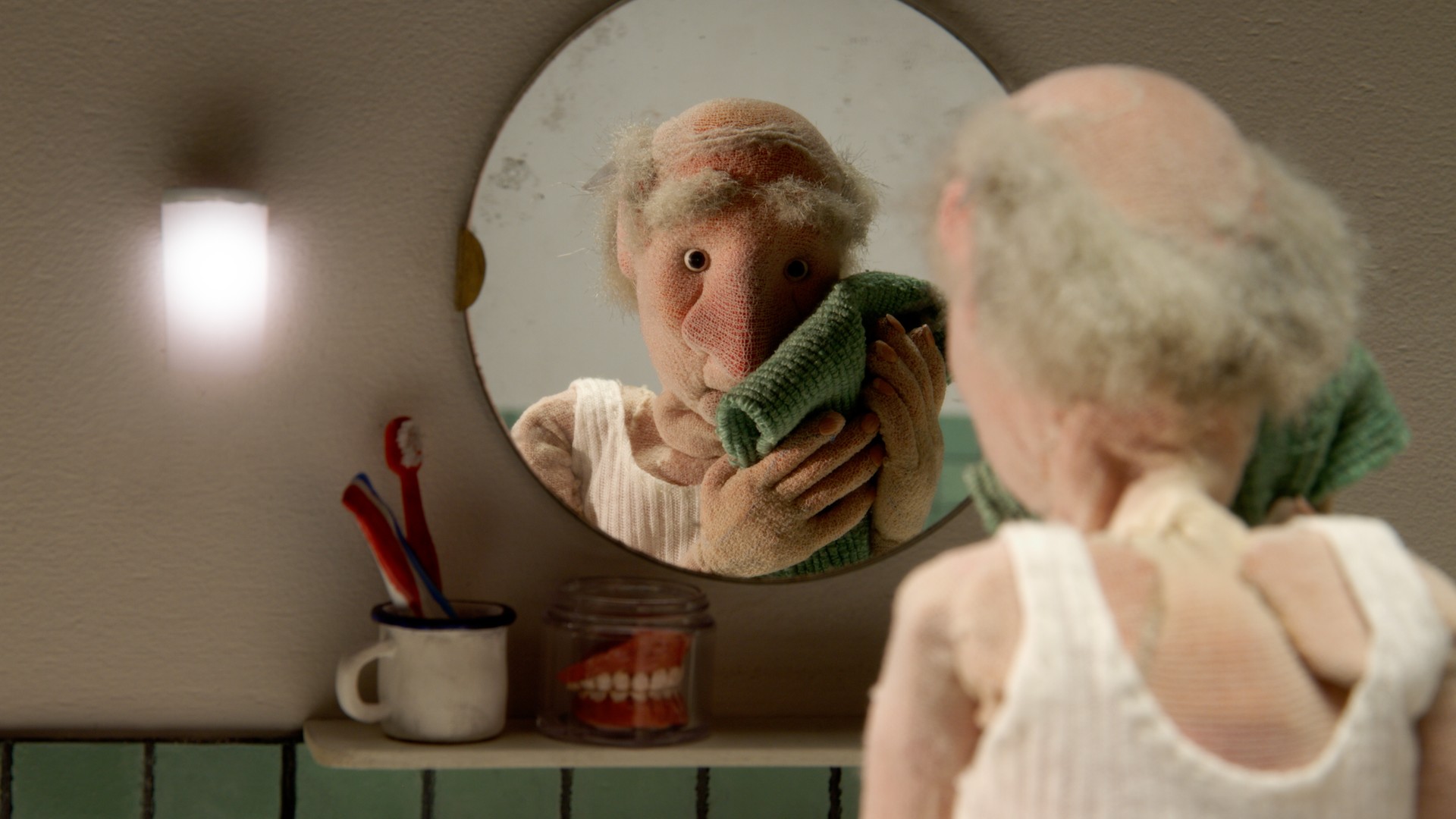
 Vielen Dank! Wir haben schon zuvor einige Animationsaufträge ausgeführt, aber dies ist unser erster Stop-Motion-Film, daher mussten wir unseren Stil von Grund auf neu entwickeln. Wir mochten Stop-Motion-Filme, in denen die Puppen aus Filz und anderen natürlichen Materialien hergestellt wurden, und baten die Textilkünstlerin Elke Lutgerink, uns bei der Suche nach dem richtigen Aussehen für die Puppen zu unterstützen. Wir waren sehr glücklich, als wir entdeckten, dass Strümpfe über einem rot-orangefarbenen Untergrund sehr gut als (alte) menschliche Haut funktionieren. Es war viel Ausprobieren und wir haben auch viele Ratschläge von Stop-Motion-Animatoren erhalten, die viel mehr Erfahrung haben als wir, welche Materialien wir verwenden sollten (und welche nicht). Zum Glück sind sie alle super nett und hilfsbereit! Andererseits gab es auch viele Freunde und Familienmitglieder, die uns sehr geholfen haben: Jannekes Mutter und ihre beste Freundin Cleo haben viel genäht, gestrickt und gestickt, um die Kleidung und Requisiten herzustellen. Freunde haben uns beim Malen der Miniaturbilder geholfen. Wir hatten großes Glück mit unserer supertalentierten Praktikantin Mila, die sich besonders für die Herstellung von Händen und Haaren begeisterte. Wir haben die Miniaturstrickerin Annelies gebeten, einen von Staren inspirierten Strickpullover für Piet zu stricken (mit einem Hauch von Grün!), und Zaou Vaughan hat die Vogelpuppen hergestellt und uns mit Ratschlägen, Requisiten, Bäumen und dem Wald sehr geholfen. Als wir uns für die Stile und Materialien entschieden hatten, konnten viele Leute mit kleinen Beiträgen helfen.
Wie lange hat die Umsetzung gedauert und wie viele Sets und Puppen habt ihr gebaut?
 Von der ersten Idee bis zum fertigen Film haben wir fast acht Jahre gebraucht. Aber das war natürlich keine Vollzeitbeschäftigung. Letztes Jahr haben wir es geschafft. Wir hatten acht Puppen mit Kugelgelenk-Armatur (zwei davon waren Piet), etwa drei Puppen mit Aluminiumdraht und einen kleinen und einen großen Vogel. Dann gab es noch einige weitere Köpfe und Kleidungsstücke, damit wir auch ein bisschen variieren konnten, sodass es mehr Figuren gab (wir sollten sie mal zählen …). Glücklicherweise waren die Kulissen wiederverwendbar, da das Altenheim mit einem multifunktionalen Aktivitätsraum ausgestattet war, in dem viele Szenen gedreht wurden. So konnten wir mit denselben Wänden verschiedene Kulissen bauen. Dann hatten wir Piets Zimmer, sein Badezimmer, den Flur im Altenheim, einen kleinen Laden, die Außenseite des Zimmers, die Außenseite des gesamten Altenheims in einem anderen Maßstab und natürlich den Wald. Das war eine ganze Menge, und ein Anfängerfehler war es, mit der Animation zu beginnen, bevor alles fertig war … Die Herstellung der Armaturen und das Ausarbeiten aller benötigten Wände, Materialien und allem anderen nahm den größten Teil unserer Zeit in Anspruch. Als wir mit der Animation begannen, hatten wir nur eine Piet-Puppe und sein Zimmer/Badezimmer fertig. Und wow … die Regie für deinen ersten Stop-Motion-Film zu führen, während du mit einem superkleinen Team Puppen, Requisiten und Sets herstellst, war eine große Herausforderung.
Wie verläuft eure gemeinsame Arbeit am Film – gibt es eine klare Aufgabenteilung oder macht ihr alles gemeinsam?
 Es ist eine Arbeitsweise, die sich ganz natürlich entwickelt hat. Wir arbeiten schon seit unserer Zeit an der Kunsthochschule zusammen, und kreatives Schaffen gemeinsam zu betreiben, hat sich für uns immer intuitiv angefühlt. Wir sind auch ein Paar und kennen uns in- und auswendig, sodass wir die Stärken des anderen verstehen und wissen, wie wir die Aufgaben so aufteilen können, dass es für uns beide funktioniert. Normalerweise kümmert sich Tim eher um die detaillierten Animationen und Janneke behält im Blick, wie alles zusammenpasst. Bei diesem Film gab es für uns nicht so viel zu zeichnen und zu animieren, aber dennoch haben sich die Aufgaben ganz natürlich aufgeteilt; wir haben beide sehr gerne mit Materialien gearbeitet und tun dies seit der Produktion dieses Films definitiv immer öfter.
Wie seid ihr beide zum Film gekommen?
 Wir haben an der Kunstakademie in Maastricht „Video“ studiert und viel über Filmen, Schneiden und die Grundlagen der Animation gelernt. Wir haben viele Auftragsarbeiten für das (lokale) Fernsehen und Dokumentarfilme gemacht, aber wir mochten beide Animation sehr gerne und wollten unbedingt mehr darüber lernen. In den folgenden Jahren haben wir uns selbst ein wenig damit beschäftigt, und Janneke hat später einen Master in Animationsfilm an der KASK [Königliche Akademie der Schönen Künste] in Gent gemacht.
Sind bereits neue Projekte – allein oder gemeinsam – geplant?
 Wir arbeiten immer gemeinsam an Animationsprojekten. Wir machen auch einige kommerzielle Arbeiten und haben das große Glück, dass unser Film auf Festivals recht erfolgreich war. Dadurch war es einfacher, neue Fördermittel für die Entwicklung eines nächsten Films zu bekommen. Jetzt schreiben wir gerade das Drehbuch und basteln Testpuppen für einen neuen Kurzfilm, der wieder eine Stop-Motion-Animation mit einer Länge von etwa 25 Minuten sein wird. Wir hoffen, dass wir innerhalb eines Jahres mit der Vorproduktion beginnen können.
Die Fragen stellte Doreen Kaltenecker
Übersetzung von Michael Kaltenecker
Lies auch die Rezension des Kurzfilms „Murmuration“
Interview: In conversation with the two directors and animation artists Janneke Swinkels and Tim Frijsinger, we learned more about their short film „Murmuration“ (OT: „Zwermen“), which celebrated its German premiere at the 68th DOK Leipzig 2025, how two ideas came together here, why they decided to use stop-motion for the first time, and what challenges this entailed.
How did you come up with the idea for your short film?
When Janneke was making her graduation film (a short documentary about her grandfather) she spent a lot of time with him in the nursing home. The quiet pace of life in there was really inspiring. We saw people that did really well in the group and seemed to love the activities and participation, while there were also some of them drifting slowly away from it, mostly because of their mental or physical decline. It felt like something to make a short film about. Tim was already thinking about a film where an old man would change into a bird, eventually we put both ideas together in one film.
You could have used many animals, so why did you choose a bird?
At the beginning we had the idea that all the old people in the care home would change into animals, and all of them differently. So, some old lady became a cat-lady, for example. But when we started writing about the man changing into the bird, it felt the most natural for us. I guess it had a bit to do with some similarities between old people and little birds. The frailty, big noses and the fluffy bits of hair. Also, we just really like birds.
What are your thoughts on retirement homes and the final years that people sometimes spend there?
For Janneke’s grandfather the retirement home was not a natural match. He was a bit of an ‘einzelgänger’ and did not feel like participating in bingo or gymnastics. On the other hand: maybe he would have been quite lonely if he didn’t move there. Some other residents really enjoyed being around the other people and participating in the activities.
What we saw from our own perspective, was that in a world where everything seems to be moving ever faster, some people actually appreciate being among peers and participating in a community that has a slower pace. In films and the media, we often see the negative aspects of aging and nursing homes. And we certainly don’t want to deny that. Growing old often comes with ailments, so that’s also the reality, but we think it’s not as black and white as it often is portrayed.
Your stop-motion animations are wonderfully tactile and full of detail. Can you tell me more about it?
Thank you! We did some commissioned animation work before, but this is our first stop motion film, so we had developed our style from scratch. We loved the stop motion films where the puppets were made out of felt and more natural materials and we asked textile artist Elke Lutgerink to support us in our search for the look of the puppets. We were very happy when we discovered that stocking over a red/orange underground works really well as an (old) human skin. It was a lot of trial and error and we also got a lot of advice from stop motion animators that have a lot more experience than us, on what materials to use (and not to use). Luckily they are all super kind and willing to help! Then on the other hand there were also a lot of friends and family that helped a lot: Janneke’s mother and best friend Cleo did a lot of sewing, knitting and embroidery for the clothing and props. Friends who helped paint the mini paintings. We had a lot of luck with our super talented intern Mila who was completely into especially making hands and hair. We asked a miniature knitting loving lady Annelies who made a starling inspired knitted sweater for Piet (with a touch of green!) and Zaou Vaughan who made the bird puppets and helped a lot with advice, set dressing, trees and the forest. When we decided on the styles and materials, a lot of people could help small bits ☺
How long did it take to make and how many sets and puppets did you build?
From the first idea to the final film, it took us almost 8 years. But that’s off course not full time. Last year we did. We had eight full ball and socket armature puppets (Two of them were Piet), and about three aluminium wired puppets and one small and one big bird. Then there were some more heads and clothing so we could change a bit as well, so there were more characters (we should count them once..) Luckily the sets were reusable, as the elderly home was thought out with a multi-functional activity room where a lot of the scenes took place. So, we could build different sets with the same walls. Then we had Piets room, his bathroom, the hallway in the elderly home, a small shop, the outside of the room, the outside of the whole elderly home in a different scale and of course the forest. It was quite a lot, and a rooky mistake was to begin animating when not everything was finished… The making of the armatures and figuring out all the needed walls, materials and everything took the most of our time. When we started animating, we only had one Piet puppet and his room/bathroom finished. And wow.. directing your first stop motion while making puppets, props and sets with a super small team was very challenging.
How do you work together on the film? Is there a clear division of tasks, or do you do everything together?
augenIt’s a way of working that developed naturally. We’ve been collaborating since before we graduated from art school, and doing creative work together has always felt intuitive. We’re also a couple and know each other through and through so we understand each other’s strengths and know how to divide responsibilities in a way that works for both of us. Normally Tim is more about the more detailed animation and Janneke keeps an eye on how everything comes together. For this film there was not so much drawing and animating for us, but still the tasks were divided quite naturally; we both really liked working with materials and we definitely are doing that more and more after making this film.
How did you both get into film?
We studied ‘Video’ at the art academy in Maastricht and learned a lot about filming, editing and the very basics of animation. We did a lot of commissioned work in (local) television/documentary but were both quite fond of animation and really want to learn more about that. We figured it out a bit ourselves during the years that followed and Janneke did a master in animation film at KASK in Gent later.
Are there any new projects planned, either individually or together?
We always work together on animation work. We do some commercial work and we are very lucky that our film had a bit of success at the festivals, because of that it got easier to get new development funding for a next film. So, now we are writing and making test-puppets for a new short film which again is going to be a short stop motion animation +- 25 min. And we hope to get that in pre-production within a year.
Questions asked by Doreen Kaltenecker
Read on the german review of the short film „Murmuration„