
Studium der Kunstgeschichte - Schwerpunkt: Filmgeschichte
(Abschluss 2010 mit der Arbeit "Rembrandt im Spielfilm")
Nebenfächer: Philosophie und Alte Geschichte
- seit 2012: Filmkritikerin bei movieworlds (Kino, DVD, BD, Festivalberichte)
- seit 2015: Blog 'Testkammer' online
- „Our Girls“ (2025) - 22. Oktober 2026
- Kinostarts 22.10.2026 - 21. Oktober 2026
- „Moscas – Fliegen und andere Gäste“ (2026) - 20. Oktober 2026
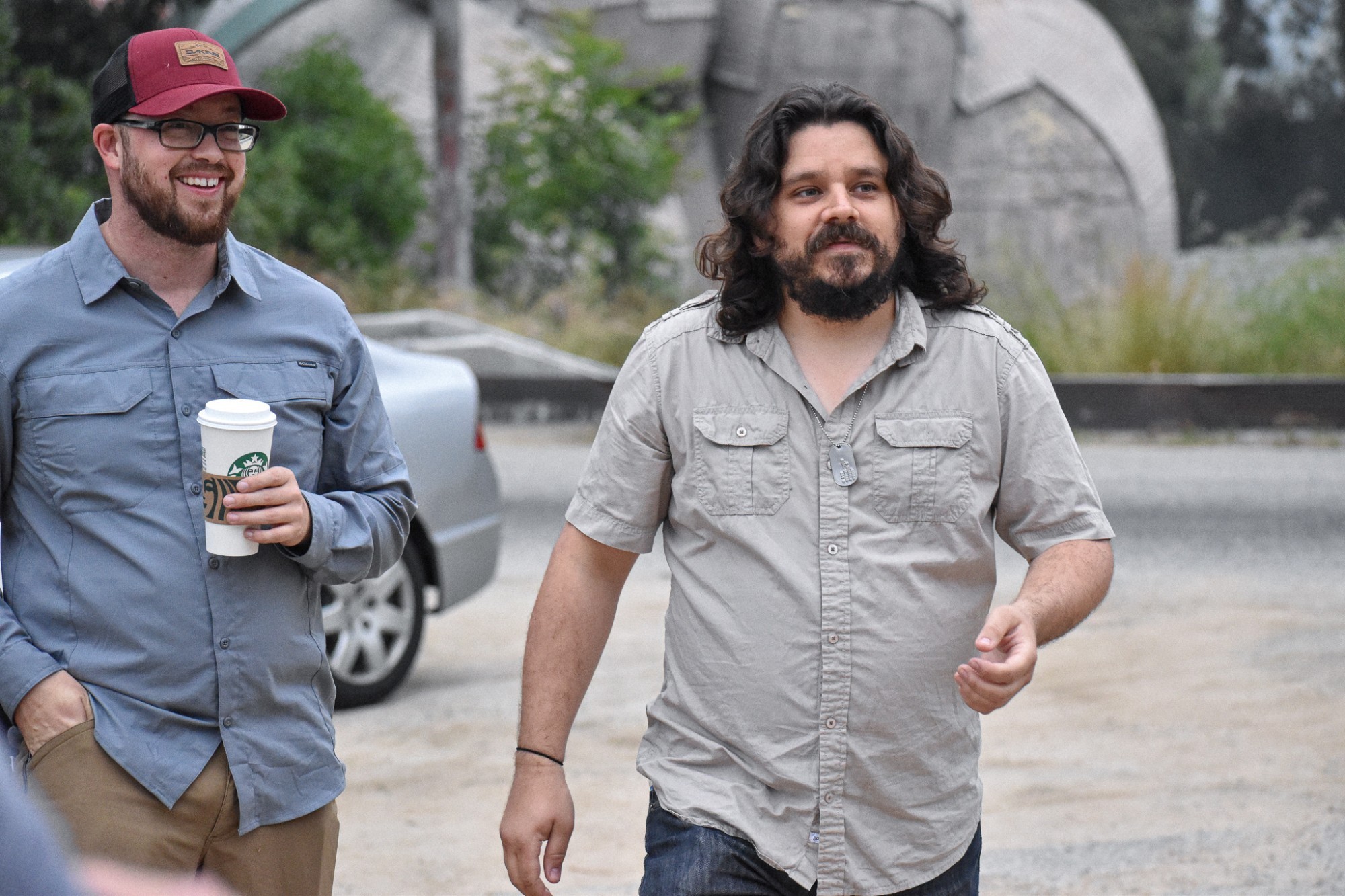 Interview: Im Gespräch mit dem amerikanischen Regisseur Paul Davis konnten wir mehr über seinen Kurzfilm „D.O.D.“ erfahren, der im ‚Shock Block‘-Programm des 24. Landshuter Kurzfilmfestivals 2024 lief, wie er sein beeindruckendes Setting fand, wie er den Film zu einem Langfilm weiter entwickeln wird und wie schwer es war, einem Kameramann wieder Vertrauen zu schenken.
The original english language interview is also available.
Wie ist die Idee zu dem Film entstanden und wie habt ihr euer Setting gefunden?
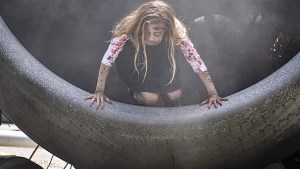
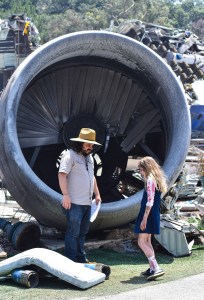 Die Idee zu diesem Film entstand, weil ich einen Spielfilm gedreht hatte, von dem ich dachte, er sei kommerziell genug, um auf einigen Filmfestivals gezeigt zu werden und sich vielleicht zu verkaufen, aber ich konnte niemanden dazu bringen, ihn anzusehen. Er wurde von jedem Filmfestival, bei dem ich ihn einreichte, abgelehnt. Ich war ein wenig frustriert und habe dann einige Zeit damit verbracht, kurze Horrorkomödien zu schreiben, die ich mit Freunden drehen konnte. Dieser Kurzfilm „D.O.D.“ sollte ursprünglich einfach in einer verlassenen Hütte im Wald spielen, über die zwei Männer stolpern. Etwas mit wenig Budget und Leichtes, das man mit Freunden machen kann. Aber dann habe ich bei einem Filmfestival der Universal Studios gewonnen, und der Hauptpreis war ein Drehtag an einem Set meiner Wahl auf dem Backlot der Universal Studios. Eine der Kulissen ist der unglaubliche Flugzeugabsturz aus Steven Spielbergs „Krieg der Welten“ (2005). Ich beschloss, das Drehbuch einfach so umzuschreiben, dass es inmitten eines Flugzeugwracks statt in einer Hütte spielt. Was das Produktionsdesign anbelangt, so war die Kulisse für den größten Teil des Films bereits fertig, und da die Kulisse des Flugzeugabsturzes so unglaublich war, wollte ich mich bei den Zombies nicht zurückhalten. Ursprünglich hatte ich mir die Zombies eher billig vorgestellt, als klassische Gruselgestalten wie in Romeros „Nacht der lebenden Toten“, aber jetzt, da der Anspruch visuell gestiegen war, sah ich mich gezwungen, die Zombies wirklich zu verkaufen. Sie mussten nun so gut aussehen, dass sie mit der Qualität der uns zur Verfügung stehenden Kulissen mithalten konnten, also war das Make-up einer der Schwerpunkte des Drehs.
Würdest Du Dich selbst als Zombie-Film-Fan bezeichnet? Spielst Du ìn Deinem Film auf bekannte Vorbilder an?
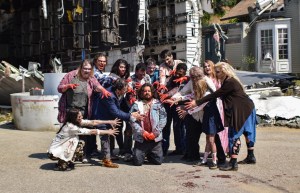
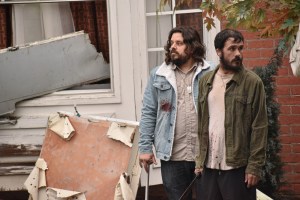 Ich bin ein großer Fan von Zombiefilmen. Ich habe sie alle gesehen. Ich habe sogar die gesamte Serie „The Walking Dead“ sowie alle Spin-offs verfolgt. „Return of the Living Dead“ und „Re-Animator“ sind zwei der Höhepunkte des Horrorkomödien-Genres, also waren sie tonal eine große Inspiration. Als in meinem Film die Zombies aus den verschiedenen Fahrzeugen und Flugzeugwracks herauskommen, war das eine direkte Anspielung auf „Return of the Living Dead“, als der Regen die Atomwolke auf den Boden fallen lässt und die Zombies zum Leben erweckt. Ich habe den Song aus diesem Film sogar als Tempotrack beim Schnitt verwendet. „Evil Dead 2“ ist ein weiterer Höhepunkt im Genre der Horrorkomödien, und ich liebe die energiegeladene und unvorhersehbare Natur dieses Films. Und natürlich pumpt das immer noch schlagende Herz von Romero das Blut durch meinen gesamten Film. „Dawn of the Dead“ ist nach wie vor mein Lieblings-Zombiefilm, aber ich bin auch ein großer Fan von „Day of the Dead“, einem ziemlich wilden Film mit den meiner Meinung nach besten praktischen Effekten, die ein Horrorfilm der 80er Jahre zu bieten hat. Aus dem Jahr 1985 stammen „Return of the Living Dead“, „Re-Animator“ und „Day of the Dead“, die alle eine so große Inspiration waren, dass einer der Abspänne des Films eine Widmung an George A. Romero, Dan O’Bannon und Stuart Gordon ist.
Wie war es, selbst die Regie und eine der Hauptrollen zu übernehmen?
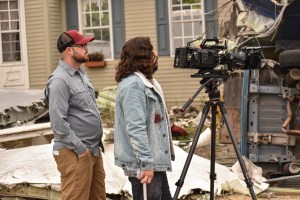 Selbst Regie zu führen, war keine allzu große Herausforderung. Ich habe in den letzten zehn Jahren bei vielen Projekten Regie geführt und auch in vielen davon mitgewirkt. Ich hatte das Projekt für mich und meinen Kumpel geschrieben, also wusste ich genau, was ich von den Darstellern wollte. Die größere Herausforderung bestand darin, alles, was wir am Set für den Flugzeugabsturz brauchten, an dem einen Tag, den wir hatten, hinzubekommen. In gewisser Weise dachte ich, dass ich durch das Spielen der Rolle schneller zu dem kommen würde, was ich wollte. Vor einigen Jahren hatte ich bei einem Spielfilm eine sehr schlechte Erfahrung mit einem Kameramann gemacht, der sich als ziemlich unfähig erwies. Er hatte zwar die Ausrüstung, konnte sie aber nicht gut einsetzen. Er hat sich bei fast jeder Aufnahme, die ich machen wollte, gegen mich gewehrt, ohne jeden Grund. Er hatte keinen künstlerischen Grund für seinen Versuch, eine Straßensperre zu sein, sondern war einfach nur schwierig, was ihm gut gefiel. Er hatte sich anfangs so begeistert gezeigt, an dem Projekt zu arbeiten, und als wir dann mitten im Nirgendwo mit ihm festsaßen, legte sich ein Schalter um, und er wurde zum absoluten Albtraum. Nach diesem Projekt beschloss ich, zu lernen, wie ich mein eigener Kameramann werde, und verbrachte die nächsten Jahre damit, Kurzfilme zu schreiben und zu inszenieren, die ich selbst drehen würde. Ich lernte, wie man mit Licht umgeht und wie man Kameras bedient. Ich bin als Kameramann nicht so gut wie als Autor oder Regisseur, aber ich wusste, dass ich mir selbst mehr zutrauen konnte, so hart zu arbeiten, wie ich konnte, als jemand anderem. Das bedeutete aber auch, dass ich bei meinen Projekten viel weniger mitwirkte, da ich das Gefühl hatte, dass ich anderen Menschen hinter der Kamera nicht trauen konnte. Als sich dann diese Gelegenheit ergab, sagte ich meiner Freundin (jetzt Ehefrau), dass ich das Projekt wahrscheinlich einfach selbst drehen würde.
  Da ich das Projekt für mich und meinen Freund als Hauptdarsteller geschrieben hatte, drängte sie mich, wie ursprünglich geplant, in dem Film mitzuspielen und endlich einen neuen Kameramann zu finden und mit ihm zusammenzuarbeiten, um zu versuchen, das Vertrauen wiederherzustellen. Ich entschied mich für den Kameramann, den wir bei „D.O.D.“ eingesetzt hatten, Drew [Ganyer], der großartig war. In den Jahren, in denen ich meine eigenen Filme gedreht habe, habe ich gelernt, wie ich meine Vision besser vermitteln kann, und ich wusste genau, was ich visuell wollte. Ich glaube, dass jede Rolle, die man am Set lernt, sei es das Schreiben, das Schauspielern, der Schnitt oder die Kameraführung, einen zu einem viel besseren Regisseur macht. Ich hatte also nicht mit der Schauspielerei und der Regie zu kämpfen, sondern damit, einem anderen Kameramann hinter der Kamera mein Vertrauen zu schenken. Aber Gott sei Dank hat mich meine Frau dazu gedrängt, diese Entscheidung zu treffen, denn die Zusammenarbeit zwischen Drew und mir bei diesem Film und auch bei dem nächsten, der gerade in der Postproduktion ist, hat sich sehr gelohnt.
Du hast Pläne, die Geschichte zu einem Langfilm auszubauen, richtig? Sind bereits weitere Projekte geplant?
 Es gibt Pläne, „D.O.D.“ zu einem abendfüllenden Film auszubauen. In der Zwischenzeit habe ich den ersten Akt des Films gedreht, den ich auf einigen Festivals als eigenen Kurzfilm präsentieren möchte, ähnlich wie wir es mit diesem Kurzfilm getan haben. Die verschiedenen Teile des Films sind so konzipiert, dass sie als eigene Kurzfilme funktionieren, mit denen ich auf Festivals auftreten kann, während ich weiter Geld für den nächsten Teil sammle. Im Grunde handelt es sich also um eine langsame Einführung eines Spielfilms, die ich Schritt für Schritt voran treibe, sobald ich die nötigen Mittel zur Verfügung habe. Im Moment sind etwa 48 Minuten des Films fertig, und ich möchte die letzten etwa 40 Minuten bald fertig drehen.
Die Fragen stellte Doreen Kaltenecker
Übersetzung von Michael Kaltenecker
Lies auch die Rezension des Kurzfilms „D.O.D.“
Interview: In our conversation with American director Paul Davis, we learned more about his short film „D.O.D.„, which screened in the ‚Shock Block‘ program of the 24th Landshut Short Film Festival 2024, how he found his impressive setting, how he will develop the film into a feature-length film and how difficult it was to trust a cinematographer again.How did the idea for the movie come about and how did you find your setting?
The idea for the movie came about because I had made a feature film that I thought might be commercial enough to get into some film festivals and may sell, but I couldn’t get anyone to watch it. It got rejected from every film festival I submitted to. I got a little frustrated, and then spent some time writing short horror comedy films that I could make with friends. This short film „D.O.D.“ had originally been written to simply take place in the woods at an abandoned cabin the two men stumble upon. Something cheap and easy to make with friends. But then I won a film festival run through Universal Studios, and the grand prize was a day of filming on sets of my choosing on the Universal Studios backlot. One of the sets they have is the incredible airplane crash from Steven Spielberg’s „War of the Worlds“. I decided to just re-write the script to take place surrounded by the wreckage of an aircraft instead of a cabin. So as far as production design went, the setting for the main chunk of the film was taken care of, and since the airplane crash set was so incredible, I didn’t want to hold back on the zombies. While I originally envisioned the zombies to be on the cheaper side, classic ghouls like Romero’s „Night of the Living Dead“, but now that the stakes had been raised visually, I felt compelled to really sell the zombies. They now needed to look good enough to match the quality of the sets we had access to, so the makeup was one of the main focuses of the shoot.
Would you describe yourself as a zombie movie fan? Do you allude to well-known movies in your film?
I am a massive zombie movie fan. I’ve seen them all. I even stuck around for the entire run of „The Walking Dead“, as well as each of the spinoffs. „Return of the Living Dead“ and „Re-Animator“ are two of the high points of the horror comedy genre, so tonally they were huge inspirations. When all of the zombies start coming out from the various vehicles and wreckage of the airplane in my film, that was a direct reference to „Return of the Living Dead“ when the rain brings the nuclear cloud down to the ground and brings the zombies to life. In fact, I even used the song from that film as my temp track while editing. „Evil Dead 2“ is another high point in the horror comedy genre, and I love the energetic and unpredictable nature of that film. And of course the still beating heart of Romero was pumping blood through the entirety of my film. „Dawn of the Dead“ is still my favorite zombie film, but I’m also a huge fan of „Day of the Dead“, which is a pretty wild film and has what I think are some of the best practical effects that any 80’s horror film has to offer. 1985 unbelievably gave us „Return of the Living Dead“, „Re-Animator“, and „Day of the Dead“, which were all such huge inspirations that one of the end credits on the film is a dedication to George A. Romero, Dan O’Bannon, and Stuart Gordon.
What was it like to direct and play one of the main roles yourself?
Directing myself wasn’t too much of a challenge. I’ve been directing a lot of projects over the past decade, and performing in a lot of them as well. I had written the project for myself and my pal, so I knew exactly what I wanted from the performances. The bigger challenge was getting everything we needed at the airplane crash set in the one day we had it. In a way, I thought that performing the role would actually be a quicker way to get what I wanted. Several years ago on a feature film, I had a very bad experience with a director of photography who turned out to be fairly inept. He had the gear, but he wasn’t very good at using it. He would fight me on almost every shot I wanted to get, for no reason at all. Like, he didn’t have an artistic reason for his attempt at being a roadblock, being difficult was just what he thrived on. He had initially presented himself as so excited to work on the project, and once we were stuck in the middle of nowhere with him, a switch flipped and he became a total nightmare. After that project, I decided to learn how to become my own DP, and spent the next few years writing and directing short films that I would shoot myself. I learned how to use light and how to operate cameras. I’m not as good at being a director of photography as I am writing or directing, but I knew I could trust myself more to work as hard as I could than I could anyone else. But this meant that I was acting in my projects far less, since I felt like I couldn’t trust other people to be behind the camera. Then when this opportunity came along, I told my girlfriend (now wife) that I would probably just shoot the project myself. Since I had written the project for me and my friend to star in, she urged me to act in the film as initially planned, and to finally find and collaborate with a new director of photography to try and rebuild that trust. I went with the DP we used on „D.O.D.„, Drew [Ganyer], who was great. I learned in the years that I had been shooting my own stuff that I now knew how to communicate my vision more effectively, and knew exactly what I wanted visually. I think that any role you learn on set, whether it’s writing, acting, editing, cinematography, will make you a much better director. So acting in the movie and directing myself wasn’t the issue I struggled with, it was learning to put my faith into another director of photography behind the camera. But thank God my wife urged me to make that choice, because the collaboration Drew and I have shared on this film, as well as the next one that is in post-production right now, has been very rewarding.
You have plans to expand the story into a feature-length movie, right? Are there any other projects planned?
There are plans to expand „D.O.D.“ into a full-length film. I have since gone on to film the first act of the film, which I’m planning to take to some festivals as its own short, much like we did with this short. The various parts of the film have been designed to work as their own short films that I can do the festival circuit with as I continue to raise funds for the next installment. So it’s basically a slow rollout of a feature film, made one step at a time as I have the resources available. So as of right now about 48 minutes of the film are completed, and I’m looking to finish filming the last 40 or so minutes soon.
Questions asked by Doreen Kaltenecker
Read on the german review of the short film „D.O.D.“