
Studium der Kunstgeschichte - Schwerpunkt: Filmgeschichte
(Abschluss 2010 mit der Arbeit "Rembrandt im Spielfilm")
Nebenfächer: Philosophie und Alte Geschichte
- seit 2012: Filmkritikerin bei movieworlds (Kino, DVD, BD, Festivalberichte)
- seit 2015: Blog 'Testkammer' online
- „Our Girls“ (2025) - 22. Oktober 2026
- Kinostarts 22.10.2026 - 21. Oktober 2026
- „Moscas – Fliegen und andere Gäste“ (2026) - 20. Oktober 2026
 Interview: Im Gespräch mit der serbischen Regisseurin und Animationskünstlerin Jelena Milunović konnten wir mehr über ihren Kurzfilm „Floating“ (OT: „Lebdenje“) erfahren, der im Internationalen Wettbewerb Animationsfilm des 68. DOK Leipzig 2025 lief. Sie erzählt davon, warum sie sich dafür entschied, diese persönliche Geschichte zu erzählen, was sie dafür benötigte, warum sie wenig Worte braucht und was ihr auf visueller Ebene wichtig war.
The original english language interview is also available.
Warum hast Du Dich dafür entschieden, diese persönliche Geschichte in einem Kurzfilm zu erzählen?
Ich habe einige Jahre gewartet, bevor ich daraus einen Film gemacht habe, weil ich etwas Abstand davon brauchte. Während ich das durchlebte, konnte ich das Gesamtbild nicht wirklich erkennen. Irgendwann hatte ich das Gefühl, dass ich aus dieser Erfahrung etwas gelernt hatte und eine Art Abschluss gefunden hatte, wodurch ich begann, es als eine Geschichte zu sehen, die ich mit anderen teilen konnte. Mir wurde auch klar, wie universell diese Erfahrung war, auch wenn man nicht offen darüber spricht. Das hat meine Sichtweise auf die psychische Gesundheit verändert, und ich wollte diese Erkenntnis teilen, insbesondere mit Menschen, die in ihren eigenen Familien Ähnliches erlebt haben.
Was lag Dir dabei am Herzen, wie Du von psychischen Erkrankungen erzählst?
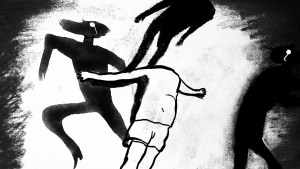
 Es war mir wichtig, die Nuancen dieser Erfahrung zu zeigen und wie psychische Erkrankungen nicht nur die betroffene Person selbst, sondern auch ihr Umfeld beeinflussen. Es gibt einen Konflikt zwischen diesen unterschiedlichen Realitäten: Was für eine Person real oder sogar stärkend ist, kann für andere verwirrend oder beängstigend sein. Ich wollte zeigen, dass ein veränderter psychischer Zustand sich eher wie eine Erweiterung der Realität anfühlen kann als wie etwas davon Getrenntes, und dass sich diese Erfahrung im Laufe der Zeit verändert und verschiedene Phasen und Hindernisse durchläuft.
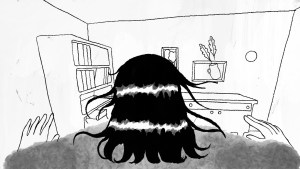
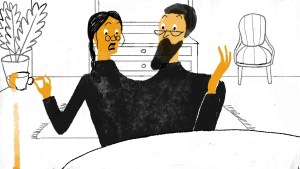
Mir war auch die Perspektive der Tochter wichtig, der Hauptfigur des Films, die ihre Verwirrung und Passivität überwinden und einen Weg finden muss, wieder mit ihrem Vater zu kommunizieren.
Kannst Du mir etwas zu den Animationen selbst sagen? Mir ist besonders der pointierte Farbeinsatz aufgefallen.
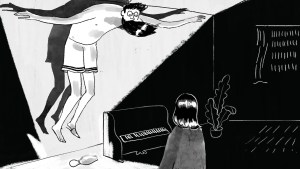 Der visuelle Stil basiert auf meinem Zeichenstil, und ich wollte, dass er die Hauptmetapher des Schwebens widerspiegelt, indem ich fließende Bewegungen und sanfte Übergänge verwende, um die Szenen miteinander zu verbinden. Aus diesem Grund standen Fluidität und Transformation im Vordergrund, weshalb ich den Stil auch relativ einfach gehalten habe.
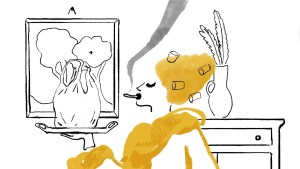
Farbe wird symbolisch eingesetzt. So kommt beispielsweise Rot nur im Ballon und im roten Faden vor. Der eine schwebt am Anfang davon, während der andere am Ende die Verbindung zwischen den Figuren wiederherstellt. Gelb steht für Herbst und Verfall, während Blau die Kälte und Isolation der psychiatrischen Anstalt und die Depression widerspiegelt, die auf das „Zurückfallen auf den Boden” folgt. Sobald die Figuren wieder miteinander verbunden sind, wird ein natürlicheres Grün eingeführt.
Du verzichtest beinahe vollständig auf Worte – umso wichtiger sind Musik und Geräusche. Magst Du mir mehr darüber erzählen?
 Ursprünglich hatte ich viel mehr Dialoge im Drehbuch, aber mit der Zeit entschied ich mich, das Meiste davon zu streichen. Es kam mir unnötig und gekünstelt vor, und ich hatte auch Schwierigkeiten, den richtigen Ton für die Synchronsprecher zu finden. Am Ende behielt ich nur den Monolog des Vaters bei, den ich mit meinem eigenen Vater aufgenommen hatte. Er wirkte am authentischsten und gab der Figur Raum, sich auszudrücken.
Mit weniger Dialogen rückten Ton und Musik in den Mittelpunkt. Ich wollte, dass die Musik sanft bleibt und dem Zuschauer keine Emotionen aufzwingt. Ich arbeitete eng mit der Komponistin Tatjana Ščerbak Šandorov und dem Sounddesigner Luka Barajević zusammen, die eine Filmmusik und ein Sounddesign schufen, die emotionale Tiefe verliehen und die verschiedenen Phasen der Geschichte miteinander verbanden.
Ist Dein Film im Rahmen des Studiums entstanden? Wie lange hat die Umsetzung gedauert?
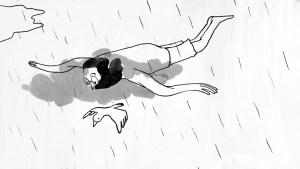 Ja, der Film war mein Masterprojekt an der Filmuniversität Babelsberg Konrad Wolf. Die Produktion dauerte etwa fünf Jahre. Viel länger, als man für einen siebenminütigen Film erwarten würde, was an COVID und den üblichen unvorhersehbaren Ereignissen im Leben lag.
Was hat Dein Vater zu diesem Film gesagt?
Mein Vater war sehr gespannt auf den Film, da er schon von Anfang an davon wusste und so lange darauf gewartet hatte. Er sagte, dass er ihm gefallen habe und er stolz sei, gab aber auch ein paar Tipps und Korrekturen.
Kannst Du mir von Dir erzählen und wie Du zum Film gekommen bist?
 Ich interessiere mich schon seit jeher für Animation. Ich habe es immer geliebt, Zeichentrickfilme und Animationsfilme anzuschauen. Bei vielen Menschen verblasst diese Leidenschaft im Teenageralter, aber bei mir war das nie der Fall. Mein Vater hatte viele VHS-Kassetten, von kommerziellen Hits bis hin zu eher unbekannten Animationsfilmen, und ich habe es geliebt, sie mir immer wieder anzuschauen.
Ich habe Animation zum ersten Mal während meines Bachelorstudiums in Serbien studiert, wo der Fachbereich noch recht neu war und viel kreative Freiheit bot. Der Schwerpunkt lag hauptsächlich auf 2D-Animation, was mir perfekt passte, da mein Stil schon immer von meinen Skizzen inspiriert war. Mit der Zeit interessierte ich mich mehr für künstlerische Animationen und Kurzfilme, was mich dazu veranlasste, weiterhin Filme zu drehen.
Sind bereits neue Projekte geplant?
 Ich habe mein nächstes Filmprojekt noch nicht entwickelt, aber ich spiele mit einigen Ideen. Momentan konzentriere ich mich darauf, Animationen für eine VR-Audio-Ausstellung im Museum für Gießen zu erstellen, und ich warte darauf, dass ich wieder Zeit habe, mich etwas Persönlicherem zu widmen.
Die Fragen stellte Doreen Kaltenecker
Übersetzung von Michael Kaltenecker
Lies auch die Rezension des Kurzfilms „Floating“
Interview: In our conversation with Serbian director and animation artist Jelena Milunović, we learned more about her short film „Floating“ (OT: „Lebdenje“), which was screened in the International Animation Film Competition at the 68th DOK Leipzig 2025. She talks about why she decided to tell this personal story, what she needed to do so, why she uses few words, and what was important to her on a visual level.
Why did you decide to tell this personal story in a short film?
I waited a few years before making this into a film because I needed some distance from it. While I was going through it, I couldn’t really see the bigger picture. At some point, I felt I had learned something from the experience and reached a kind of closure, which allowed me to start seeing it as a story I could share with others. I also realized how universal the experience was, even though it’s not something people talk about very openly. It changed how I think about mental health, and I wanted to share that, especially with people who’ve been through something similar in their own families.
What was important to you in terms of how you depict mental illness?
It was important to me to show the nuances of this experience and how mental illness affects not only the person going through it, but also the people around them. There’s a clash between these different realities: what feels real, or even empowering, to one person can be confusing or frightening to others. I wanted to show that a changed mental state can feel like an extension of reality rather than something separate from it, and that this experience shifts over time, moving through different phases and obstacles.
I also cared about the perspective of the daughter, the main character of the film, who has to move past her confusion and passivity and find a way to communicate with her father again.
Can you tell me something about the animations themselves? I was particularly struck by the striking use of color.
The visual style comes from my drawing style, and I wanted it to reflect the main metaphor of floating, using fluid movement and smooth transitions to connect the scenes. Because of that, fluidity and transformation became the main focus, which is also why I kept the style relatively simple. Color is used symbolically. For example, red appears only in the balloon and the red thread. One floats away at the beginning, while the other reestablishes the connection between the characters at the end. Yellow is connected to autumn and decay, while blue reflects the coldness and isolation of the mental institution and the depression that follows „falling back to the ground.“ Once the characters reconnect, a more natural green is introduced.
You refrain from using words, which makes the music and sounds all the more important. Would you like to tell me more about that?
I initially had much more dialogue in the script, but over time, I decided to strip most of it back. It started to feel unnecessary and forced, and I was also struggling to find the right tone for the voice actors. In the end, I kept only the father’s monologue, which I recorded with my own father. It felt the most authentic and gave the character space to express.
With less dialogue, sound and music became central. I wanted the music to remain gentle and not force emotions onto the viewer. I worked closely with composer Tatjana Ščerbak Šandorov and sound designer Luka Barajević, who created a score and sound design that added emotional depth and connected the story’s different stages.
Was your film created as part of your studies? How long did it take to make?
Yes, the film was my master’s project at the Film University Babelsberg Konrad Wolf. It took about five years to make. A lot longer than you’d expect for a seven-minute film, thanks to COVID and the usual unpredictable life events.
What did your father say about this film?
My father was really eager to see the film, having known about it from the very beginning and waited so long. He said he liked it and that he was proud, but he also shared a few tips and corrections.
Can you tell me about yourself and how you got into film?
I’ve been interested in animation for as long as I can remember. I’ve always loved watching cartoons and animated films. For many people, that passion fades in their teenage years, but for me, it never did. My dad had a lot of VHS tapes, ranging from commercial hits to more obscure animated films, and I loved watching them on repeat.
I first studied animation during my bachelor’s in Serbia, where the department was still fairly new and offered a lot of creative freedom. It focused mainly on 2D animation, which suited me perfectly since my style has always been inspired by my sketches. Over time, I became more drawn to artistic animation and short films, which led me to continue making films.
Do you have any new projects planned?
I haven’t developed my next film project yet, but I’m exploring some ideas. At the moment, I’m focused on creating animations for a VR-audio exhibition at the Museum für Gießen, and I’m waiting for the time to return to something more personal.
Questions asked by Doreen Kaltenecker
Read on the german review of the short film „Floating„