
Studium der Kunstgeschichte - Schwerpunkt: Filmgeschichte
(Abschluss 2010 mit der Arbeit "Rembrandt im Spielfilm")
Nebenfächer: Philosophie und Alte Geschichte
- seit 2012: Filmkritikerin bei movieworlds (Kino, DVD, BD, Festivalberichte)
- seit 2015: Blog 'Testkammer' online
- Große Testkammer-Sommerpause - 3. Juli 2026
- Sieben Fragen an Mirjana Balogh - 2. Juli 2026
- „Wish you were Ear“ (2025) - 2. Juli 2026
 Interview: Im Gespräch mit der portugiesischen Filmemacherin und Animationskünstlerin Marta Reis Andrade konnten wir mehr über ihren Kurzfilm „Dog Alone“ (OT: „Cão Sozinho“) erfahren, der im Wettbewerb des 41. Interfilm Berlin 2025 und auf dem 38. Filmfest Dresden 2026 zu sehen war. Sie erzählt von den autobiographischen Hintergründen, warum sie sich für eine reduzierte Farbpalette entschied und wie sie zusammen mit ihrem Team Geräusche mit Musik fließend verbindet.
The original english language interview is also available.
Wie kam es zu der Idee für deinen Kurzfilm? Inwieweit ist die Geschichte autobiografisch?
Die Idee stammt aus der Zeit, als ich oft zwischen London und Portugal hin und her pendelte. Ich bin in einem sehr kleinen Dorf in Portugal aufgewachsen, wo jeder jeden kennt. Als ich nach meinem Studium in London lebte, begann ich mich extrem einsam zu fühlen. Man sieht jede Menge Menschen, die essen, spazieren gehen und immer in Eile sind, aber die Beziehung zu ihnen ist so anders als dort, wo ich aufgewachsen bin. Ich fing an, Menschen nur noch als Körper zu sehen. Es war unmöglich, eine Verbindung zu ihnen aufzubauen.
Zur gleichen Zeit empfand mein Großvater zu Hause eine andere Art von Einsamkeit, die mit dem Alter und dem Verlust einhergeht. Meine Großmutter war verstorben, er verlor seine Freunde und Verwandten, die in seinem Alter waren. Auch weil er alt war, ging er nicht mehr auf die gleiche Weise mit Menschen um und wurde viel abhängiger und nachdenklicher. Seine geistigen Fähigkeiten waren nicht mehr so wie früher.
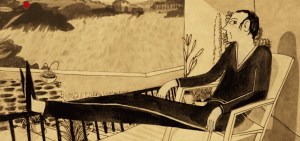 Mein Großvater erzählte mir immer wieder von der dritten Figur in meinem Film, dem Hund des Nachbarn. Er heulte Tag und Nacht, nachdem alle anderen Hunde, mit denen er zusammengelebt hatte, an Vernachlässigung und Altersschwäche gestorben waren. Er konnte seine Freunde nicht finden. Alle kamen zu dem Schluss, dass er einsam war. Und dann projizierten die Menschen ihre eigenen Ängste und ihre Einsamkeit sowie die Furcht davor, einsam zu sein, auf diesen Hund.
Als der Hund verschwand, sagten die Leute, sie könnten ihn immer noch hören, als ob sein Geist noch da wäre. Das wollte ich auch im Film darstellen: den Hund als einen Geist, der der Hauptfigur Marta – mir selbst – dabei hilft, meinem Großvater körperliche Zuneigung und Liebe zu zeigen, was ich eigentlich tun wollte, aber zu schüchtern war.
Dies ist kein Dokumentarfilm, aber er enthält dokumentarische Elemente und Geschichten. Ich wollte das Leben eher wie ein Abenteuer darstellen und diese Wandlung der Figur verfolgen: von der Unfähigkeit, viel Zuneigung zu zeigen, hin zur Fähigkeit, ihren Großvater zu umarmen. Sie war die Einzige aus den drei Geschichten oder Linien der Einsamkeit im Film, die etwas dagegen tun konnte.
In welchem Zusammenhang und über welchen Zeitraum hinweg ist Ihr Kurzfilm entstanden?
Der Film entstand über einen Zeitraum von drei Jahren mit einem wechselnden Team. Meine Regieassistentin Diana half mir dabei, alles für das Team zu organisieren. Zuvor hatte ich mehrmals versucht, finanzielle Unterstützung zu erhalten, und begann schließlich, den Film auf eigene Faust zu entwickeln.
Kannst du mir etwas über den Stil deines Animationsfilms erzählen? Mir ist vor allem dein Umgang mit einer reduzierten Farbpalette aufgefallen.
Früher habe ich Glasbilder in Schwarz-Weiß gemalt, die mir sehr gut gefallen haben, aber ich wollte mehr Wärme in diesen Film bringen, also habe ich mich nach weiteren Stilen umgesehen. Ein Ansatz, den ich entdeckt habe, bestand darin, auf Papier zu skizzieren, die Papierschichten übereinander zu legen und das Papier von unten zu beleuchten. Mir hat die geheimnisvolle Atmosphäre, die dies den Bildern des Films verleiht, sehr gut gefallen.
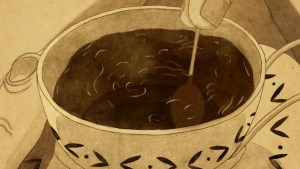 Was die Figuren und Hintergründe angeht, habe ich mich von vielen Künstlern inspirieren lassen, die ich während meines Studiums und meiner Recherchen kennengelernt habe, zum Beispiel Edward Gorey, Lorenzo Mattotti und französische Comics wie die von Joann Sfar, aber auch die Gemälde von David Hockney. Ich mag fließende Zeichnungen und die Vereinfachung menschlicher Figuren, bei der ihre Kurven und geraden Linien im Blick bleiben.
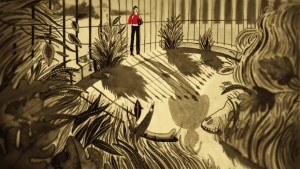
Der Einsatz von Farbe ist in diesem Film sehr zurückhaltend und zudem recht einfach gehalten. Ich habe zum Beispiel Rot für die Figur verwendet, die mich repräsentiert, weil ich Rot liebe, aber auch, weil Rot für mich Stärke, Leidenschaft, Lebendigkeit und Tatendrang symbolisiert. Das sind zwar alles Klischees, aber sie spiegeln wider, wie ich mich gefühlt habe. Meine Figur war die Einzige, die wirklich etwas gegen ihre Einsamkeit unternehmen und vielleicht auch anderen in ihrer Einsamkeit helfen konnte. Mein Großvater trug früher einen blauen Mantel. Diese blaue Farbe passt sehr gut zu ihm, weil es kälter ist und zeigt, dass er die Wärme anderer Menschen braucht. Der grüne Hund verschmilzt mit dem Gras und zeigt ihn als einen Geist, der im Haus spukt. Die grauen Figuren in London stehen dafür, wie ich mich in London gefühlt habe, als ich alle ansah und sie nur als Körper wahrnahm, unfähig, eine Verbindung herzustellen.
Kannst du mir etwas über die Gestaltung und Charakterisierung der Figuren erzählen?
 Die Figuren basieren auf Fotos und Zeichnungen meines Großvaters, meines Vaters, von mir selbst und meinen Tanten. Ich habe sie vereinfacht und stilisiert, um ihnen meinen eigenen Stil zu verleihen. Auch das Bühnenbild ist handgezeichnet, basiert jedoch auf realen Hintergründen, ist stilisiert und weist eine verzerrte Perspektive auf.
In deinem Film kommen nicht viele Worte vor, dafür ist die Musik sehr gut eingesetzt. Kannst du mir etwas über den Ton und den musikalischen Ansatz erzählen?
Alle Stimmen stammen von meiner Familie. Ich habe außerdem ein paar Sätze hinzugefügt, die ich brauchte, damit die Erzählung funktioniert, und die hauptsächlich von meiner Figur Martha gesprochen werden.
Was Ton und Musik angeht, wollte ich schon immer eine Symbiose schaffen. Ich habe schon früh damit angefangen, weil ich das Gefühl hatte, dass es für die Erzählung wirklich wichtig war, und es hat den Prozess vorangebracht. Wir hatten Jam-Sessions im Tonstudio. Der Komponist, der Sounddesigner und ich nahmen uns selbst auf, wie wir mit verschiedenen Instrumenten zum Film spielten.
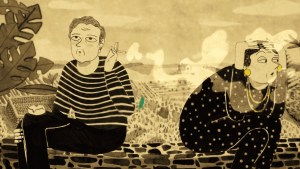 Ich wollte schon immer Atemgeräusche verwenden, um ein Stammesgefühl zu erzeugen. Ich habe auch Geige gespielt, um zu sehen, an welcher Stelle im Film das gut passen würde. Dann habe ich zusammen mit dem Komponisten die Melodie für die Hundesitz-Szene komponiert, und er hat sie mit diesem wunderschönen Orchesterarrangement unterlegt. Wir spielten mit Instrumenten, die ich sehr mag, wie der kleinen chinesischen Schachtel oder Maracas, um den Klang von Schlangen oder die Illusion von Insekten zu erzeugen. Die Vögel sind hauptsächlich Menschen, die schreien. Ich bin der Vogel, der viel schreit! Auf diesen Vogel bin ich wirklich stolz. Ich habe viel gelacht, aber an diesem Tag hatte ich für den Rest des Tages keine Stimme mehr.
Wir haben fünf oder sechs Mal gejammt, bevor wir uns auf bestimmte Szenen und Instrumente festgelegt haben. Gegen Ende haben der Sounddesigner Bernardo und der Komponist Grilo zusammengearbeitet, um alles miteinander zu „verschmelzen“, und ich finde, das ist wirklich gut gelungen. Eine meiner Inspirationsquellen ist Ennio Morricone in diesen Western, wo er es schafft, dass Musik zu jedem Geräusch wird und jedes Geräusch zu Musik. Diesen Ansatz wollte ich unbedingt auf diesen Film anwenden.
Kannst du mir etwas über dich erzählen und wie du zum Filmemachen gekommen bist?
Als ich etwa sieben Jahre alt war, hatte ich diese VHS-Kassette von „Schneewittchen“, die ich nicht zurückspulte. Als ich sie mir dann noch einmal ansah, entdeckte ich das „Making-of“ von „Schneewittchen“: Man sah Leute malen und zeichnen, und die Zeichnungen bewegten sich. Ich fand das magisch, und da ich selbst auch gerne zeichnete, wollte ich Teil dieser Welt sein. Das hat mich wirklich geprägt. Ich habe mir das „Making-of“ immer und immer wieder angesehen.
 Ich habe in der Oberstufe Kunst belegt und wusste, dass ich an der Universität Animation studieren wollte, aber an den staatlichen Universitäten in Portugal hatte ich nur zwei Möglichkeiten: entweder die Filmhochschule oder die Hochschule für Bildende Künste. Ich ging zur Filmhochschule. Das hat mich wirklich geprägt und mich motiviert, weiterhin neugierig zu bleiben. Aber ich wusste, dass ich mehr Erfahrung in der Animation brauchte, wenn ich das beruflich machen wollte, also ging ich für ein Jahr an eine Animationsschule in Paris. Als ich fertig war, wurde ich am Royal College of Art in London angenommen. Ich wollte dort meinen Master machen, weil mich verschiedene Kulturen faszinieren und ich verstehen wollte, wie die Welt miteinander in Beziehung steht. Das Studium in London war sehr erfüllend. Ich habe als Studentin alles erkundet, was ich konnte, und vor meinem Abschluss so viele Fehler, Stile und Techniken wie möglich ausprobiert. Ich bin wirklich glücklich über diese Erfahrung. Sie hat es mir ermöglicht, mich als Künstlerin zu entfalten.
Sind bereits neue Projekte geplant?
Bei der Arbeit an diesem Projekt wurde mir etwas bewusst, das ich wohl schon lange wusste, mir aber nie wirklich bewusst gemacht hatte: Was ich im Leben wirklich liebe, ist, Geschichten zu erzählen. Und zwar vor allem visuell und mit Ton.
Mein Vollzeitjob im Animationsstudio und die Arbeit am Film sind beides wunderbare Dinge, aber auch extrem kräftezehrend, und ich habe weder die Zeit noch den Freiraum gefunden, etwas Neues zu schaffen, auch wenn ich es mir wirklich wünsche.
Die Fragen stellte Doreen Kaltenecker
Übersetzung von Michael Kaltenecker
Lies auch die Rezension des Kurzfilms „Dog Alone“
Interview: In our conversation with Portuguese filmmaker and animator Marta Reis Andrade, we learned more about her short film “Dog Alone” (original title: “Cão Sozinho”), which was screened in competition at the 41st Interfilm Berlin 2025 and at the 38th Filmfest Dresden 2026. She talks about the autobiographical background, why she chose a limited color palette, and how she and her team seamlessly blend sound with music.
How did the idea for your short film come about? How autobiographical is the story?
The idea comes from the time when I was going back and forth from London to Portugal a lot. I grew up in a very small village in Portugal where everyone knows each other. When I lived in London after my studies I started feeling extremely lonely. You see loads of people eating, walking and always rushing but the relationship to them is so different compared to where I grew up. I started just seeing people as bodies. It was impossible to create a connection to them.
At the same time my grandfather back home was feeling a different kind of loneliness that comes with age and loss. My grandmother had passed away, he was losing his friends and relatives that were his age. Also by being old, he stopped having the same way of interacting with people and he became much more dependent and introspective. His faculties started to not be as they were before.
My grandfather would always tell me about the third element of my film, the neighbor’s dog. He would howl day and night after all the other dogs he had been living with had passed away from neglect and old age. He was not able to find his friends. The conclusion everyone reached was that he was lonely. And then people would project their own fears and loneliness and fear of being lonely into this dog.
As the dog disappeared people would say that they still could hear him, as if his spirit was still there. That’s what I also wanted to portray in the film: the dog as a spirit there to help the main character Marta – myself – show physical affection and love towards my grandfather, which is something I wanted to do but was too shy to.
This is not a documentary but there are documentary elements and stories inside it. I wanted to portray life more like an adventure and follow this change of character from not being able to show much affection to being able to hug her grandfather. She was the only one from the three stories or lines of loneliness in the film who could do something about it.
In what context and over what period of time was your short film made?
The film was made during three years with a rotating team. My assistant director Diana helped me organize everything for the team. Before that I was trying to get financial support several times and started developing the film on my own.
Can you tell me a little about the style of your animated film? I was particularly struck by your use of a limited color palette.
I used to do painting on glass in black and white that I really liked, but I wanted more warmth in this film, so I researched more styles. One approach I discovered was sketching on paper, layering the paper on top of each other and lighting that paper from below. I really liked the mystery ambiance that this gives the visuals of the film.
In terms of characters and backgrounds I was inspired by a lot of artists from my years studying and doing research, for example Edward Gorey, Lorenzo Mattotti and the French comic books like from Joann Sfar but also the paintings from David Hockney. I like fluid drawings and simplifying human figures in a way that observes their curves and straight lines.
The use of color is very minimal in this film and also pretty basic. For example, I used red for the character that represents me because I love red but also because to me red represents strength, passion, vibrance and action. These are all clichés, but they do represent how I felt. My character was the only one who really could do something about her loneliness and maybe also help others in their loneliness. My grandfather used to wear a blue overcoat. This blue color makes a lot of sense for him because it’s colder and shows that he needs the warmth of other people. The green dog is merging with the grass, showing him as a spirit that haunts the house. The gray characters in London represent how I felt in London looking at everyone, seeing them just as bodies, unable to form a connection.
Can you tell me something about the design and characterization of the figures?
The characters are based on pictures and drawings from my grandfather, my father, myself and my aunts. I simplified and stylized them to incorporate my own style. The set design is also hand-drawn but based on real backgrounds, stylized and with a subverted perspective.
Your movie doesn’t use many words, but it has a good use of music. Can you tell me a little about the sound and your approach to the music?
All the voices are recorded from my family. I also added a few sentences that I needed to make the narrative work that mainly my character Martha speaks.
In terms of sound and music I always wanted to have a symbiosis. I started work on it early on because I felt it was really important for the narrative and it unclogged things in the process. We had jam sessions in the sound studio. The composer, the sound designer and myself would record ourselves playing to the movie with different instruments.
I always wanted to use the sound of breathing for a tribal feeling. I also played the violin, seeing when in the film it would fit well. Then I created the melody for riding the dog with the composer who added this beautiful orchestra to it. We played with instruments that I really like, like the little Chinese box or maracas to create the sound of snakes or or the illusion of insects. The birds are mainly people screaming. I am the bird that screams a lot! I’m really proud of that bird. I laughed a lot, but that day I was left with no voice for the rest of the day.
We were jamming for five or six sessions before narrowing it down to specific scenes and instruments. Towards the end, the sound designer Bernardo and the composer Grilo worked together to “marry” it all together, and I think it really worked well. One of my inspirations is Ennio Morricone in those Westerns, where he really makes music be any sound and any sound can be music. I really wanted to apply this approach to this film.
Can you tell me about yourself and how you came to filmmaking?
When I was around seven I had this VHS tape of Snow White I didn’t rewind. So when I came back to rewatch it I saw the Making Of of Snow White, people painting and drawing and the drawings were moving. I thought that was magic and I also loved to draw so I wanted to be part of this world. This really stayed with me. I kept watching the Making Of over and over again.
I studied art in high school and knew that I wanted to do animation at university but at public universities in Portugal I had only two choices: either film school or fine arts. I went to film school. It really shaped the way I am and it really motivated me to continue to be curious. But I knew I needed more experience in animation if I wanted to do it as a job, so I went to an animation school in Paris for a year. When I finished, I got into the Royal College of Art in London. I wanted to do a Master’s there because I’m fascinated by different cultures and understanding how the world relates to each other. Studying in London was very fulfilling. I explored everything I could as a student, trying as many mistakes, styles, and techniques as possible before graduating. I’m really happy with that experience. It allowed me to explore as an artist.
Are there any new projects planned?
Doing this project, I realized something that I think I knew for a long time, but I never really consciously noted: what I really love to do in life is to tell stories. And mainly tell stories visually and with sound.
My full-time studio job in animation and accompanying the film are both wonderful things but extremely draining and I have not been finding the time or space to create anything new even if I really want to.
Questions asked by Doreen Kaltenecker
Read on the german review of the short film „Dog Alone„