
Studium der Kunstgeschichte - Schwerpunkt: Filmgeschichte
(Abschluss 2010 mit der Arbeit "Rembrandt im Spielfilm")
Nebenfächer: Philosophie und Alte Geschichte
- seit 2012: Filmkritikerin bei movieworlds (Kino, DVD, BD, Festivalberichte)
- seit 2015: Blog 'Testkammer' online
- Acht Fragen an Mathieu Georis und Théo Hanosset - 3. November 2026
- „The Little White Queen“ (2025) - 3. November 2026
- Sieben Fragen an Nicolas Fong - 2. November 2026
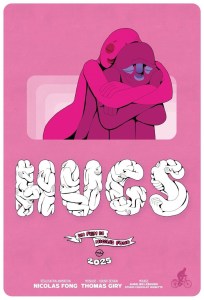
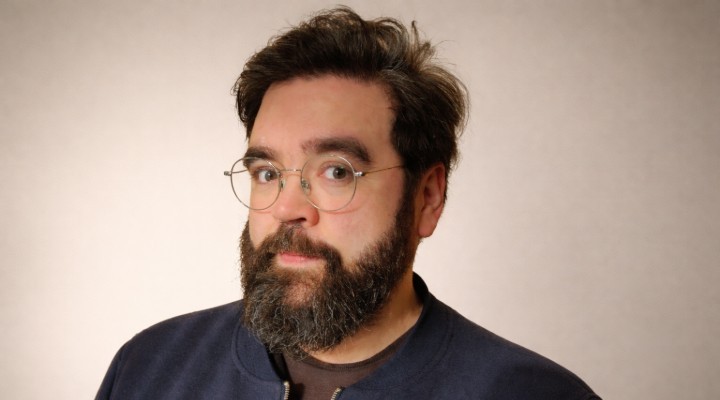 Interview: Im Gespräch mit dem belgischen Regisseur Nicolas Fong konnten wir mehr über seinen Animationsfilm „HUGS“ erfahren, der im Internationalen Wettbewerb des 42. Interfilm Festival Berlin 2026 zu sehen sein wird. Er erzählt, wie er auf die Idee kam, einen Film nur mit Umarmungen zu füllen, was ihm dabei bei der Figurengestaltung und den Farben wichtig war und wie die Musik von Thomas Giry das Ganze unterstützt.
The original english language interview is also available.
Wie ist die Idee zu Deinem Kurzfilm entstanden? Gab es einen Zeitpunkt, an dem Du dran gedacht mehr narrativ zu arbeiten?
Bevor ich „HUGS“ gedreht habe, habe ich mehrere Kurzfilme und Musikvideos gedreht. Und in jedem Film habe ich eine Umarmung eingebaut. Es hat mir großen Spaß gemacht, Menschen bei einer Umarmung zu animieren. Also beschloss ich, viele Umarmungen zu animieren. Zuerst animierte ich nur eine, dann eine zweite und eine dritte … Nach einer Weile beschloss ich, eine Sammlung von Umarmungen zusammenzustellen und einen Film darüber zu drehen. Erst als ich in Belgien mit  dem Fahrrad an einem Fluss entlang fuhr (der Ourthe, er ist wunderschön) und auf ein sich umarmendes Paar stieß, wurde mir klar, dass ich eine Figur brauchte, die all diese Umarmungen miterlebt. Dieser Radfahrer war ausschlaggebend für die endgültige Form des Films. Ich meine, zunächst habe ich eine Version des Films mit Schnitt erstellt, es gab einen Schnitt zwischen jeder Einstellung. Eine Umarmung – Schnitt – eine weitere Umarmung – Schnitt – usw. Das hat mich nicht zufrieden gestellt. Also brachte mich der Radfahrer auf die Idee, den Film aus seiner Perspektive zu drehen: Der Film sollte eine lange POV-Einstellung sein.
Du verstehst sicher, dass mein Film nicht nach Drehbuch gedreht wurde, es gab kein Storyboard, ich habe den Look des Films im Laufe der Dreharbeiten festgelegt. Ich drehe diesen Film in meiner Freizeit. Der Film ist in Eigenproduktion entstanden. Auf diese Weise hatte ich eine organische Arbeitsweise: „Arbeiten während wir uns bewegen“ und fast alles verbessern.
Wie viele Aufgaben hast Du in der Entwicklung und Umsetzung selbst übernommen?
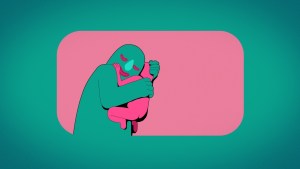 In diesem Film mache ich fast alles selbst: Charakterdesign, Key-Posing, Animation, Clean-Up, Compositing, Schnitt – und die Geschichte, wenn man überhaupt von einer Geschichte sprechen kann; es handelt sich eher um einen Experimentalfilm. Beim Compositing habe ich etwas Unterstützung erhalten: Alexandre Lemasson hilft mir bei den Kamerabewegungen in After Effects, Guillaume Lurati bei einigen Key-Posing-Aufnahmen und Camille Rodriguez bei den handgemalten Hintergründen. Natürlich auch Thomas Giry für das Sounddesign und Aurélien Lebourg für den Tonmix.
Kannst Du mir mehr zu den Animationen selbst erzählen: Sind sie per Hand gezeichnet, wie hast Du es geschafft, dass die Figuren so perfekt ineinander fließenden und warum hast Du Dich für diese Farbpalette entschieden?
Alles wird Bild für Bild animiert, von Hand gezeichnet, am Computer. Das Animieren bereitet mir große Freude, ich liebe die Magie, die dabei entstehen kann! Ich bin nun schon seit vielen Jahren als Animator tätig. Vor 20 Jahren habe ich mit Animation angefangen, und sie hat mich schon immer fasziniert. Für diesen Film wollte ich eine besonders einfühlsame Animation schaffen. Aufgrund der Entscheidung des Fahrradfahrers, eine POV-Perspektive zu wählen, anstatt die Aufnahmen nacheinander zu schneiden, wirkt der Film sehr fließend – das passt gut zu meiner sanften und fließenden Animationen.
Die Farben, die ich gewählt habe, lagen zunächst auf der Hand. Ich wollte meine Figuren in Schwarz-Weiß mit farbenfrohen Hintergründen darstellen. Aber ich wollte nicht, dass meine Figuren nur weiß sind. Ich habe mehrere Tests mit vielen verschiedenen Farben durchgeführt und mich schließlich entschieden, meine Farbpalette einzugrenzen auf fast ausschließlich Rot und Grün.
Was lag Dir bei der Figurenzeichnung am Herzen?
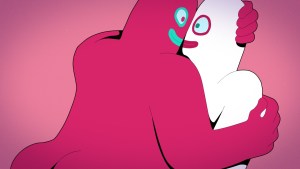 Als ich meine erste Umarmung animierte, wollte ich, dass meine Figuren ganz einfach gestaltet sind. Ohne Kleidung, ohne Haare, ohne bestimmte Form. Erst danach habe ich mich für die Farben entschieden: Grün, Rot, Lila … nicht nur Weiß. Ich möchte, dass sie universell sind, sodass man ihre Herkunft oder soziale Schicht nicht erkennen kann; sie sind geschlechtslos. Und natürlich war es ohne all diese Details einfacher, sie zu animieren. ;)
Dein Film arbeitet ohne Worte, umso wichtiger ist die Musik von Thomas Giry. Kannst Du mir dazu erzählen.
Ich sagte Thomas Giry, er solle etwas schaffen, das aus dem Bauch herauskommt, etwas Ursprüngliches; er antwortete, das Zusammenspiel der Körper inspiriere eine Partitur, die mit Klangtexturen spiele, die aus realen Tonaufnahmen stammen: das Aneinanderreiben von Haut und Kleidung, Atemgeräusche, der Kontakt und die Bewegung von Gegenständen usw. Außerdem wollte er die Erinnerungen und die Fantasie, die der Film weckt, durch die Einbindung einer uralten, instinktiven und traumhaften Litanei heraufbeschwören, die sich nach und nach über den gesamten Film hinweg entfaltet und als eine Art emotionaler Hintergrund dient, welcher in jede Szene eingebettet ist.
Kurz noch zu Dir als Person und wie Du selbst zum (Animations-)Film gekommen bist.
 Schon als Kind begann ich mich für Animation zu interessieren, und während meines Grafikdesign-Studiums in Paris spielte ich mit dem Gedanken, mich der Animationskunst zu widmen. Deshalb zog ich 2003 nach Brüssel, um an der Kunsthochschule LaCambre Animation zu studieren. Während meines Studiums arbeitete ich als Animator an einem großartigen Projekt: „Fear(s) of the dark“, einer Sammlung von Kurzfilmen zum Thema Dunkelheit. Seit meinem Abschluss arbeite ich viel für animierte Fernsehserien und Spielfilme, sowohl als Animator als auch als leitender Animator. In der Zwischenzeit habe ich mein erstes Musikvideo (Korn!! OMG), meinen ersten professionellen Kurzfilm „Yin“ und viele andere Projekte inszeniert. Meine Haupttätigkeit ist das Animieren, und zwischen zwei Produktionen versuche ich, meine eigenen Projekte zu verwirklichen.
Sind bereits weitere, auch eigene Projekte geplant?
Ja! Ich wünschte, ich könnte einen handgezeichneten Film drehen, mit weniger Computereingriffen. Wegen der KI habe ich das Gefühl, dass ich mich von der digitalen Welt lösen und mich etwas Greifbarem, Sinnlicherem zuwenden muss. Ich habe eine Geschichte über Reinkarnation – drückt mir die Daumen, dass ich die Zeit und das Geld finde, sie umzusetzen. Denn einen Film in Eigenproduktion zu drehen, ist nicht einfach.
Die Fragen stellte Doreen Kaltenecker
Übersetzung von Michael Kaltenecker
Lies auch die Rezension des Kurzfilms „HUGS“
Interview: In our conversation with Belgian director Nicolas Fong, we learned more about his animated film “HUGS”, which will be screened in the International Competition at the 42nd Interfilm Festival Berlin in 2026. He explains how he came up with the idea of creating a film consisting entirely of hugs, what was important to him in terms of character design and color, and how Thomas Giry’s music complements the film.
How did the idea for your short film come about? Was there a point when you thought about taking a more narrative approach instead?
Before making “HUGS”, I directed several short movies and music videos. And in each film, I included a cuddle. It was a great pleasure to animate people having a Hug. So, I decided to animate a lot of hugs. At first, I animated just one, a second, and a third … After a while I decided to have a collection of hugs and made a film about it. It’s only when I was riding my bike along a river in Belgium (l’Ourthe, it’s wonderful), and I came across a couple hugging, that I realized I needed a character who would witness all these hugs. Because of this cyclist, this led to the film’s final form. I mean at first, I made a version of the film with an editing, there was a cut between each shot. A hug, cut, another hug, cut, etc. It wasn’t satisfying for me. So, the biker gave me the idea to do the film from his point of view: the film will be a POV long shot.
You have to understand my film wasn’t scripted, there was no storyboard, I decided on its look as I went along. I do this film in my spare time. This film was self-produced. In this way, I had an organic way of working. „working as we move“, and improving almost everything along the way.
How many tasks did you handle yourself during the development and production?
In this film I do almost everything. Character design, key posing, animation, clean, compositing, editing, and the story if you can say there is a story, it’s more an experimental movie. I have some help for the compositing, Alexandre Lemasson helps me with camera movement in afterFX. Guillaume Lurati for a few key posing shots. And Camille Rodriguez for the hand-painting backgrounds. Of course, Thomas Giry for the sound design, and Aurélien Lebourg for the mixage.
Can you tell me more about the animations themselves: Are they hand-drawn? How did you manage to make the characters flow so seamlessly into one another, and why did you choose this color palette?
Everything is animated frame by frame, hand-drawn, on computer. Animating is a great pleasure for me, I like the magic it can provide! I’ve been an animator for many years now. I started animation 20 years ago, and it always amazed me. For this movie I wanted to do a really sensitive animation. Because of the decision of the biker, to do a POV perspective, instead of an editing with a shot one after another, the film seems to be really smooth, it fits well to my soft and fluid animation.
The colors I chose were obvious at first. I wanted to have my characters in black and white with colorful backgrounds. But I didn’t want my characters to be only white. I made several tests with a lot of colors, and I’ve decided to narrow down my color palette. Almost red and green.
What was most important to you when designing the characters?
When I animated my first hug, I wanted my characters to be really simple. Without clothes, without hair, without particular shape. It’s only after I decided on the colors, green, red, purple … not just white. I want them to be universal, so you can’t tell their origin or social class. They are genderless. And of course, without all of those details it was easier to animate ;)
Your film uses no words, which makes Thomas Giry’s music all the more important. Can you tell me more about that?
I told Thomas Giry to do something that comes from the guts, something tribal. He said, the interaction of bodies inspires a score that plays with sound textures derived from real-life sound recordings: the rubbing of skin and clothing, snippets of breathing, the contact and movement of objects, etc. He also wanted to evoke the memories and imagination that the film conjures by incorporating an ancient, instinctive, and dreamlike litany, which unfolds gradually throughout the film, serving as a sort of emotional backdrop embedded in each scene.
What is your background and how did you get into (animated) film?
I started to be interested in animation when I was a kid, and I considered doing animation while I was studying graphic design in Paris. So, I moved to Bruxelles to study animation in the art school LaCambre, in 2003. During my studies, I worked as an animator for a great project : „Fear(s) of the dark“, a compilation of short films about the same theme (the dark). After school, I work a lot for animated TV shows and feature films, as an animator and lead animator. Meanwhile I directed my first music video (korn!), my first professional short film, „Yin“, and many other projects. My main occupation is to animate, and between two productions I try to do my own stuff.
Are there any other projects planned, including your own?
Yes! I wish I could do a hand-draw film, with less computer intervention. Because of AI, I feel like I need to step away from the digital world and get closer to something more tactile, more sensory. I have a story about Reincarnation, wish me luck to find the time and money to do it. Because making a self-produced film is not easy …
Questions asked by Doreen Kaltenecker
Read on the german review of the short film „HUGS„