
Studium der Kunstgeschichte - Schwerpunkt: Filmgeschichte
(Abschluss 2010 mit der Arbeit "Rembrandt im Spielfilm")
Nebenfächer: Philosophie und Alte Geschichte
- seit 2012: Filmkritikerin bei movieworlds (Kino, DVD, BD, Festivalberichte)
- seit 2015: Blog 'Testkammer' online
- Jetzt in der Mediathek! – Der Film „Gelato – Die sieben Sommer der Eisliebe“ - 22. März 2026
- Sechs Fragen an Stella Deborah Traub - 21. März 2026
- „Schwanensee“ (2025) - 21. März 2026
 Interview: Im Gespräch mit dem Regisseur Bo Wang konnten wir mehr über seinen Kurzfilm „An Asian Ghost Story“, der auf dem 66. DOK Leipzig 2023 die Goldene Taube für den besten dokumentarischen Kurzfilm gewonnen hat, erfahren, wie er zu dieser Geschichte kam und wie weit ihn bekannte Motive aus Horrorfilmen bei seiner Ästhetik beeinflusst haben.
The original english language interview is also available.
Wie bist Du auf diese Wirtschaftsgeschichte aufmerksam geworden?
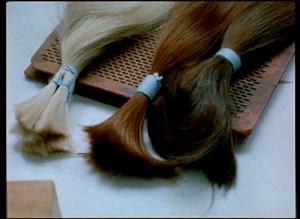 Dieses Projekt wurde ursprünglich vom Center for Heritage, Art and Textile in Hongkong in Auftrag gegeben und stand unter dem Thema Textilindustrie und Modernisierung in Ostasien. Als der Kurator an mich herantrat, war es das Jahr 2020, und ich las zufällig eine Nachricht, dass die Perückenpreise weltweit wegen Covid erheblich gestiegen waren. Der eigentliche Grund für den Preisanstieg war, dass Nordkorea wegen Covid seine Grenze geschlossen hatte, wodurch die Verbindung zwischen den chinesischen Perückenherstellern, welche die Hauptlieferanten für die globalen Märkte waren, und den nordkoreanischen Arbeitsmärkten unterbrochen wurde. Ich begann zu begreifen, dass Perücken auch eine besondere Textilware sind, und zwar in einer Weise, die eine transnationale Arbeitsorganisation, geschlechtsspezifische Aufteilungen usw. beinhaltet. Da ich während der Covid-Zeit nicht wirklich reisen konnte, konzentrierte ich mich mehr auf Archivrecherchen und stieß später auf diese Geschichte über das kommunistische Haarverbot im Jahr 1965.
In welchem historischen Rahmen spielen die Ereignisse des Films?
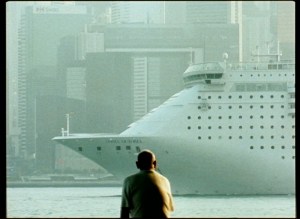 Die Handlung des Films spielt hauptsächlich in den 1960er Jahren und reicht bis in die frühen 1990er Jahre. Hongkong war in den 1960er Jahren die Frontlinie des Kalten Krieges und spielte eine Rolle, die die sozialistische und die kapitalistische Welt miteinander verband. Der Protagonist des Films, das Haar oder der Geist, hat die Fähigkeit, durch beide Welten zu reisen, in denen die fragmentierten Erinnerungen an eine geopolitische Ordnung und die Traumata individueller Erinnerungen zusammenkamen.
War Dir schnell klar, dass Du dies nicht nur als reine Dokumentation erzählen willst? Du inszenierst Szenen, die auch klar gestellt sind. Kannst Du mir zu Deinem Konzept und der Mixtechnik erzählen?
 In der Tat gibt es außer ein paar Zeitungsberichten nicht viel Material darüber, was genau während der Sanktion geschah. Aber das Ereignis selbst ist so seltsam, dass es so viel Raum für Fantasie geschaffen hat. Ich sehe das Projekt also eher als eine spekulative, oder vielleicht sollte man sagen performative Interpretation von historischem Material.
Aus welchen Quellen hast Du Dein Archivmaterial zusammengestellt?
In den letzten zehn Jahren habe ich an mehreren Projekten über Hongkong und die Geschichte des städtischen Raums gearbeitet. Vor diesem Projekt hatte ich also bereits ein relativ umfangreiches persönliches Archiv zusammengestellt, das aus Filmen, Wochenschauen, Dokumentarfilmen und Amateurvideos bestand.
Was lag Dir visuell am Herzen? Wie weit haben Dich gängige Genrefilme beeinflusst?
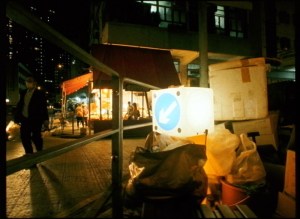
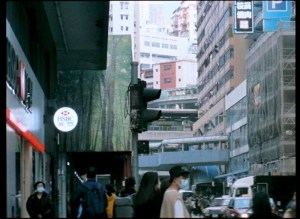 Bei der Arbeit an diesem Projekt war mir von Anfang an klar, dass ich den Bildern mehr Textur verleihen wollte. Die auf Analogfilmen gedrehten Wochenschauen aus den 60er und 70er Jahren waren eine Referenz für die Art von Bildern, die ich suchte. Was die Geschichte selbst betrifft, so waren Horrorfilme bekanntlich ein wichtiger Bestandteil des Hongkonger Kinos während seiner Blütezeit. „An Asian Ghost Story“ orientiert sich nicht so sehr an der Bildsprache der Hongkong-Horrorfilme, sondern ist eher von der Vorstellungskraft beeinflusst, die man in diesen Filmen findet.
Kannst Du mir noch ein bisschen mehr zu Dir erzählen und wie Du zum Film gekommen bist?
 Ich habe in Peking Naturwissenschaften studiert. In dieser Zeit begann ich, mich sehr für die Fotografie zu interessieren. 2007 zog ich in die USA, zunächst um einen Doktortitel in angewandter Physik zu erwerben, aber ich beschloss, das Studium bald abzubrechen und stattdessen Kunst zu studieren. Später wurde ich in ein MFA-Programm an der School of Visual Arts in New York aufgenommen, das sich MFA in Fotografie, Video und verwandten Medien nennt. Von dort aus begann ich, meine Praxis mehr auf bewegte Bilder zu verlagern.
Sind bereits neue Projekte geplant?
Im Moment gibt es noch nichts Konkretes.
Die Fragen stellte Doreen Kaltenecker
Übersetzung von Michael Kaltenecker
Lies auch die Rezension des Kurzfilms „An Asian Ghost Story“
Interview: In our conversation with director Bo Wang, we were able to learn more about his short film „An Asian Ghost Story„, which won the Golden Dove Short Film at the 66th DOK Leipzig 2023, how he came up with this story and how far familiar motifs from horror films influenced him in his aesthetic.
How did you become aware of this economic story?
This project was initially commissioned by the Center for Heritage, Art and Textile in Hong Kong, themed under textile industry and modernization in East Asia. When I was approached by the curator, it was 2020 and I happened to read a news that wig price globally had considerably rosen due to Covid. The real cause of the price rise was that North Korea closed its border due to Covid, which cut off the connection between Chinese wig manufacturers who were the main suppliers to the global markets and North Korean labor markets. I started to realize how wig is also a peculiar textile commodity, in such a way that it involves transnational organization of labor, gendered divisions, etc. As I could not really travel during Covid time, so I focused more on archival research and later encountered this story of the communist hair ban in 1965.
In what historical context do the events of the film take place?
The story of the film took place majorly during the 1960s and had a stretch to the early 1990s. Hong Kong in the 1960s was the front line of the cold war, playing a role that connected the socialist and the capitalist worlds. The protagonist of the film, the hair, or the ghost, has the capability to travel through both worlds, upon which fragmented memories of a geopolitical order and traumas of individual memories had come together.
Did you quickly realize that you didn’t just want to tell it as a documentary? You are staging scenes that are also clearly not real. Can you tell me about your concept and the mixed approach?
Indeed, as there is not much material available about what exactly happened during the sanction, except a few newspaper reports. But the event itself is so odd that it has created so much space for imagination. So I see the project more as a speculative, or maybe should be called performance interpretation of historical material.
From which sources did you compile your archive material?
I had worked on several projects about Hong Kong and the history of its urban space in the past ten years. So prior to this project, I have already compiled a relatively rich personal archive that ranged from films, newsreels, documentaries and amateur videos.
What was important to you visually? To what extent were you influenced by popular genre films?
When working on this project, I knew from early on that I would like to give more texture to the images. The newsreels shot on analogue films from the 60s and 70s was a reference for the kind of images I was looking for. In terms of the story itself, as we all know, horror films were a big part of Hong Kong cinema during its peak time. „An Asian Ghost Story„ did not take much reference from the visual language of Hong Kong horror films, but is more influenced by ways of imagination that one can find in those films.
Can you tell me a bit more about yourself and how you came to film?
I studied science as an undergraduate in Beijing. It was this time that I started to get very interested in photography. I moved to the USA in 2007, initially to pursue a PhD degree in applied physics, but I decided to quit soon and wanted to study art instead. Later I got into a MFA program at School of Visual Arts in New York, called MFA in photography, video and related media. It was from there that I started to shift my practice more to moving images.
Are there any new projects planned?
Not anything specific at this moment.
Questions asked by Doreen Kaltenecker
Read on the german review of the short film „An Asian Ghost Story„