
Studium der Kunstgeschichte - Schwerpunkt: Filmgeschichte
(Abschluss 2010 mit der Arbeit "Rembrandt im Spielfilm")
Nebenfächer: Philosophie und Alte Geschichte
- seit 2012: Filmkritikerin bei movieworlds (Kino, DVD, BD, Festivalberichte)
- seit 2015: Blog 'Testkammer' online
- Sieben Fragen an Dominic Wittrin - 27. Juli 2026
- „How to kill your family“ (2026) - 27. Juli 2026
- Jetzt online! – Der Film „Invincible“ - 26. Juli 2026
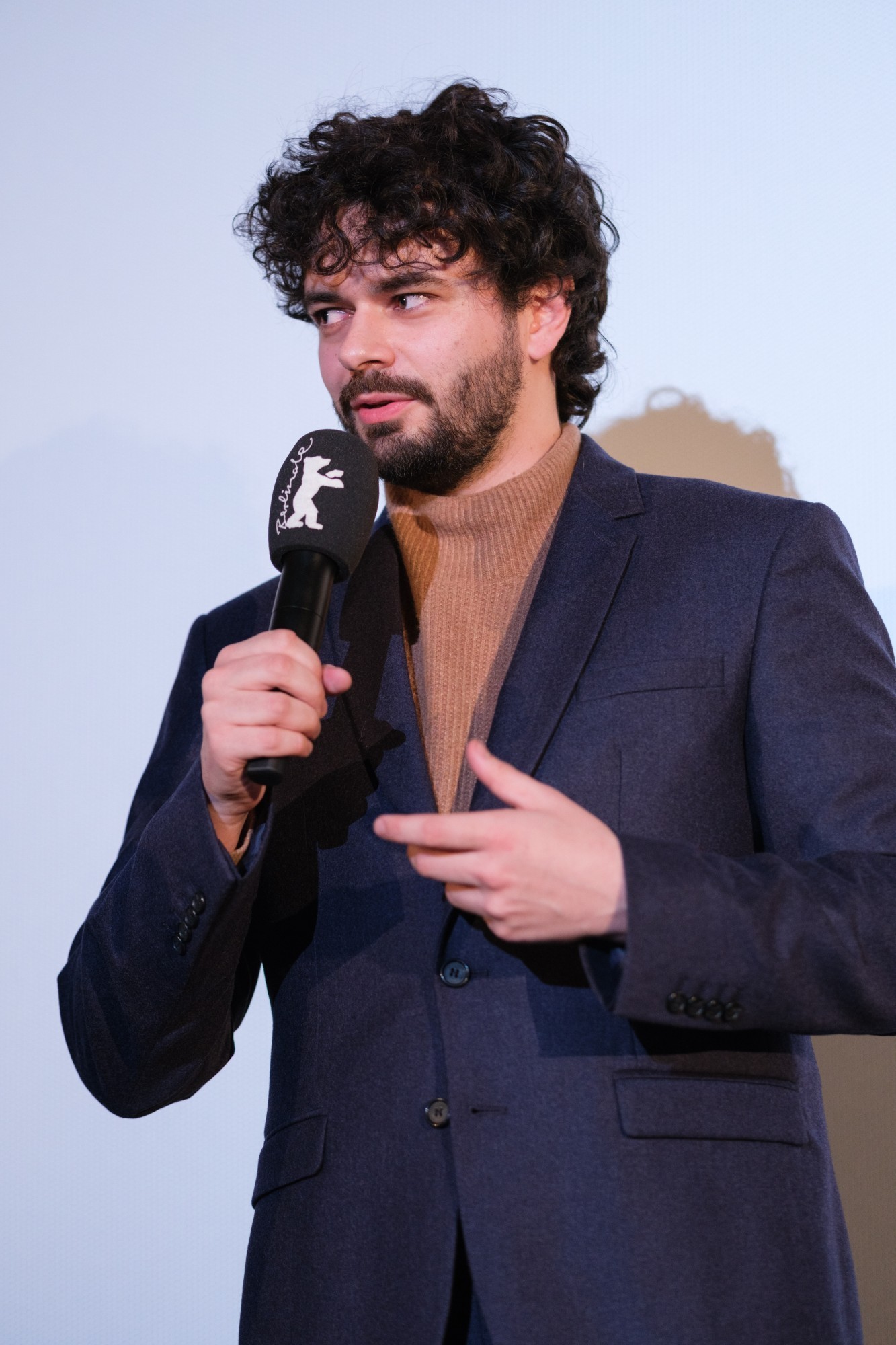 Interview: Im Gespräch mit dem französischen Regisseur Nathan Ghali konnten wir mehr über seinen Kurzfilm „Lick a Wound“ (OT: „Les animaux vont mieux“) erfahren, der im Rahmen des ‚Berlinale Shorts‘-Programm der 74. Berlinale 2024 gezeigt wurde. Dabei spricht er von der Entwicklung der Geschichte, die durch Impressionen und Bildern geformt wurde, wie entscheidend der Ton ist und in welcher Technik er den Animationsfilm umgesetzt hat.
The original english language interview is also available.
Wie ist die Idee zu Deinem Kurzfilm entstanden?
Die Idee für diesen Film kam mir während eines Aufenthalts in La Peyrigne in Südfrankreich, wo ich die Gelegenheit hatte, den verfallenen Keller einer Kirche zu erkunden und eine Art „Statuenfriedhof“ zu entdecken. Sofort stellte ich mir eine Filmkulisse vor und stellte mir eine Gemeinschaft von Tieren vor, die dort leben. Ich schrieb kein Drehbuch, aber da das Thema dieses Aufenthalts „Sammeln“ war, begann ich, im Internet nach 3D-Modellen von Tieren zu suchen. Ich begann, Bilder zu schaffen, bevor ich eine Geschichte hatte. Die visuelle Atmosphäre des Kirchenkellers bestimmte die Erzählung. Dann arbeitete ich daran, die Geschichte in Form von Monologen der Tiere zu schreiben, die sich als sehr autobiografisch herausstellten: Die Tiere erinnerten mich sehr an meine Kindheit, in der ich immer mit meinen Katzen zusammen war, und es weckte in mir das Bedürfnis, über bestimmte Erinnerungen zu sprechen, und zwar mit den Augen meiner damaligen Katze. Ein Jahr lang habe ich allein an diesem Film gearbeitet und nach und nach verschiedene Zweige, Szenen und Erzählstränge hinzugefügt. Allein zu arbeiten, bevor ich den Film mit einem Team fertigstellte, bot reichlich Raum für Fantasie und Experimente.
Erzähl mir bitte zu dem Rahmen, der Aufenthalt in La Peyrigne, und wie viel Zeit Du für das Projekt hattest?
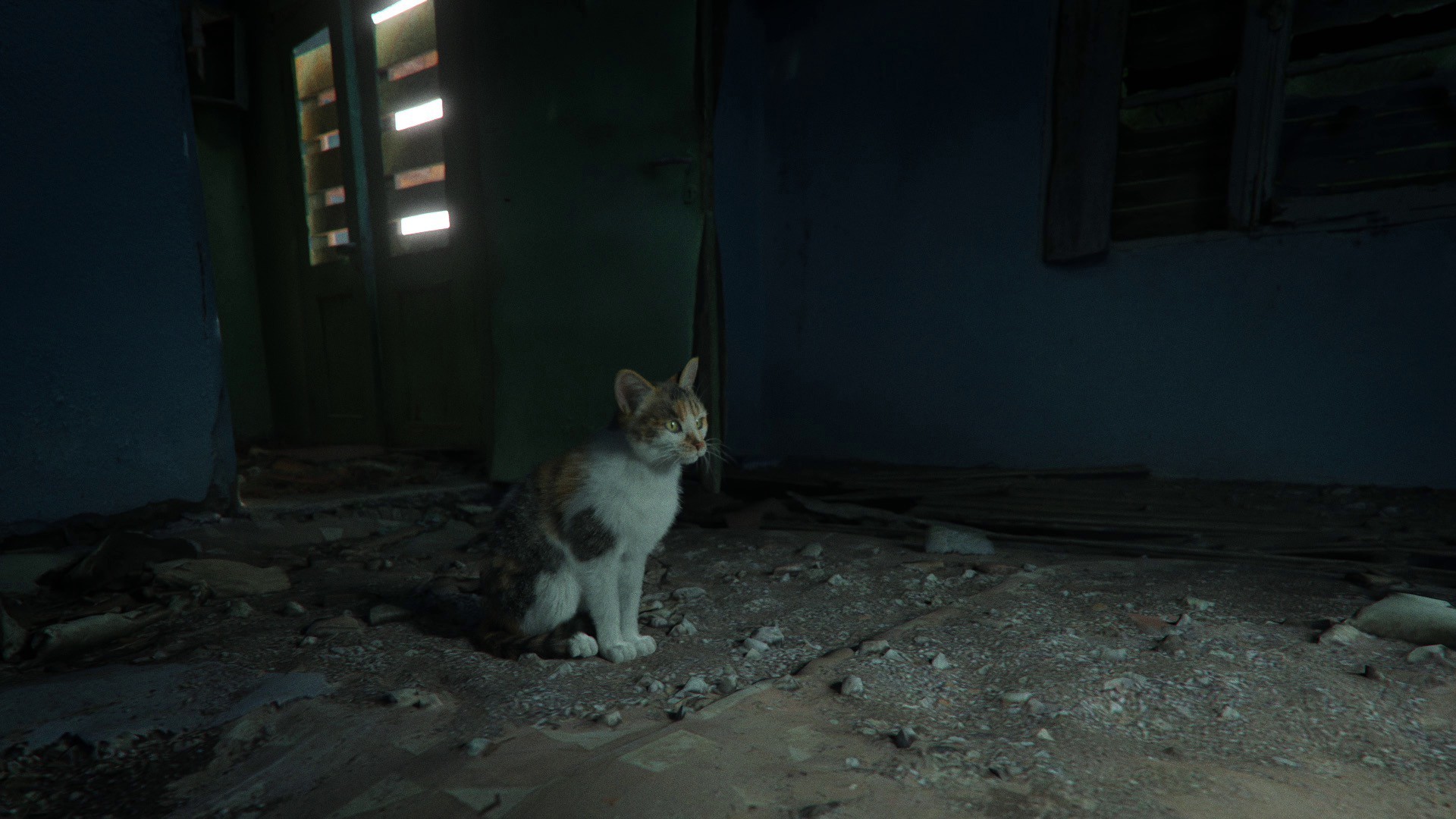 Die Residenz ist eigentlich ein Bauernhof, der noch in Betrieb ist und sich langsam in eine Kunstresidenz verwandelt. Wir waren 14 Bewohner, die einen Monat lang zusammen lebten. Das Leben in der Gemeinschaft beeinflusste auch die Idee, dass diese Tiere alle zusammen sind. Ich blieb einen Monat dort, im Juli 2022. Ich hatte bereits einen Prototyp des Films, als ich abreiste. Ich verfeinerte ihn erst allein und dann mit einem Team, bis er im Januar 2024 fertig war, es dauerte also anderthalb Jahre, in denen ich fast Vollzeit arbeitete.
Du hast den Film ganz allein mit Blender geschaffen, oder? Was war Dir da wichtig? Wie hast Du es geschafft, die Tiere so lebensecht zu übertragen?
Nicht wirklich! Ich habe ein ganzes Jahr lang allein gearbeitet, aber dann kamen die Produzenten (Le GREC), eine Animatorin (Margaux Kempff), ein Cutter (Michel Klochendler), ein Geräuschemacher (Etienne André) und ein Tonmeister (Jules Jasko) dazu. Die Arbeit mit einem kleinen Budget (5.000€) und einer kleinen Crew ermöglichte es mir, kreativ völlig frei zu sein, aber ich habe nicht vor, meine nächsten Projekte auf diese Weise zu produzieren, es ist ermüdend! Die Tiere sehen aus mehreren Gründen lebensecht aus: Erstens sind die Modelle, die wir gekauft haben, von sehr guter Qualität, und Margaux, die Animatorin, ist ebenfalls sehr talentiert. Ich habe mich auch dafür entschieden, sie immer von hinten zu beleuchten, so dass man keinen totalen Zugang zu ihnen hat, das Geheimnis bleibt. Ich habe sie wie Filmfiguren gestaltet, nicht wie Tiere in einer Dokumentation. Das macht sie nicht unbedingt realer, aber wir betrachten sie eher als Figuren und können uns besser in sie hineinversetzen.
Was lag Dir noch visuell am Herzen?
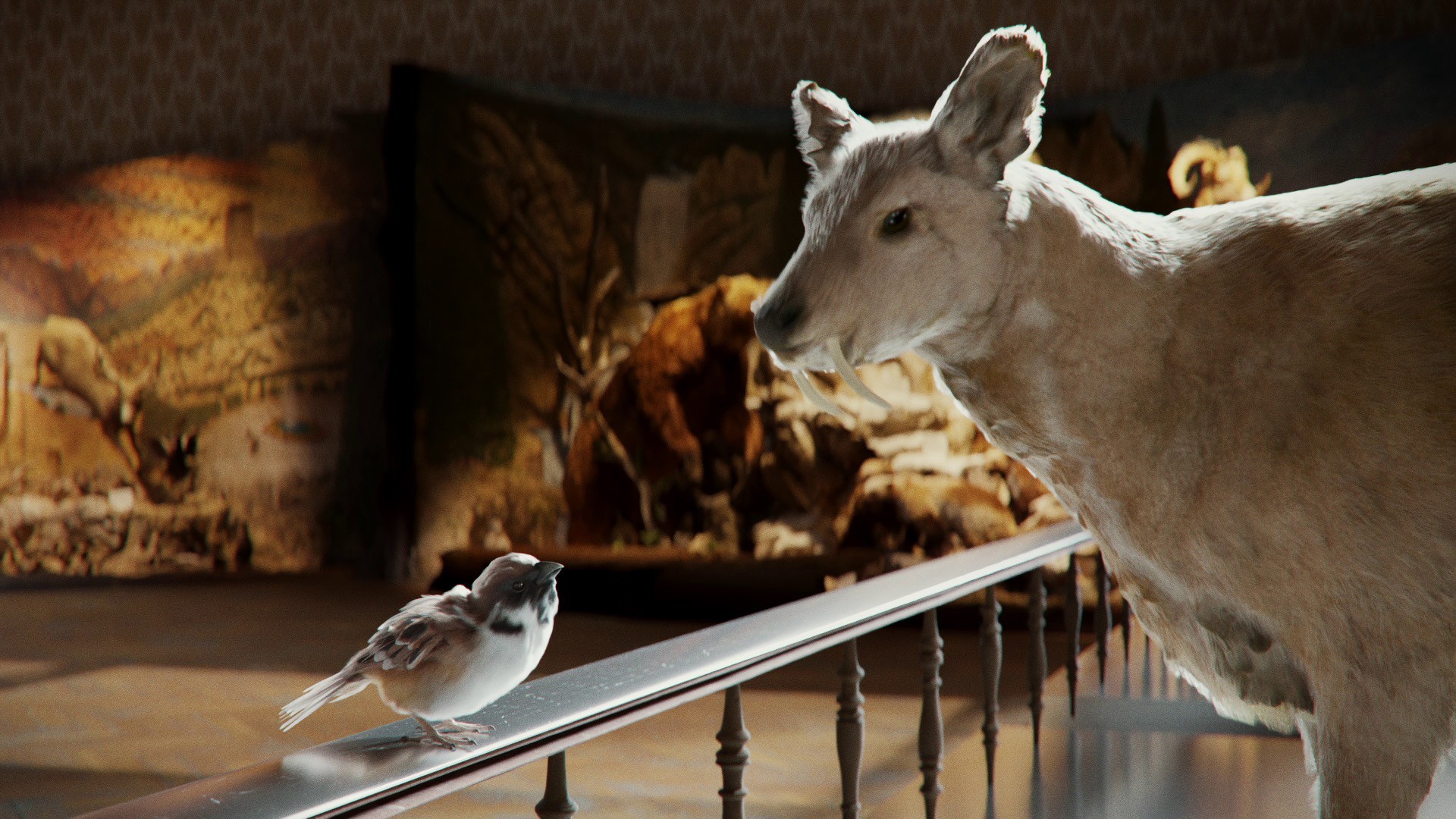 Natürlich war der Realismus wichtig, ich habe das Gefühl, dass er für mich eher ein Werkzeug als ein Ziel ist: Wenn der Film realistisch aussieht, kann ich mit vielen Dingen spielen, kleine Störungen erzeugen, die Tiere bewegen sich zum Beispiel immer in Schleifen. Da es für den Zuschauer ohnehin schon schwierig ist, herauszufinden, was er da sieht, schafft das eine interessante Atmosphäre, auf die ich aufbauen kann.
Interessant finde ich auch Deine Entscheidung, ihre Gedanken als Projektion in den Film zu integrieren, wie kam es dazu?
Zuerst waren die Untertitel nur normale Untertitel, aber das hat nicht wirklich funktioniert. Echte Untertitel zu verwenden bedeutet „das sagen/denken die Tiere“. Das Konzept des projizierten Textes kam mir, als ich mir der Bedeutung der Darstellung von Tieren und des Anthropomorphismus bewusster wurde, und es ist für mich eine Art zu sagen: „Das ist meine Interpretation als Regisseur, als Mensch, ihrer Gedanken.“ Die Texte sind sehr autobiografisch, ich ‚projiziere‘ buchstäblich einige Gedanken, Erinnerungen und Emotionen auf diese Tiere, aber vielleicht ist es nicht das, was sie wirklich fühlen und denken. Das ist auch der Grund, warum meine Übersetzung nach einem Drittel des Films aufhört, als hätte ich akzeptiert, dass ich mich nicht in ihre Köpfe hineinversetzen kann, sie haben ihre eigene Alterität, ihre Handlungsfähigkeit, und das ist es, was wir als Menschen akzeptieren müssen, wir können das meiste, was Tiere denken und fühlen, nicht verstehen, sie haben Zugang zu Emotionen, die wir nicht haben (das Gegenteil ist auch wahr).
Auch die Tonspur ist besonders – magst Du mir noch mehr zu dem erzählen, was man hört?
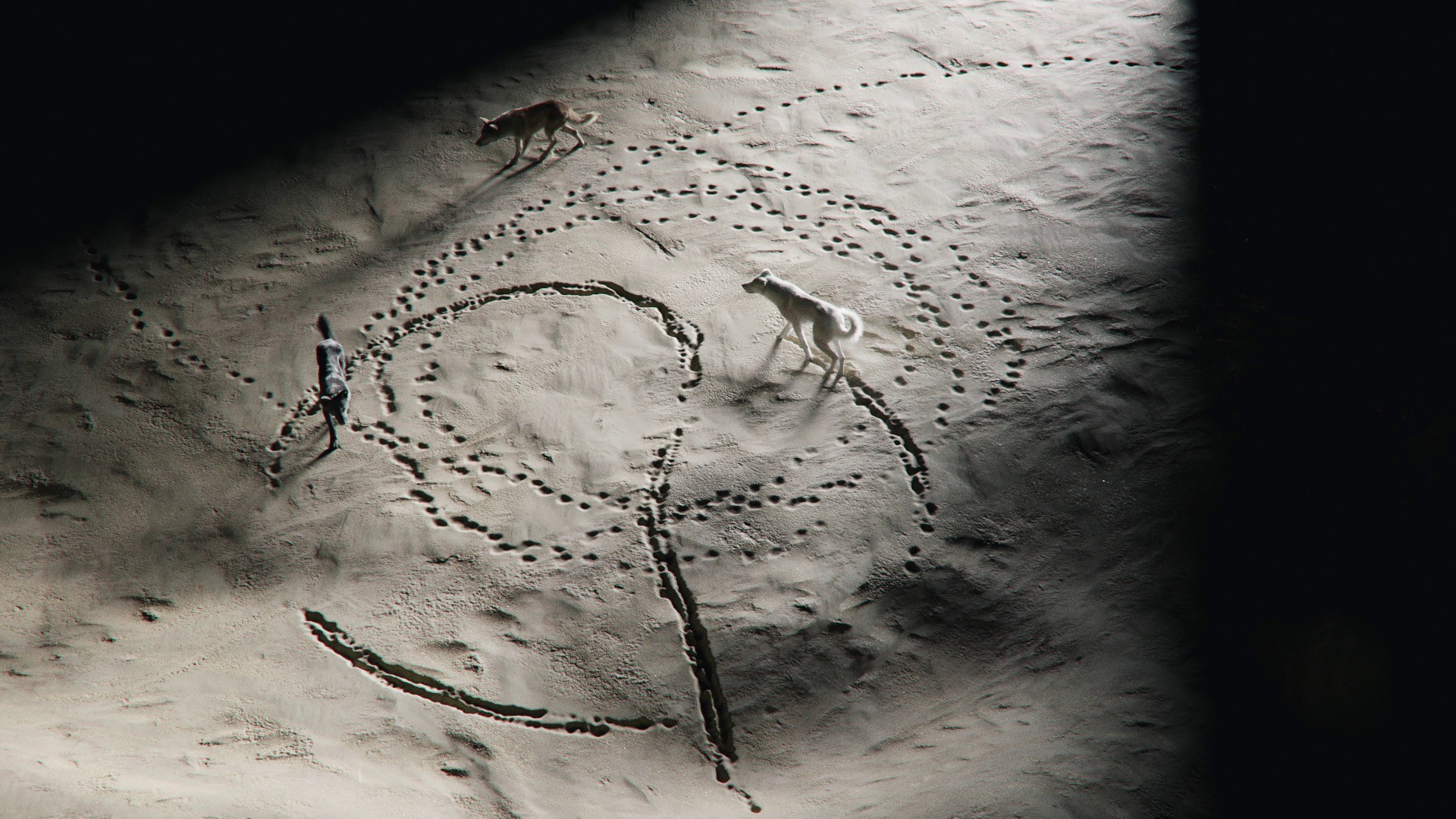 Für den Ton habe ich mit einigen Leuten zusammengearbeitet. Etienne André hat die Geräusche vertont, Michel Klochendler hat sich um die Atmosphäre gekümmert und Jules Jasko hat den Ton gemischt. Wir haben viel darüber gesprochen, wie wir den Filmton angehen wollten, und wir waren uns alle einig, dass ein sehr leiser, fast dokumentarischer Stil am sinnvollsten wäre, auch weil das Bildmaterial bereits sehr intensiv war. Etienne und Jules hatten die großartige Idee, die Geräusche der Tiere (Fell, Pfoten auf Kies, Atmung), die ein Mensch normalerweise nicht hören würde, zu übertreiben, so dass der Ton insgesamt mehr aus der Sicht der Tiere zu hören ist, was wiederum den Blickwinkel dezentralisiert. Viele Arbeiten von Etienne sind kaum wahrnehmbar, es sind Geräusche, die man unbewusst hört (jede kleine Bewegung und Atmung sind im Klang enthalten), aber sie verleihen den Tieren viel mehr Tiefe und Emotion.
Kannst Du mir ein bisschen von Dir erzählen und wie Du zum Film gekommen bist?
Ich begann mit den Dreharbeiten zu diesem Film, als ich 23 Jahre alt war. Es war das Jahr, in dem ich die Kunstschule besuchte (das tue ich immer noch), es war mein erstes ernsthaftes Projekt, und damals war ich etwas frustriert, weil ich für andere Leute arbeitete und keinen Film für mich machte. Ich hatte genug Geld gespart, um ein Jahr lang für niemanden zu arbeiten, also habe ich meine ganze Zeit auf diesen Film konzentriert. Es war großartig und gleichzeitig sehr schlimm, ich war so besessen von diesem Film, dass ich kaum noch meine Wohnung verließ und mich mit Freunden traf. Es war ein sehr einsamer Prozess, abgesehen von meiner damaligen Freundin habe ich nicht viele Leute gesehen. Ich glaube, man kann diese Einsamkeit im Film irgendwie spüren. Gegen Ende der Produktion war ich sehr ausgebrannt, müde von den zehn verschiedenen Jobs, die ich für den Film hatte. Wenn ich noch einmal von vorne anfangen müsste, hätte ich vielleicht versucht, etwas mehr Geld zu finden, aber ich habe mich so sehr diesem Film gewidmet, dass alle Mitarbeiter, die ich erwähnt habe, ihre Stunden nicht gezählt haben, jeder war mit Leidenschaft dabei.
Dieser Film behandelt auch sehr persönliche Themen: den Verlust eines Freundes, die Beziehung zwischen meinen Eltern durch die Augen meiner Kindheits-Katze. Ich spreche immer über sehr intime Dinge, wenn ich Filme mache. Das fühlt sich für mich sehr notwendig und selbstverständlich an, vielleicht weil es mir im echten Leben schwerfällt, darüber zu sprechen.
Sind bereits neue Projekte geplant?
 Diesmal entwickle ich einen neuen Animationsfilm mit Menschen. Im Moment ist es ein VR-Film, in dem man Zeuge wird, wie zwei Kollegen während eines Arbeitstages ihre Trennung durchmachen. Auch dieser Film ist sehr persönlich.
Ich werde diesen Sommer auch nach La Peyrigne zurückkehren, um einen weiteren Animationsfilm mit Tieren zu schreiben. Ich habe das Gefühl, dass dieser erste Film wirklich geholfen hat, zu verstehen, wie interessant und unterschiedlich es sein kann, Tiere darzustellen, aber auch sehr schwierig, wenn man sie nicht vermenschlicht, es gibt also noch viel zu erforschen.
Die Fragen stellte Doreen Kaltenecker
Übersetzung von Michael Kaltenecker
Lies auch die Rezension des Kurzfilms „Lick a Wound“
Interview: In our conversation with French director Nathan Ghali, we were able to learn more about his short film „Lick a Wound“ (OT: „Les animaux vont mieux“), which was shown as part of the ‚Berlinale Shorts‚ program of the 74th Berlinale 2024. He talks about the development of the story, which was shaped by impressions and images, how crucial the sound is and the technique he used to realize the animated film.
How did the idea for your short film come about?
The idea for this film came to me during a residency at La Peyrigne, in the south of France, where I had the opportunity to explore the ruined basement of a church and discover a kind of “statues cemetery”. Immediately, I envisioned a film set and pictured a community of animals living there. I didn’t write a script, but since the theme of this residency was “gleaning”, I began searching the internet for 3D models of animals. I started creating images before having a story. The visual atmosphere of the church basement drove the narrative. I then worked on writing the story through monologue lines for the animals, which turned out to be highly autobiographical : animals reminded me a lot about my childhood, when I was always hanging out with my cats, and it awakened a need to talk about certain memories, through the eyes of my cat at the time. Throughout a year of working alone on this film, I added different branches, scenes, and narrative arcs as I went along. Working alone before finishing the film with a crew provided ample room for imagination and experimentation.
Please tell me about the setting, the stay in La Peyrigne, and how much time you had for the project?
The residency is actually a farm still in activity, slowly transforming into an art residency. We were 14 residents living together during a month, living in community also influenced the idea of these animals being all together. I stayed a month there, in July 2022. I already had a prototype of the film when I left, I kept refining it alone and then with a crew until it was all finished in January 2024, so it took a year and a half almost full time for me.
You created the film all by yourself with Blender, didn’t you? What was important to you? How did you manage to make the animals look so lifelike?
Not really ! I worked alone for a whole year, but after that producers (Le GREC), an animator (Margaux Kempff) , an editor (Michel Klochendler) , a foley artist (Etienne André) and a sound mixer (Jules Jasko) got on board. Working with a small budget (5000€) and crew allowed me to be totally free creatively speaking, but I don’t plan on producing my next projects like this, it’s tiring ! Animals look lifelike for a few reasons, first the models we bought are very good quality, and Margaux, the animator, is also very talented. I also chose to always light them more from the back, so you don’t have total access to them, mystery remains. I framed them like film characters, not animals in a documentary. It doesn’t make them necessarily more real but we tend to consider them more as characters and empathize more with them.
What else was important to you visually?
Of course realism was an important thing, I feel like it’s almost a tool for me more than a goal : if the film looks realistic, I can play with a lot of things, create little disturbances, the animals always move in loops for example. Since the viewer already has a hard time figuring out what he’s looking at, it creates an interesting ambiance, I can build upon that.
I also find your decision to integrate their thoughts into the film as a projection interesting, how did that come about?
At first, the subtitles were just normal subtitles, but it wasn’t really working. Using real subtitles means “this is what the animals are saying/thinking”. The projected text concept came to me while I was getting more aware of the stake of representing animals and anthropomorphism, and it’s kind of a way for me to say “this is my interpretation as a director, a human, of their thoughts”. The texts are very autobiographical, I literally “project” some thinking, memories and emotions onto those animals, but maybe it’s not what they really feel and think. That’s also why after a third of the film, my translation stops, like I accepted that I cannot be in their heads, they have they own alterity, their agency, and that’s what as humans we have to accept, we cannot understand most of what animals think and feel, they have access to emotions we don’t (the contrary is also true).
The soundtrack is also special – would you like to tell me more about what can be heard?
For the sound, I collaborated with a few people. Etienne André did the foley, Michel Klochendler worked on the ambience and Jules Jasko did the mixing. We talked a lot about how we wanted to approach the film sound, and we all agreed a very silent, almost documentary style would make the most sense, also because the visuals were already very intense. Etienne and Jules pushed a great idea of exaggerating the animals‘ sound (fur , paws on gravel, respirations) that a human wouldn’t usually hear, so the overall sound would be more from the animals point of view, again decentralizing the point of view. A lot of Etienne work is actually barely noticeable, it’s sound you unconsciously hear (every little movement and respiration exists in the sound), but it gives those animals a lot more depth and emotion.
Can you tell me a bit about yourself and how you came to make the movie?
I started making this film when I was 23, it was a year I was in art school (I still am), it was my first real serious project, at that time I was a bit frustrated working for other people and not making a film for me, so I had something to prove to myself with making this film. I had enough money saved not to work for anyone for a year so I really focused all my time on this film. It was great and also very bad at the same time, I got so obsessed with this film that I was barely leaving my place and seeing any friends. It was a very solitary process, apart from my girlfriend at that time I wasn’t seeing a lot of people. I think you can kind of feel this loneliness in the film. Around the end of the production I was very burnt out, tired of working 10 different jobs on the film, if I had to start over I would have tried to find a bit more money maybe, but I was so dedicated to this film that every collaborator I mentioned also didn’t count their hours, everyone was passionate while making it.
This film is also tackling very personal subjects : the loss of a friend, the relationship between my parents through the eyes of my childhood cat. I always talk about very intimate things when I make films, it feels very necessary and obvious to me, maybe because in real life I have a hard time talking about it.
Are there any new projects planned?
Quite a few actually, I’m developing a new animated movie with humans this time, for now it’s a VR film where you witness two of your colleagues going through their breakup during a day at work. This one is also very personal.
I will go also back to La Peyrigne this summer to write another animals animated film, I feel like this first one really helped understand how interesting and different it can be to represent animals, but also very hard if you don’t anthropomorphize them, so there’s still a lot to be explored.
Questions asked by Doreen Kaltenecker
Read on the german review of the short film „Lick a Wound„