
Studium der Kunstgeschichte - Schwerpunkt: Filmgeschichte
(Abschluss 2010 mit der Arbeit "Rembrandt im Spielfilm")
Nebenfächer: Philosophie und Alte Geschichte
- seit 2012: Filmkritikerin bei movieworlds (Kino, DVD, BD, Festivalberichte)
- seit 2015: Blog 'Testkammer' online
- Jetzt in der Mediathek! – Der Film „Skin on Skin“ - 12. Juli 2026
- „Etwas ganz Besonderes“ (2026) - 9. Juli 2026
- Kinostarts 09.07.2026 - 8. Juli 2026
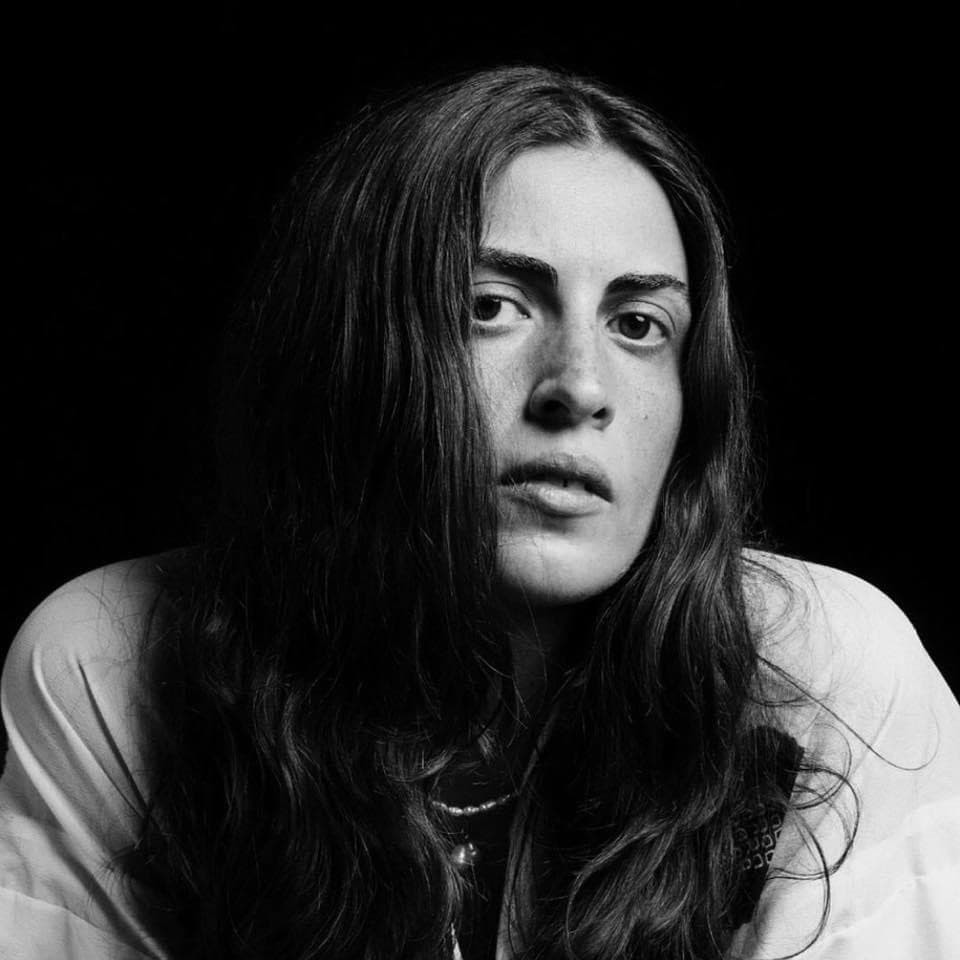 Interview: Im Gespräch mit der georgischen Regisseurin Nutsa Tsikaridze konnten wir mehr über ihren Kurzfilm „Burning Sun“ (OT: „მცხუნვარე მზე“) erfahren, der auf dem 34. Filmfestival Cottbus 2024 den Hauptpreis für den besten Kurzfilm gewann, und wie dies ein Film über Existentialismus und trotzdem, aufgrund der Lage im Land, auch politisch ist und wie wichtig der Drehort für die Realisierung des Films war.
The original english language interview is also available.
Wie ist die Idee zu Deinem Kurzfilm entstanden?
Ich bin Drehbuchautorin und spiele schon lange mit dem Gedanken, meinen eigenen Film zu schreiben und Regie zu führen. Aber das Schreiben eines Drehbuchs für Kurzfilme war für mich immer sehr schwierig. Um ehrlich zu sein, mag ich Kurzfilme nur selten. Also habe ich angefangen, über das Wesen von Kurzfilmen nachzudenken, und mir wurde klar, warum ich die meisten von ihnen nicht mag. Es liegt daran, dass ihre dramatische Struktur zu offensichtlich ist, was der Geschichte den Sinn für die Realität nimmt. Die Geschichte hat keine Zeit, sich vollständig zu entwickeln.
Ich habe angefangen, Kurzfilme zu analysieren, und mir ist klar geworden, dass der stärkste Aspekt eines Kurzfilms der Moment sein kann, in dem eine Verwandlung in einer Person beginnt. In meinem Film geht es darum, wie der Tod in das Leben von Kindern eintritt – und wie er ein unterbewusstes Gefühl und eine unklare Angst erzeugt. In jedem Drehbuch, an dem ich arbeite, geht es um die Begegnung mit dem Tod. Ich interessiere mich auch sehr für die ersten Gefühle und Empfindungen, deshalb habe ich mich für die Welt der Kinder entschieden. Diese Geschichte basiert auf meinen Kindheitserinnerungen, und sie könnte sogar eine Art Traum sein.
Wie kann man Deine Geschichte in einem größeren gesellschaftlichen Kontext des Landes verorten?
 Vielleicht ist alles, was wir tun, ein Spiegelbild unseres Lebens und des sozialen Umfelds, in dem wir leben. Aber wenn ich über ein Drehbuch nachdenke, denke ich nicht unbedingt, dass es sozial sein sollte. Dieser Film ist wahrscheinlich eher existenziell, obwohl ich politisch sehr aktiv bin und mich an vielen sozialen und politischen Protesten beteilige. Seit zwei Jahren bin ich Mitglied der Bewegung „Georgisches Kino ist bedroht“, und wir boykottieren das georgische Nationale Filmzentrum, weil vor zwei Jahren die Repressionen im Kultursektor und jetzt in allen Bereichen unseres Landes begonnen haben. Wir haben eine unrechtmäßige Regierung, die die Wahlen gefälscht hat, eine repressive Politik betreibt und Demonstrationen brutal unterdrückt. Es befinden sich bereits mehr als 300 politische Gefangene im Gefängnis, von denen die meisten gefoltert, geschlagen und misshandelt werden. Unter ihnen sind auch Schauspieler. Das Gesamtkonzept meines Films, der sich derzeit in der Entwicklung befindet, ist eher politisch.
Wo genau habt ihr gedreht und wie viele Drehtage hattet ihr?
Der Drehort war das Wichtigste für mich, ich wollte, dass er genau so ist, wie ich ihn mir vorgestellt habe. Deshalb hat die Suche nach dem Drehort am längsten gedauert. Es gibt viele Flüsse in unserem Land, ich bin durch das ganze Land gereist, um einen Ort zu finden. Schließlich drehten wir am Fluss Mtkvari in der Stadt Rustavi, ganz in der Nähe von Tiflis. Es sollte ein bisschen wie im Märchen sein, eine verträumte, sehr schöne, aber auch schaurige und giftige Umgebung. Der Film wurde in vier Tagen gedreht, da das Budget sehr begrenzt war.
Was lag Dir visuell am Herzen?
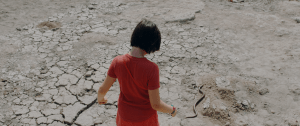
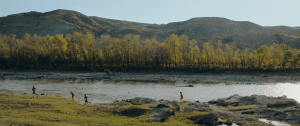
Visuell war die Umgebung wichtig. Außerdem wird die Geschichte des Films in langen, weiten Einstellungen erzählt, in denen die Kinder als winzige Kreaturen erscheinen. Wir kommen ihnen nur nahe, wenn sie die Leiche finden. Ich wollte, dass alles um sie herum gegen die Kinder gerichtet ist – das Rauschen des Flusses, die unerträgliche brennende Sonne, die Hitze, die Reptilien. Und ich wollte, dass diese ganze Einheit im Bild präsent ist.
Wie war es mit den Kinderdarsteller:innen zu drehen und hast Du sie über ein klassisches Casting gefunden?
 Der schwierigste Teil war wahrscheinlich die Arbeit mit Kindern. Obwohl ich schon viele Jahre als Assistentin im Kino gearbeitet habe, wusste ich sehr wohl, dass die Arbeit mit Kindern kompliziert ist. Wir mussten in einer sehr schwierigen Umgebung arbeiten, denn es war sehr heiß in der Nähe des Flusses, was gefährlich war, obwohl wir Retter hatten. Ich habe bei den Stunts speziell nach der Leiche dieses Mannes gesucht, damit er sie wirklich in den Fluss werfen konnte. Der Typ ist ein Stuntman, ich kannte ihn schon vorher und er hat ein interessantes Aussehen. Ich habe mit den Kindern mehrere Tage lang geprobt. Ich musste improvisieren, aber ich habe trotzdem versucht, mich nah am Text zu halten. Sie waren sehr süß und wir wurden sehr gute Freunde. Einen Jungen fand ich im Dorf Eri, als ich Tasso, die Mädchenfigur, besuchte. Wir haben ein Casting für die anderen Kinder gemacht.
Kannst Du mir noch ein bisschen mehr von Dir erzählen und wie Du zum Film gekommen bist?
Ich habe zunächst Philosophie studiert und mich dann für einen Masterstudiengang in Filmdramaturgie eingeschrieben. Ich habe viele Jahre lang als Regieassistentin, Produzentin und Casting-Direktorin beim Film gearbeitet. Ich bin Drehbuchautorin mehrerer Kurzfilme und Co-Autorin des Drehbuchs für den Spielfilm „Holy Electricity“ von Tato Koteishvili. Aber mein Hauptziel war es immer, meine eigenen Filme zu machen. „Burning Sun“ ist mein erster Film, und ich habe mich immer dafür interessiert, wie ich mit diesem sehr schwierigen Beruf zurechtkommen werde. Alles, was ich bisher gemacht habe, diente wahrscheinlich diesem Zweck. Ich hoffe also, dass ich meinen nächsten Film drehen kann. Es ist sehr schwierig, weil, wie ich schon sagte, in unserem Land die einzige Finanzierungsquelle das Filmzentrum ist, und wir boykottieren diese Institution, weil sie von Propagandisten geleitet wird. Seit 26 Tagen geht die Mehrheit der georgischen Bevölkerung auf die Straße, um gegen die isolationistische, pro-russische und illegitime Regierung zu protestieren. Daher sind wir alle Aktivisten, die gegen diese zerstörerische Politik kämpfen. Ich hoffe, dass dieser Kampf mit dem Sieg des georgischen Volkes enden wird und wir uns auf unsere Arbeit konzentrieren können, die wir seit vielen Jahren aufgebaut haben und lieben.
Die Fragen stellte Doreen Kaltenecker
Übersetzung von Michael Kaltenecker
Lies auch die Rezension des Kurzfilms „Burning Sun“
Interview: In our conversation with Georgian director Nutsa Tsikaridze, we were able to learn more about her short film „Burning Sun“ (OT: „მცხუნვარე მზე“), which won the main prize for best short film at the 34th Cottbus Film Festival 2024, and how this is a film about existentialism and yet, due to the situation in the country, also political and how important the location was for the realization of the film.
How did the idea for your short film come about?
I am a screenwriter, and for a long time, I have been thinking about writing and directing my own film. However, writing a screenplay for short films has always been very difficult for me. To be honest, I rarely like short films. So, I started thinking about the nature of short films, and I realized why I don’t like most of them. It’s because their dramatic structure is too obvious, which takes away the sense of reality from the story. There’s no time for the story to fully develop.
I began analyzing short films and I realized that the strongest aspect of a short film might be the moment when a transformation begins in a person. In the case of my film, which deals about how death enters the lives of children – and how it creates a subconscious feeling and an unclear fear. Every script I work on is about encountering death. I’m also very interested in first feelings and sensations, that’s why I chose to explore children’s world. This story is based on my childhood memories, and it might even be a kind of dream.
How can your story be placed in the wider social context of the country?
Perhaps everything we do is a reflection of our lives and the social environment in which we live. However, when I think about a script, I don’t necessarily think it should be social. This film is probably more existential. Despite the fact that I am very politically active and involved in many social and political protests. For the past two years, I have been a member of the movement „Georgian Cinema is under threat“ and we are boycotting the Georgian National Film Center because two years ago, repressions began in the cultural sector and now in the whole spheres of our country. We have an illegitimate government that falsified the elections, and it carries out repressive policies and brutally suppressing demonstrations. There are already more than 300 political detainees in prison, most of whom are tortured, beaten, and mistreated. Among them are actors. The overall concept of my film, which is currently in development, is more political.
Where exactly did you shoot and how many shooting days did you have?
The filming location was the most important thing for me, I wanted it to be exactly as I imagined it. That’s why the location scouting took the longest time, there are a lot of rivers in our country, I traveled all over the country to find a place. Finally, we shot on the Mtkvari river in the city of Rustavi, very close to Tbilisi. It had to be a bit of a fairy tale, a dreamy, very beautiful but also a chilling and poisonous environment. The film was shot in 4 days because the budget was very limited.
What was visually important to you?
Visually, the environment was important. Also, the narrative of the film is told through long wide shots, where the children appear as tiny creatures. We only get close to them when they find the corpse. I wanted everything around them to be against these children – the sound of the river, the unbearable burning sun, the heat, the reptiles. And I wanted all of this unity to be present in the frame.
What was it like to shoot with the child actors and did you find them through a traditional casting process?
Probably the most difficult part was working with children. Even though I have been working in the cinema for many years as an assistant, I knew very well that working with children is complicated. We had to work in a very difficult environment because it was very hot, near the river which was dangerous even though we had rescuers. I specifically looked for this man’s corpse in stunts so that he could really throw it into the river. The guy is a stuntman, I knew this man before and he has an interesting appearance. I rehearsed with the children for several days. I had to improvise but still I tried to keep it close to the text. They were very cute and we became very good friends. I found one boy in Eri Village when I went to see Tasso, the girl character. We did a casting for the other children.
Can you tell me a bit more about yourself and how you came to filmmaking?
I first studied philosophy, then I enrolled in a master’s program in film dramaturgy. I worked in cinema for many years as a first assistant director, producer, and casting director. I am the screenwriter of several short films and the co-writer of the script for one feature film „Holy Electricity“ by Tato Koteishvili . But my main goal has always been to make my own films. „Burning Sun“ is my first film, and I have always been interested in how I would manage to cope with this very difficult profession. Everything I’ve done so far probably served this purpose. So, I hope to shoot my next film. It’s very difficult because, as I mentioned, in our country the only source of funding is the Film Center, and we are boycotting this institution because it is run by propagandists. For 26 days now, the majority of the population of Georgia has been out in the streets protesting the isolationist, pro-Russian, and illegitimate government. As a result, we are all activists, fighting against this destructive policy. I hope this struggle will end with the victory of the Georgian people, and we will be able to start thinking about our work, which we have been building for many years and love.
Questions asked by Doreen Kaltenecker
Read on the german review of the short film „Burning Sun„