
Studium der Kunstgeschichte - Schwerpunkt: Filmgeschichte
(Abschluss 2010 mit der Arbeit "Rembrandt im Spielfilm")
Nebenfächer: Philosophie und Alte Geschichte
- seit 2012: Filmkritikerin bei movieworlds (Kino, DVD, BD, Festivalberichte)
- seit 2015: Blog 'Testkammer' online
- „Our Girls“ (2025) - 22. Oktober 2026
- Kinostarts 22.10.2026 - 21. Oktober 2026
- „Moscas – Fliegen und andere Gäste“ (2026) - 20. Oktober 2026
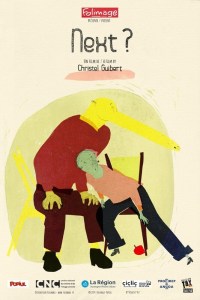
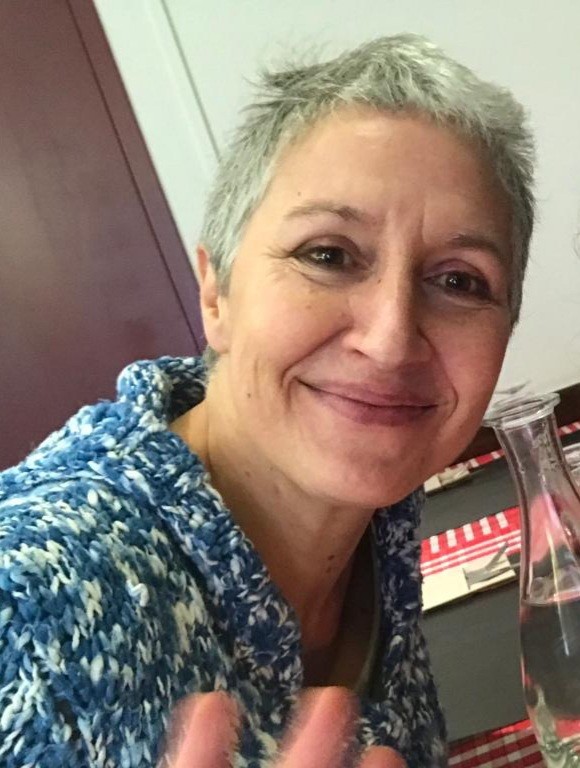 Interview: Im Gespräch mit der französischen Filmemacherin und Animationskünstlerin Christel Guibert konnten wir mehr über ihren Kurzfilm „Next ?“, der im Internationalen Wettbewerb des 40. interfilm Festival Berlin 2024 lief, erfahren, warum sie sich für Tier-Mensch-Hybriden entschieden hat und wie der Tanz und die Musik den Film mitgestaltet haben.
The original english language interview is also available.
Wie ist die Idee zu Deinem Kurzfilm entstanden?
Seit mehreren Jahren möchte ich über die Schwierigkeiten sprechen, die wir alle haben, zu kommunizieren, uns verständlich zu machen, zu reagieren, ohne unser Gegenüber zu verletzen. Wir alle haben unterschiedliche Hintergründe und Erziehungsstile. Ich denke da zum Beispiel an eine Anekdote, die mich persönlich betrifft: Zu einem bestimmten Zeitpunkt in meinem Leben lebte ich mit einem Partner zusammen, der bei einem Konflikt die Klappe hielt, keinen Ton von sich gab  und wartete, bis sich der Sturm gelegt hatte, während ich das Gespräch brauchte, um zu verstehen und zu überwinden, was uns entgegenstand. Unsere Arbeitsweisen waren so unterschiedlich! Dieses Thema ging mir durch den Kopf, aber ich wusste nicht, was ich damit machen sollte – einen Bildband, einen Film – und so blieb es mehrere Jahre lang auf Eis gelegt.
Im Jahr 2016 wollten meine Freundin Sylvie und ich jeweils über einen kurzen Animationsfilm nachdenken, und um uns gegenseitig zu motivieren, trafen wir uns alle zwei oder drei Wochen, um über den Fortschritt unserer jeweiligen Projekte zu sprechen und so kam das Thema der schwierigen Kommunikation wieder auf.
Wie lange hat die Realisierung des Films gebraucht? Wie hast Du ihn finanziell auf die Beine gestellt?
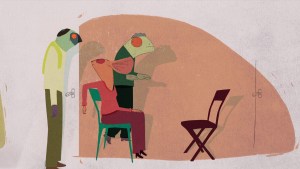 Es hat viele Jahre gedauert, von der ersten Recherche bis zur Zusammenarbeit mit einem Produzenten, um eine Finanzierung für den Film zu finden. In Frankreich gibt es eine Reihe möglicher Finanzierungsquellen, wie z. B. den CCN, die Region und andere Strukturen. Als die Produktionsfirma (Folimage) eine Finanzierung beantragte, bekamen wir weniger als 100.000 Euro, was für einen Kurzfilm sehr wenig ist! Sie fragten mich, ob ich bereit wäre, es trotzdem zu machen, mit allen Konsequenzen – d.h. wir würden nicht viele Leute einstellen können und ich würde nicht die ganze Zeit bezahlt werden, also sagte ich okay!
Das war im Jahr 2018 oder 2019. Dann kam Covid, die das Projekt stoppte! Zumal wir mit einem kleinen Team einen Aufenthalt in Cicilic machen wollten. Der gesamte Animationsteil wurde verschoben. Zusammenfassend würde ich sagen, dass ich erst im Jahr 2021 wirklich (mit einem kleineren Team) angefangen habe. Mit dem Wissen, dass der Film noch einige Monate auf Eis gelegt werden musste, damit ich an anderen Produktionen arbeiten konnte.
Warum hast Du dich für Tier-Menschen-Hybriden und warum hast Du Dich exakt für diese Tiere in den Rollen entschieden?
Die Idee, diese halb menschlichen, halb tierischen Figuren zu schaffen, kam mir sofort.
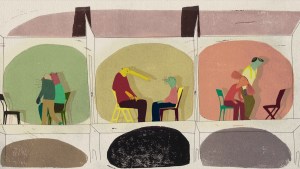 Ich wollte in meinem ersten Film keinen Dialog, sondern die Gesten und die Choreografie sollten für sie sprechen. Also habe ich viel Zeit damit verbracht, mich über Tiere, ihre Eigenschaften und Temperamente (ängstlich, sozial, Geruchssinn, usw.) zu informieren. Ich wollte Katzen, Löwen und all diese Tiere, die so oft verwendet werden, vermeiden. Nach all diesen Recherchen bin ich eine echte Ethnologin geworden! Es ist faszinierend, die Codes und die Kommunikation all dieser Tierarten zu studieren! Ich wollte, dass die Begegnungen unwahrscheinlich sind und die Schwierigkeit der Kommunikation hervorheben.
Die eigentliche Schwierigkeit bestand darin, interessante Situationen für die Organisation der Begegnungen zu finden, und ich musste mir überlegen, wie ich die Tiere an den richtigen Stellen platziere! Denn wenn die Männer die Boxen für eine neue Begegnung wechseln, muss auch die Beziehung neu und „sprechend“ sein! Ich habe Diagramme mit Pfeilen gemacht, damit ich mich besser zurechtfinden kann!
Kannst Du mir noch mehr zu den Animationen erzählen – was war Dir visuell wichtig und wie sind sie entstanden?
Um die Begegnungen ohne Worte zu verdeutlichen, wollte ich, dass Choreografie und Tanz von Anfang an im Mittelpunkt des Projekts stehen. Denn dafür bin ich sehr empfänglich, und wie wunderbar lassen sich mit diesem Medium Charaktere entwickeln! Deshalb habe ich im ursprünglichen Budget geplant, Tänzer und einen Choreographen hinzuzuziehen. Ich habe eine sehr kurze fünftägige Residenz mit zwei Tänzern, Sophie Couineau und Vincent Delétang, und einer Choreografin, Virginie Quigneaux, durchgeführt. Meine Produzentin hatte mir von einer Kompanie (Instabili) in der Nähe von Valence, wo ich wohne, erzählt, und wir haben uns ihre Arbeit angesehen. Ich habe mich sofort in ihre Arbeit und ihre Persönlichkeiten verliebt!
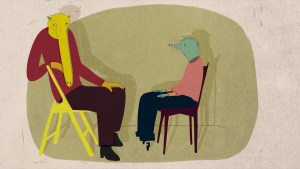 Dann haben wir einen Termin für die Arbeit vereinbart und ich habe die Begegnungen gefilmt. Es war so aufregend, das zu beobachten. Am Morgen gab ich ihnen die Merkmale der Tiere, die sie interpretieren sollten. Sie benutzten oft Requisiten, um sich den Charakteren anzupassen, und am Nachmittag konzentrierten wir uns auf ihre Begegnungen. Ich gab ihnen auch so viel Zeit, wie die Begegnung dauerte. Etwas mehr als die Zeit, die ich mir in meiner Animation vorgestellt hatte, um ihnen etwas Spielraum zu geben. Ich könnte stundenlang darüber reden, was wir erlebt haben! Diese Arbeit betraf nur die Treffen in den Speed-Dating-Kabinen!
Als wir in der Animationsphase waren, hatte jeder Zugang zu dem Video des Treffens, das er animieren sollte. Es ging nicht darum, es zu kopieren – das wäre auch gar nicht möglich gewesen (in Bezug auf Kamerawinkel, Zeit oder Morphologie der Figuren) – sondern sich davon inspirieren zu lassen, und das war’s! Das Wichtigste für mich war, in meinen Gesten fair und subtil zu sein, einen Sinn für Humor, aber auch für Sinnlichkeit und für Sensibilität zu haben. Ich wäre gerne noch weiter gegangen, als der Film zeigt, aber die Produktionszeit war so kurz!
Dein Film braucht keine Worte, er lebt auch von der Musik. Wie schnell war Dir klar, mit welcher Musik Du Deinen Film untermalen willst?
Der Film lebt stark von der Musik, und ich hatte das große Glück, Olivier Kikteff kennenzulernen! Wir hatten eine idyllische Zusammenarbeit!
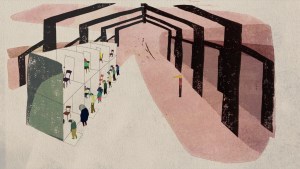 Als ich das Animatic (das Storyboard mit weiteren Bildern und allen Einstellungen des Films in seiner Chronologie) vorbereitete, hatte ich auch einige Referenzmusikstücke aus dem Internet eingefügt, die mir gefielen. Ich wusste bereits, welche Stimmung und welchen Rhythmus ich bestimmten Szenen geben wollte. Ich wusste, dass ich mehr in Richtung Tango oder Fado gehen wollte, die sehr gefühlsbetont und tanzbar sind, und außerdem liebe ich diese Art von Musik. Sie berühren mich, sie sprechen zu mir, man kann nichts dagegen tun, manche Musik packt einen einfach und die Emotionen nehmen überhand. Musik hat eine außergewöhnliche Kraft.
Da es in meinem Film weder Voice-over noch Dialoge gibt, konnte ich nicht auf Musik oder Soundeffekte verzichten, um ihn zum Leben zu erwecken. Olivier komponierte also Musik für den Animationsfilm, und als wir mit den Dreharbeiten begannen, hatte ich bereits mehr als die Hälfte der Musik, die Olivier komponiert hatte. Das war eine große Hilfe, als es darum ging, über die Bewegungen nachzudenken. Als der Film fertig geschnitten war, konnte Olivier bestimmte Elemente nachjustieren und die endgültigen Stücke machen.
Kannst Du mir noch ein bisschen mehr von Dir erzählen und wie Du zum (Animations-)Film gekommen bist?
Ich habe zunächst Angewandte Kunst studiert, d. h. ich habe mit 15 Jahren angefangen, für berufliche Zwecke zu zeichnen, bis ich 18 war. Ich war zu jung, um zu wissen, was ich wirklich machen wollte, also bin ich in die Werbung gegangen, aber das hat mir nicht wirklich gefallen. Als ich 19 war, habe ich ein Praktikum bei Folimage, einem Animationsstudio, gemacht. Ich verstand nicht, was sie machten, ich dachte, sie machten Filmplakate!
 Es ist schon komisch, dass ich die Animation durch ein Missverständnis entdeckt habe! Und es hat mir gefallen! Auch die Atmosphäre. Ich glaube, ich hätte damals fast alles gemocht, was handwerklich und kreativ ist.
Ich habe zwei Jahre lang eine Ausbildung speziell im Bereich Animation gemacht und mit 21 Jahren angefangen, in diesem Bereich zu arbeiten. Ich war etwa zehn Jahre lang Kamerafrau und Animationsassistentin. Dann ging ich auf die L’école de la Poudrière, eine Schule für Animationsfilmende. Als ich die Schule verließ, wollte ich etwas anderes machen. Ich kannte dieses Umfeld erst seit meinem ersten bezahlten Vertrag! Ich habe ein paar Jahre lang in ganz unterschiedlichen Berufen gearbeitet. Natürlich habe ich immer etwas mit meinen Händen gemacht, Kinderbücher, Theaterkulissen und so weiter. Man kann nicht alles noch einmal machen. Schließlich kehrte ich zur Arbeit im Animationsbereich zurück, bereichert, wie ich hoffe, durch meine verschiedenen Erfahrungen. Und ich habe versucht, meine Fähigkeiten in diesem Bereich zu erweitern.
 Sind bereits neue Projekte geplant?
Ja, ich habe einige Projekte in der Entwicklung, einen weiteren Kurzfilm, der sich von diesem sehr unterscheidet, und einen 26-minütigen Film, den ich für Kinder machen möchte. Ich bin immer offen für neue Möglichkeiten. Je unterschiedlicher die Projekte sind, an denen ich arbeite, desto mehr habe ich von ihnen! Ich bin mir bewusst, wie unsicher Berufe wie der meine sind und dass Frauen in diesem Bereich noch einen weiten Weg vor sich haben, auch wenn sich die Dinge weiterentwickeln.
Die Fragen stellte Doreen Kaltenecker
Übersetzung von Michael Kaltenecker
Lies auch die Rezension des Kurzfilms „Next ?“
Interview: In our conversation with French filmmaker and animation artist Christel Guibert, we learned more about her short film „Next ?„, which screened in the International Competition of the 40th interfilm Festival Berlin 2024, why she chose animal-human hybrids and how dance and music helped shape the film.
How did the idea for your short film come about?
For several years now, I’ve wanted to talk about the difficulty we all have in communicating, making ourselves understood, reacting without offending the person in front of us…we all have different backgrounds and upbringings. I was thinking, for example, of an anecdote that concerns me personally: At one point in my life, I was living with a companion who, when there was a conflict, would shut down, not letting a sound out of his mouth, and wait for the storm to pass, whereas I needed to talk to understand and overcome what was opposing us. Our ways of working were so different! I had this theme running through my head, but I didn’t know what to do with it – an illustrated book, a film – so it stayed on the back burner for several years.
In 2016, my friend Sylvie and I each wanted to think about a short animated film, and to motivate each other to see it through, we would meet once every two or three weeks to talk about the progress of our respective projects… and that’s how the theme of the difficulty of communicating came back.
How long did it take to make the film? How did you make it work financially?
It took many years between the initial research and then working with a producer to find financing for the film. In France, we have a number of possible sources of funding, such as theCNC , the region, and other structures. When the production company (Folimage) applied for funding, we got less than 100,000 euros, which is very little for a short film! They asked me if I’d be willing to do it anyway, with all the consequences… i.e. we wouldn’t be able to hire many people and I wouldn’t be paid all the time, so I said okay!
That was in 2018 or 2019. Then came the covid, which put a stop to the project! all the more so as we were due to go and do a residency in Cicilic with a small team. The whole animation part was postponed. To sum up, I’d say I really started with a reduced team in 2021. Knowing that the film was put on pause for several more months so that I could work on other productions.
Why did you choose animal-human hybrids and why did you choose these animals for the roles?
The idea of creating these half-human, half-animal characters came immediately. I didn’t want any dialogue for my first film, and I wanted the gestures and choreography to speak for them. So I spent a lot of time researching animals, their characteristics and temperaments (fearful, social, olfactory, etc.). I wanted to avoid cats, lions and all those animals that are so often used. I became a real ethologist after all that research! It’s fascinating to study the codes and communication of all these animal species! I wanted the encounters to be improbable and to accentuate the difficulty of communicating.
The real headache was to find interesting situations in the organization of the encounters, and I had to think about putting the animals in the right places! because when the Men were going to change boxes towards a new encounter, the relationship also had to be new and “talking”! this stage also took up a lot of my time. I made charts with arrows all over them to help me find my way around!
Can you tell me more about the animations – what was visually important to you and how were they created?
To make the encounters explicit without words, I wanted choreography and dance to be at the heart of the project right from the start. Because I’m very sensitive to it, and what a wonderful way to develop characters using this medium! So in the initial budget, I planned to call on the services of dancers and a choreographer. I did a very short 5-day residency with two dancers, Sophie Couineau and Vincent Delétang, and a choreographer, Virginie Quigneaux. My producer had told me about a company (Instabili) not far from Valence, where I live, and we went to see them work. I immediately fell in love with their work and their personalities!
Then we planned a date to do the work and I filmed the encounters. It was so exciting to watch. In the morning, I gave them the characteristics of the animals they were going to interpret. They often used props to blend in with the characters… and in the afternoon we focused on their encounters. I also gave them about as much time as the encounter lasted…a little more than the actual time I’d imagined in my animation, to give them a little room to play. I could talk for hours about what we experienced! This work only concerned the meetings in the speed-dating booths!
When we were at the animation stage, everyone had access to the video of the meeting they were to animate. The idea wasn’t to copy – in fact, that would have been impossible (in terms of camera angle, time or character morphology) – but to draw inspiration from it, and that was that! The important thing for me was to be fair and subtle in my gestures, to have a sense of humor but also sensuality. sensitivity, in fact, I think. I would have liked to go even further than the film shows, but the production time was so short!
Your film doesn’t need words, it lives on music. How quickly did you realize what music you wanted to use to accompany your film?
The film relies heavily on music, and I was so lucky to meet Olivier Kikteff! We had an idyllic collaboration!
When I prepared the animatic (the storyboard filmed with more images, and all the shots of the film in its chronology) I had also put in some reference music I liked that I had taken from the Internet. I already knew what mood and rhythm I wanted to give to certain scenes. I knew I wanted to go more towards tango or fado, which are extremely conducive to emotions and dance, and what’s more, I love these kinds of music. They touch me, they speak to me, there’s nothing you can do about it, some music just grabs you and emotion takes over. Music has an extraordinary power.
What’s more, as my film has no voice-over or dialogue, I couldn’t do without music or sound effects to bring it to life. So Olivier composed some music to suit the animatic, and by the time we went into residency to do the animation, I already had more than half the music Olivier had composed. This was a great help when it came to thinking about movement. When it came to the final cut of the film, Olivier was able to readjust certain elements and do the final pieces.
Can you tell me a little more about yourself and how you got into (animated) filmmaking?
I first studied applied arts, which means that I started drawing for professional purposes at the age of 15, until I was 18. I was too young to know what I really wanted to do, so I went into advertising, but it didn’t really suit me. When I was 19, I did an internship at Folimage, an animation studio. I didn’t understand what they did, I thought they made movie posters!
It’s funny to think that I discovered animation through a misunderstanding !!!! and I liked it! The atmosphere too. I think I would have liked almost anything manual and creative at the time, though.
I trained for two years specifically in animation and at 21 I started working in this field. I was a camera operator and assistant animator for around ten years. Then I went to L’école de la Poudrière, which is a school for animation filmmakers. When I left the school, I wanted to do other things. I’d only known this environment since my first paid contract! I worked in very different professions for a few years. Of course, I was always doing things with my hands, children’s books, theater sets and so on. You can’t do things over again. I finally came back to work in animation, enriched, I hope, by my different experiences. And I’ve tried to broaden my skills in this field.
Do you have any new projects?
Yes, I have a few projects I’m developing, another short film very different from this one and a 26-minute film I’d like to make for children. I’m always open to new opportunities. The more different the projects I work on, the more I get out of them! I’m well aware of the precariousness of jobs like mine, and of how far women still have to go in this field, even if things are moving forward…
Questions asked by Doreen Kaltenecker
Read on the german review of the short film „Next ?„