
Studium der Kunstgeschichte - Schwerpunkt: Filmgeschichte
(Abschluss 2010 mit der Arbeit "Rembrandt im Spielfilm")
Nebenfächer: Philosophie und Alte Geschichte
- seit 2012: Filmkritikerin bei movieworlds (Kino, DVD, BD, Festivalberichte)
- seit 2015: Blog 'Testkammer' online
- Kinostarts 23.07.2026 - 22. Juli 2026
- Jetzt online! – Der Kurzfilm „Intermezzo“ - 19. Juli 2026
- Kinostarts 16.07.2026 - 15. Juli 2026
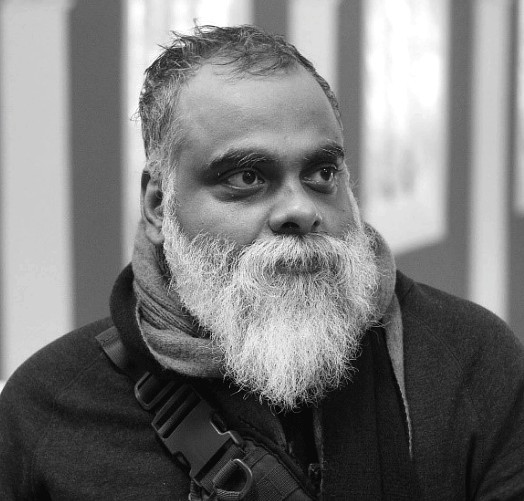 Interview: Im Gespräch mit dem indischen Filmemacher Suresh Eriyat konnten wir mehr über seinen Kurzfilm „Desi Wool“ (OT: „Desi Oon“) erfahren, der im Internationalen Wettbewerb des 41. interfilm Berlin 2025 zu sehen war, warum er die Geschichte der einheimischen Wolle als Stop-Motion-Musical erzählt und wie es war mit dem Medium selbst zu arbeiten.
The original english language interview is also available.
Wie ist die Idee zu dem Kurzfilm entstanden?
Die Idee zu diesem Film entstand, nachdem ich die Ausstellung „Desi Oon“ in Delhi besucht hatte. Ich war beeindruckt davon, wie unsichtbar pastorale Gemeinschaften und indigene Wollsysteme in Indien geworden sind, trotz ihrer tiefen Verbindung zu Land, Ökologie und Handwerk. Was als Neugierde begann, verwandelte sich langsam in Verantwortung. Als das Centre for Pastoralism mich bat, einen Film als Hommage an den legendären Schäfer zu drehen, der die Deccani-Schafherde erhalten hat, fühlte sich das weniger wie ein Auftrag an, sondern eher wie eine Berufung. Dieser Film sollte in einer kuratierten Ausstellung namens „Living Lightly” gezeigt werden. Ich hatte das Gefühl, dass die Geschichte auf eine respektvolle, greifbare und emotional ansprechende Weise erzählt werden musste. Aus diesem Impuls heraus entstand schließlich ein Stop-Motion-Film, der durch das Material selbst erzählt wird.
Der Film ist auch Teil einer Initiative – kannst Du mir mehr dazu sagen?
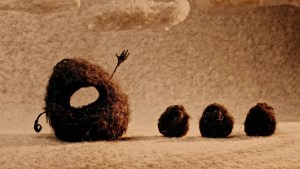 Der Film ist Teil einer größeren Initiative zur Sensibilisierung für die Weidewirtschaft, einheimische Schafrassen und gefährdete Handwerksökosysteme in Indien. Er steht in engem Zusammenhang mit der Arbeit des Centre for Pastoralism und dessen langjährigen Bemühungen vor Ort. Über den Film hinaus war es das Ziel, ein Kommunikationsinstrument zu schaffen, das ein breites Publikum anspricht und einen Dialog anregt, nicht nur innerhalb politischer oder akademischer Kreise, sondern auch mit der breiten Öffentlichkeit.
Warum habt ihr euch entschieden, es als Musical zu erzählen?
Die Musik ermöglichte es dem Film, emotional zu kommunizieren, ohne belehrend oder didaktisch zu wirken. Da die Geschichte aus der Perspektive der Wolle erzählt wird, erschien eine lyrische Struktur natürlicher als herkömmliche Dialoge. Von der Volksmusik inspirierte Musik trägt Erinnerungen, Migration und mündliche Überlieferungen in sich, was genau widerspiegelt, wie pastorales Wissen selbst weitergegeben wird. Die musikalische Form trug dazu bei, dass der Film sanft und dennoch wirkungsvoll blieb.
Die Musik ist großartig und eingängig – wer ist der Sänger und wer hat sie komponiert? Kann man die Musik irgendwo unabhängig vom Film hören?
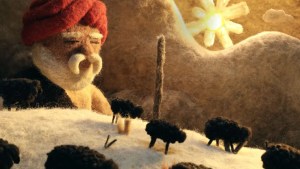 Der Text und der Gesang stammen von Swanand Kirkire, die Musik wurde von Rajat Dholakia komponiert. Die Musik wurde mit Live-Folkmusikern aus Maharashtra aufgenommen, um ihre ursprüngliche kulturelle Struktur zu bewahren.
Derzeit ist der Soundtrack nicht separat erhältlich. Der Film wurde auf verschiedenen digitalen Plattformen veröffentlicht, aber die Musik wurde nicht als eigenständiges Werk herausgebracht. Ich bin der Meinung, dass in diesem Fall die Musik und der Film eng miteinander verbunden sind. Ohne die Bilder könnte die Musik etwas von ihrer Lebendigkeit und emotionalen Resonanz verlieren.
Die Stop-Motion-Aufnahmen sind wunderschön und arbeiten gekonnt mit dem Material. Erzähl mir bitte mehr zu dem visuellen Konzept. Wie habt ihr die Wolle selbst zum Leben erweckt?
Die zentrale visuelle Idee bestand darin, Wolle wie Wolle wirken zu lassen und sie nicht zu zwingen, etwas anderes zu imitieren. Wir haben ausgiebig mit Filzen, Schichten, Dehnen und Komprimieren des Materials experimentiert. Wolle hat ihr eigenes Temperament, und sobald wir aufgehört haben, sie zu stark zu kontrollieren, begann sie, organische Formen und Bewegungen anzudeuten. Die Beschränkung auf eine schmale Farbpalette veranlasste das Team, eher durch Textur, Licht und Bewegung als durch Farbe für Abwechslung zu sorgen.
Wie lange hat die Realisierung gedauert und wie viele Animationskünstler:innen waren beteiligt?
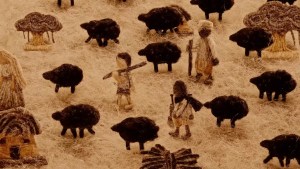 Von den ersten Recherchen bis zur endgültigen Fertigstellung dauerte das Projekt etwa zwölf Monate. Die Stop-Motion-Aufnahmen selbst wurden in vier intensiven Monaten mit zwei parallelen Setups und zeitweise sogar drei Setups fertiggestellt. Etwa zwanzig bis fünfundzwanzig Künstler waren in verschiedenen Phasen beteiligt, von denen viele noch keine Erfahrung mit Stop-Motion hatten. Was ihnen an Vorerfahrung fehlte, machten sie mit Neugier, Geduld und Bereitschaft, durch praktisches Tun zu lernen, wett.
Sind bereits neue Projekte geplant? Bleibst Du dem Stop-Motion-Film treu?
Wir planen viele weitere Projekte, bei denen wir unser Fachwissen im Bereich der Entwicklung effektiver Kommunikationsinstrumente einsetzen, die sich nicht nur an ein Publikum in Indien, sondern auch an Zuschauer weltweit richten. Wir haben eine Stiftung gegründet, die sich auf die Produktion von Filmen und öffentlichen Kommunikationsmaterialien zur Erhaltung, Verbreitung und zum langfristigen Fortbestand gefährdeter indischer Handwerks- und Kunstpraktiken konzentriert.
Im kommerziellen Bereich entwickeln wir aktiv originelle indische Spielfilme und Serien im Bereich Animation. Stop-Motion wird weiterhin eines der von uns verwendeten Werkzeuge sein, aber nicht das einzige. Die Wahl des Mediums wird immer davon bestimmt sein, was der Geschichte am besten dient.
Die Fragen stellte Doreen Kaltenecker
Übersetzung von Michael Kaltenecker
Lies auch die Rezension des Kurzfilms „Desi Wool“
Interview: In our conversation with Indian filmmaker Suresh Eriyat, we learned more about his short film „Desi Wool“ (OT: „Desi Oon“), which was screened in the International Competition at the 41st interfilm Berlin 2025. We also learned why he chose to tell the story of local wool as a stop-motion musical and what it was like to work with the medium itself.
How did the idea for the short film come about?
The idea for the film emerged after I visited the Desi Oon exhibition in Delhi. I was struck by how invisible pastoral communities and indigenous wool systems have become in India, despite their deep connection to land, ecology, and craft. What began as curiosity slowly turned into responsibility. When the Centre for Pastoralism approached me to make a film as a tribute to the legendary shepherd who preserved the Deccani sheep flock, it felt less like an assignment, and more like a calling. This film was to be showcased at a curated exhibition called Living Lightly. I felt the story needed to be told in a way that was respectful, tactile, and emotionally engaging. That impulse eventually evolved into a stop motion film told through the material itself.
The movie is also part of an initiative. Can you tell me more about it?
The film is part of a larger effort to support awareness around pastoral economies, indigenous sheep breeds, and endangered craft ecosystems in India. It aligns closely with the work of the Centre for Pastoralism and their long term efforts on the ground. Beyond the film, the intent was to create a communication instrument that could travel across audiences and spark dialogue, not just within policy or academic circles but also with the general public.
Why did you decide to tell it as a musical?
Music allowed the film to communicate emotionally without becoming instructional or didactic. Since the story is told from the perspective of wool, a lyrical structure felt more natural than conventional dialogue. Folk inspired music carries memory, migration, and oral tradition within it, which closely mirrors how pastoral knowledge itself is transmitted. The musical form helped the film remain gentle while still being impactful.
The music is great and catchy. Who is the singer and who composed it? Can the music be heard anywhere independently of the movie?
The lyrics and vocals are by Swanand Kirkire, and the music is composed by Rajat Dholakia. The music was recorded using live folk musicians from Maharashtra to preserve its raw, cultural texture.
At present, the soundtrack is not available independently. The film has been shared across digital platforms, but the music has not been released as a standalone piece. I feel that, in this case, the music and the film are deeply interdependent. In the absence of the visuals, the music may lose some of its vivaciousness and emotional resonance.
The stop motion shots are beautiful and work skillfully with the material. Please tell me more about the visual concept. How did you bring the wool itself to life?
The central visual idea was to let wool behave like wool and not force it to imitate something else. We experimented extensively with felting, layering, stretching, and compressing the material. Wool has its own temperament, and once we stopped controlling it too tightly, it began suggesting forms and movements organically. The limitation of a narrow colour palette pushed the team to find richness through texture, light, and motion rather than colour.
How long did it take to realize and how many animation artists were involved?
From initial research to final delivery, the project took about twelve months. The stop motion shoot itself was completed over four intense months using two parallel setups, and at times three setups. Around twenty to twenty five artists were involved at different stages, many of whom were new to stop motion. What they lacked in prior experience, they made up for with curiosity, patience, and a willingness to learn through doing.
Are new projects already planned? Will you stick to stop motion film?
We are planning to do many more projects that use our expertise in creating effective communication instruments, aimed not only at audiences in India but also at global viewers. We have set up a foundation focused on creating films and public communication material for the preservation, propagation, and long term survival of endangered Indian crafts and art practices.
On the commercial front, we are actively developing original Indian feature films and series in animation. Stop motion will continue to be one of the tools we use, but not the only one. The choice of medium will always be guided by what serves the story best.
Questions asked by Doreen Kaltenecker
Read on the german review of the short film „Desi Wool„